County Parks Will Continue Operating Through 2026
Jefferson County Commissioners Vote to Fund Parks Through 2026 While Pursuing Long-Term Levy.

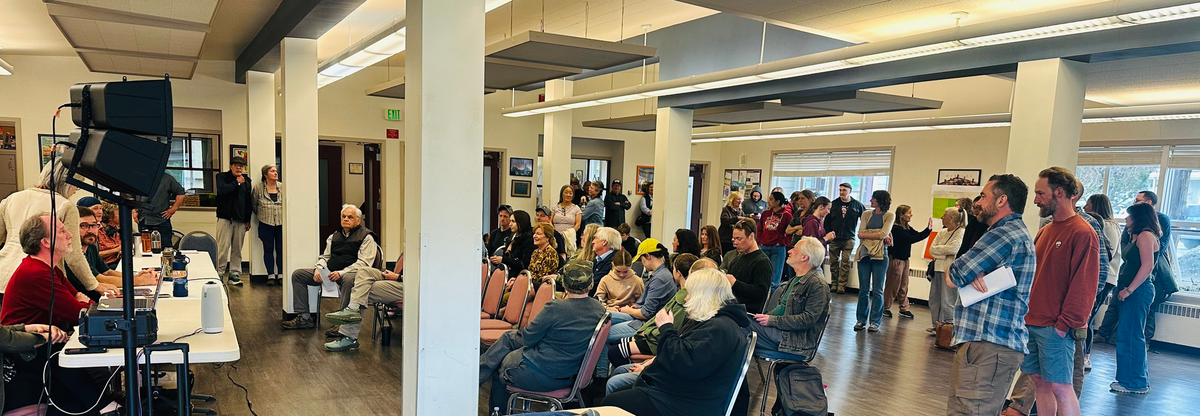
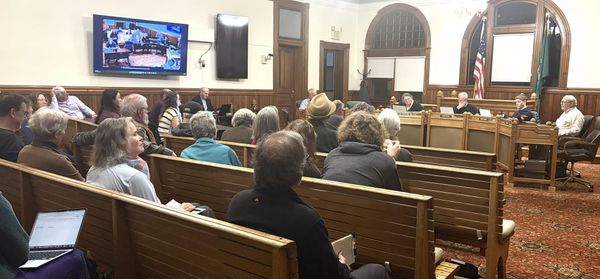
JEFFERSON COUNTY, WA — For the residents who packed the Port Townsend Community Center on the Friday night before spring break, the news was both reassuring and sobering. The Jefferson County Board of Commissioners voted unanimously to deficit-spend county reserves to keep all current parks and recreation programs running through the end of 2026. But that reprieve, commissioners made clear, comes with a warning: without a new source of sustainable revenue, the cuts that were narrowly avoided this year will return in 2027, and they will be deeper.
The meeting, a special joint session with the Parks and Recreation advisory board and staff, was originally convened to address an immediate budget crisis. In December, the parks department was forced to absorb a 25% cut for its 2026 budget as part of broader county belt-tightening. That cut would have meant closing the Port Townsend Rec Center, eliminating staff positions, and shuttering Memorial Field to interscholastic sports. The community responded by raising $85,000 through the Jefferson Community Foundation to keep the Rec Center open through 2026. But as Parks and Recreation Manager Matt Tyler explained,
“It definitely solved a huge part of the problem, but unfortunately, not the entire problem.”
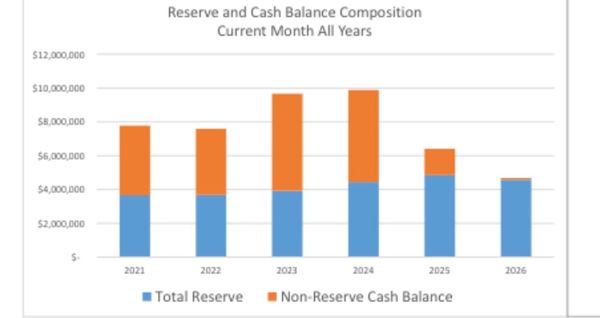
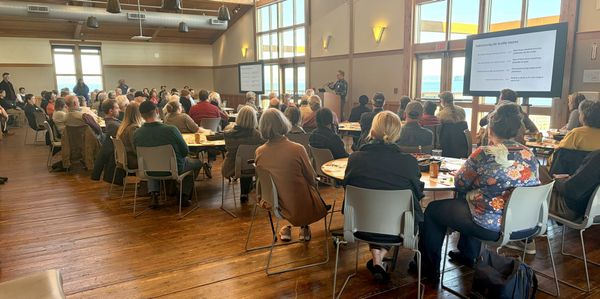
The larger problem, as County Administrator Josh Peters laid out in remarks that echoed a similar presentation at the March Connectivity Summit, is structural. The county has been deficit spending for years, drawing down reserves to cover the gap between rising mandated costs and revenue constrained by the state’s 1% cap on annual property tax increases. In 2025, the county spent $3 million more than it brought in. The adopted 2026 budget still carries a deficit of roughly $1.1 million.
“We can’t continue to keep deficit spending, clearly, just like you couldn’t in your own household,” Peters said. “But temporarily, we’re borrowing time to be able to address some fundamental issues in our budgeting process.”
Those fundamental issues include a 35% spike in liability insurance premiums this year alone, bringing the total to $2.2 million. It also includes a public defense mandate that costs the county over $1 million annually, which the state provides less than 8% of the funding for. A bill in the state legislature to address tort reform, which could have limited the county’s exposure to runaway jury awards, died this session.
Memorial Field on the brink
Of all the facilities at risk, none drew more emotional testimony than Memorial Field. Tyler announced that, under the original budget cuts, the field would close to interscholastic sports after May 7, with a volunteer caretaker living on-site to provide only basic maintenance. That level of service, he warned, would not be sufficient for high school football or soccer, meaning fall sports would have no home field.
“The field has to be safe,” Tyler said. “There’s a much greater awareness of concussion in youth sports, especially high school sports. The field has to be taken care of to a high level.”
Several high school students stepped up to the microphone to plead with the commissioners. One described Memorial Field as a vital “third space” for teenagers, a place between home and school where young people can gather for homecoming games and feel part of their community. Another student offered a more nuanced critique, acknowledging that while the community rallied to save the Rec Center, many his age do not actually use it because the facility has not been well-maintained.
A mother shared that her neurodivergent eleven-year-old son, struggling with school and depression, had finally shown joy when spring soccer practice began, spending an evening washing his cleats and soccer ball with a dish sponge. An adult organizer for a pickup soccer group described playing on alternative fields where the ground is “harder than tile sometimes,” leading to concussions and joint injuries.
Tyler also announced that portable toilets would be removed from several popular beaches, including North Beach and Indian Island, and that parks such as North Beach, Courthouse Park, and Hicks Park would be moved to an Adopt a Park volunteer program. A resident who lives near North Beach warned that removing the toilets would create a public health hazard, as families spend all day at the beach with no facilities.
Two paths forward
The commissioners considered two long-term solutions. The first, proposed by County Assessor Jeff Chapman, is a levy lid lift: a voter-approved property tax measure dedicated specifically to parks and recreation. Chapman recommended a $0.15 increase per $1,000 of assessed value, which would generate approximately $1.5 million annually and cost the owner of a median home in Port Townsend about $7 per month. The measure would expire after six years unless renewed by voters, similar to a King County parks levy that passed with 70% approval last August.
“Levy lid lifts are hard to pass for a county or city,” Chapman cautioned. “The higher you go, the much harder it is to pass.”
The second path, presented by community member Devon Buckham on behalf of an organized group of citizens, is a Metropolitan Parks District, or MPD. Unlike a countywide levy, an MPD would be a separate elected board with dedicated taxing authority, potentially drawn narrowly around the Port Townsend city limits or school district to address the facilities most immediately at risk.
“What the community is asking for is to pull it out from underneath the county budget and put it back into the community’s ability to be actively involved and engaged,” Buckham said. “A levy lid lift gets us back to status quo. The problem is the structure itself.”
Buckham acknowledged the challenges: gathering a petition signed by 15% of voters in the proposed district, two separate ballot measures, and the risk of boundary disputes that derailed a similar effort in 2013. But he argued that the same community energy that raised $85,000 in a week could accomplish the lift.
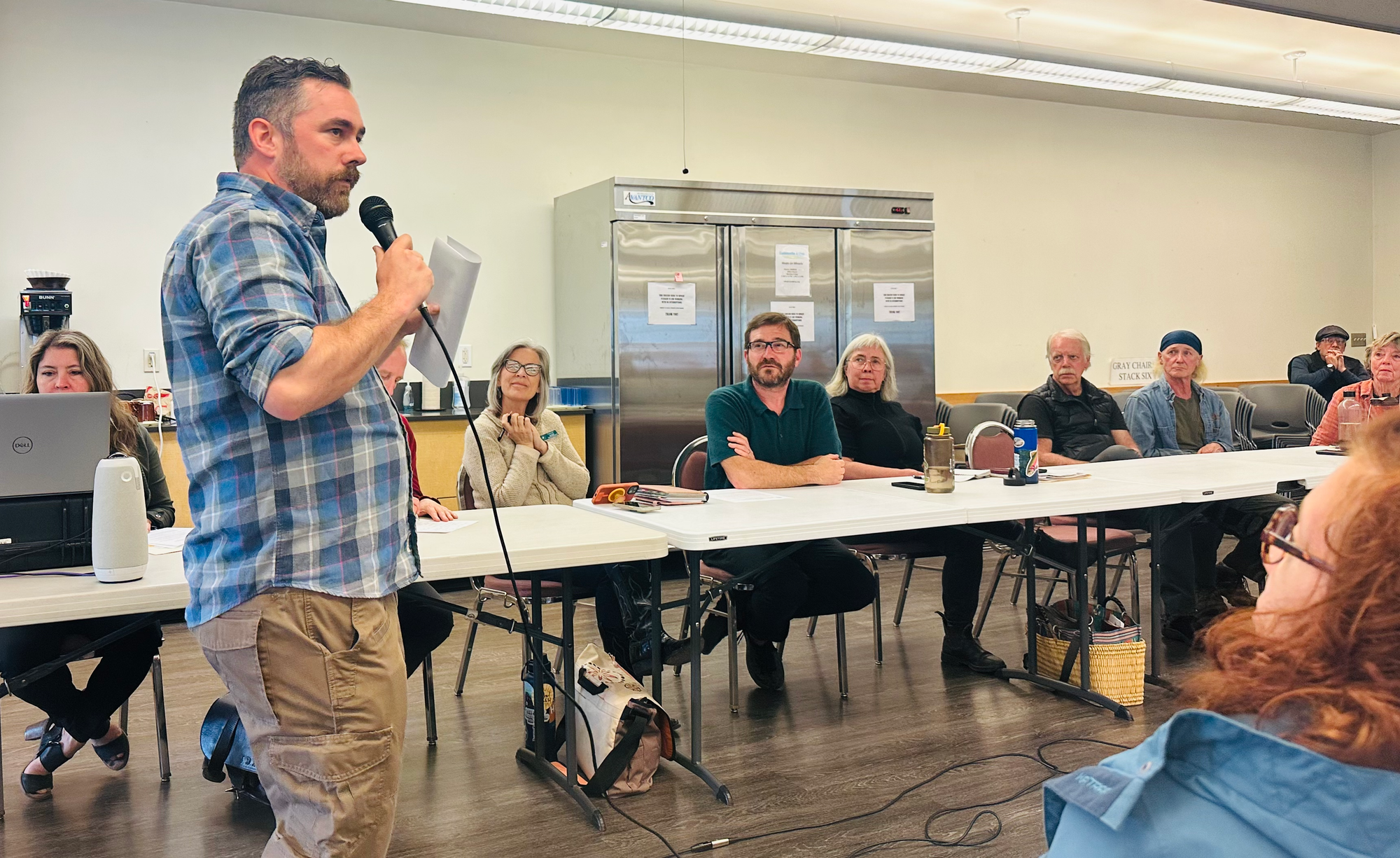
Park and Rec Advisory Board Chair Bob Hoyle offered a compromise, endorsing the levy lid lift as an immediate step while leaving the door open for an MPD later. “I like the idea of a Metropolitan Park District, but I don’t like the idea of one in lieu of a levy lid lift,” Hoyle said. “The county park system is the entire East County, all the way down to Quilcene. The levy lid lift would fund all of the parks.”
Commissioners act
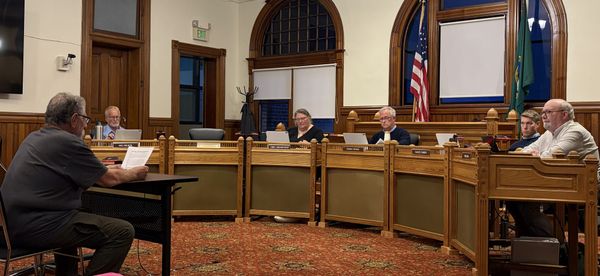
After nearly two hours of testimony, the commissioners took two unanimous votes. The first directed staff to prepare a resolution for a $0.15 levy lid lift to appear on the August or November ballot. The second, more immediately consequential, authorized deficit spending from county reserves to maintain all current parks and recreation services, staffing, and programs unchanged for the remainder of 2026.
That means Memorial Field will stay open through spring sports. The portable toilets will remain at the beaches for now. The department will not have to implement the caretaker plan or the Adopt-a-Park expansions. But the commissioners were explicit that this is a one-time bridge, not a solution.
District 1 Commissioner Heather Dudley-Nollette, who has been directly involved in the issue since taking office in 2024, noted that she was on the other side of the table a decade ago, having the same conversation.
“It’s ultimately our job as your commissioners and staff to keep our focus on the long-term, more sustainable solution,” she said. “We cannot keep trying to solve this same problem in the same way. It’s not working.”
District 2 Commissioner Heidi Eisenhour struck a note of optimism, pointing to successful volunteer programs already in place at Irondale Beach and Indian Island. “I have seen firsthand the caretaker programs work at a lot of our parks amazingly well,” she said. “Those are the kind of people we want on our team.”
But she also acknowledged the limits of volunteer labor. “We don’t want to create a dynamic in our community that I have witnessed for the last 40 years, where we only take care of the parks in town.”
What comes next
The resolution for the levy lid lift must be finalized by April 27 to make the August ballot. If approved by voters, the new revenue would begin flowing in 2027. In the meantime, the county will continue its broader budget exercise, categorizing every service as either mandated by state law or discretionary, and looking for savings across all departments.
The community group pursuing an MPD plans to continue organizing, with the goal of placing a measure on the November ballot. And for at least the next several months, the Rec Center will stay open, the portable toilets will remain in place, and Memorial Field will host its spring games.
But as District 3 Commissioner Greg Brotherton, who chaired the meeting, put it, the two conversations are related and interactive. The short-term reprieve is not an ending. It is an investment of time and money to let the community build something that might finally last.
“We have a structural problem going forward,” Brotherton said. “We have a short-term problem we’re dealing with now.”