Letter from the Editor: The Latest Local News Findings are Predictably Depressing (Except When They're Not)
The latest report from the 2026 Local Journalism Index landed in my inbox this week. Here’s some of what it says.
Last week, the latest report on the abysmal state of local news landed in my inbox. My inbox is frequently depressing, and reports like this aren’t designed to lift spirits.
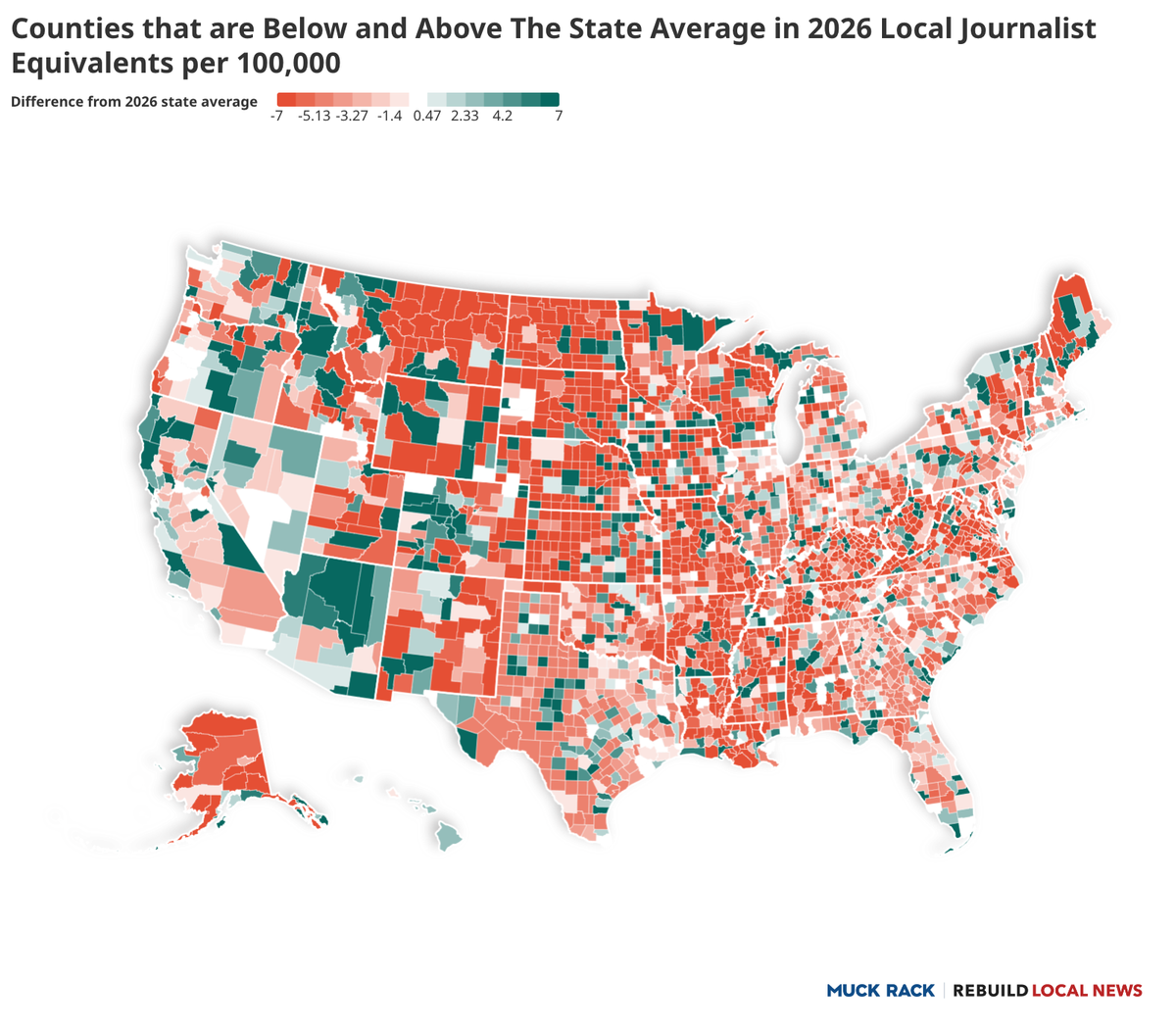
This particular report is the 2026 Local Journalism Index, whose key findings include a marked decrease in local journalists; Washington State is down to just 7.8 per 100,000 people after an adjustment for metro areas, ranking us at 29 out of the 50 states.
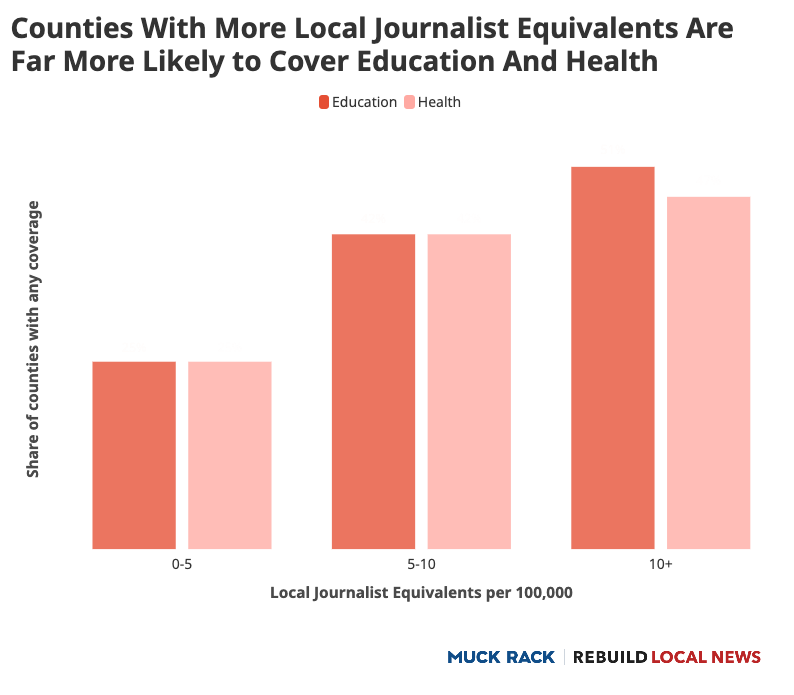
The report, which uses data compiled from MuckRock and Rebuild Local News, also found that where there are less local news journalists, there are less stories about health and education.
As an editor of a small rural news outlet, I felt this statistic pretty deeply. Education and health stories are a continuous struggle for us to tackle; we simply don’t have the money to dedicate staff to these stories, in part because they need to be dedicated beats. It’s an issue we’re trying to solve, at least on the education side, by applying for grants to fund a dedicated education reporter. Unfortunately, another reason my inbox is depressing this week is we were turned down for a grant that would have made this possible.
We’re also following the trend of having more stories about crime than areas who have more journalists do. From the report, “In counties with fewer than five [local news journalists] per 100,000 residents, nearly one in five local articles are about crime and justice, roughly 50% more than in counties with higher journalist density.”
In our case, that’s because we’re experimenting with how the criminal legal system is covered; analyzing and tracking complex systems of government takes up a lot of time and virtual column inches. We may be in the same boat as other regions, but, I’m sad to say, probably for different reasons.
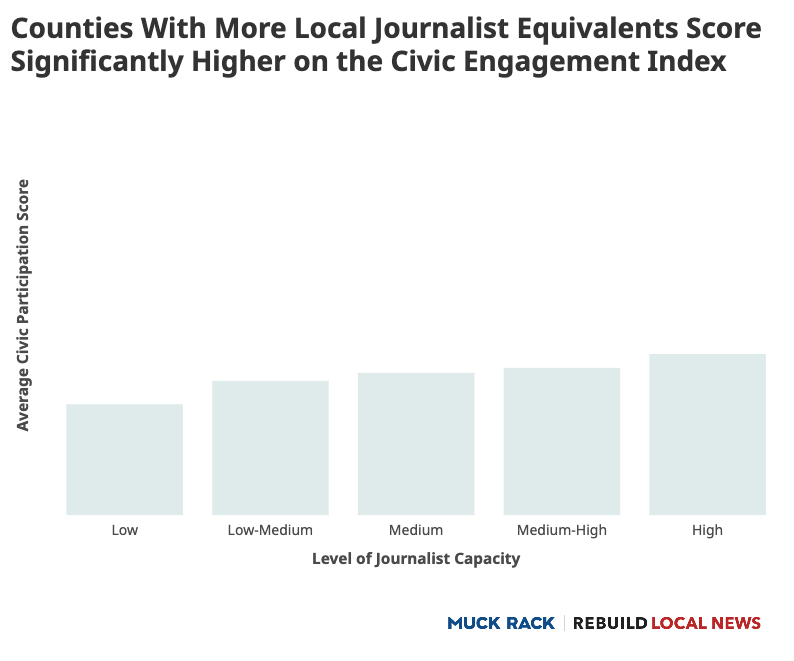
Now we get into the really interesting stuff in the report. Places with more reporters have more civic engagement. Because a letter from an editor is technically an opinion piece, I feel confident in saying, “well, duh.”
People who understand the decisions their government is making feel more empowered to have an opinion worth sharing with said government. When you know that your city council is discussing options to provide affordable housing, and the options have been clearly laid out by a professional journalist, you’re more likely to write in and say, “Hey, let’s do this!” or “Please do not do anything that will jeopardize my house’s value.” In short, you have to know what your government is up to in order to care about it and want to get involved.
All of these findings were interesting, but they weren't what made me want to write. This takeaway has been rattling around in my brain:
“Research suggests a link between local news and loneliness levels. A working paper by Danny Hayes and Anusha Trivedi, political scientists at George Washington University, has found that states with weaker local news environments have higher rates of loneliness, even after controlling for rurality. LJE data reinforces the findings: In every matched pair of states with comparable rural populations, the state with fewer journalists per resident also had a higher loneliness rate.”
It seems obvious that a good community news outlet helps people stay connected to each other, but it’s not something that I’d directly thought about. I have been consistently impressed by the way Beacon readers comment on articles and respond to comments from each other. It feels like a community (small c) but I hadn’t considered that perhaps we were helping to make a broader Community (big C).
I’m curious if local news makes you feel less lonely in the same way it makes this introverted editor feel more connected to the world outside her inbox. If it does, let me know in the comments.