Swan School Explorers End School Year with Food Pantry Success
A collaborative story from the Beacon and KPTZ on youth ingenuity.
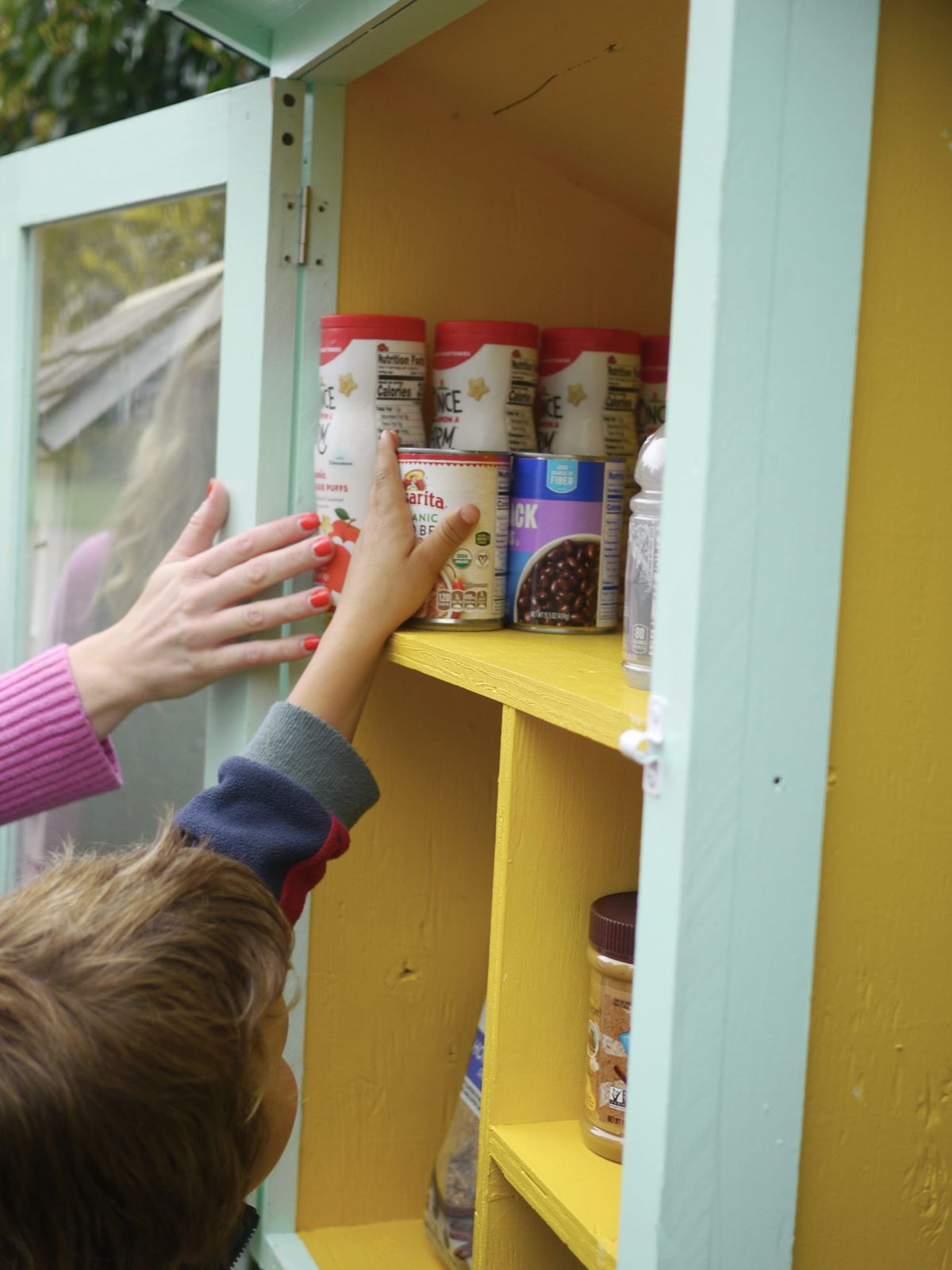
PORT TOWNSEND, WA — Port Townsend has a number of new Little Free Pantries, thanks to Katey Dwyer's class at Swan School, who encourage us all to "bring what you can, take what you need."
Several months ago, KPTZ chair Jon Pinnow approached editor Nhatt Nichols with the idea to collaborate together on the story of how elementary-aged kids came together to create a project that utilizes public transit, feeds those in need and teaches valuable STEAM skills.
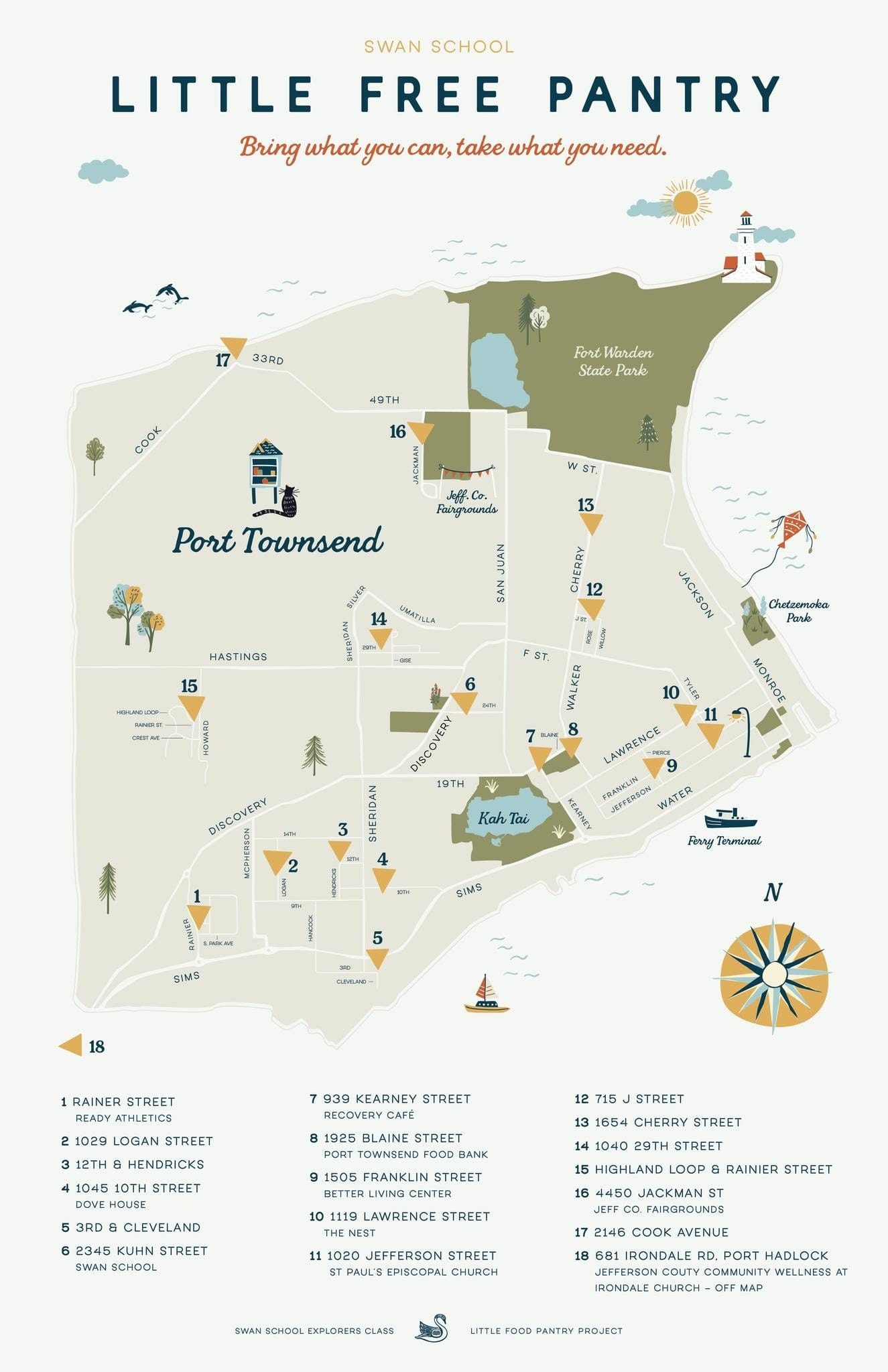
Pinnow also spoke with Tracy Garrett from St. Paul’s Episcopal Church, who shares practical advice on how neighbors can keep local pantries stocked and thriving. You can find the community pantry map here.
You can hear the version that went out on KPTZ’s Attention Please program by clicking the audio player, or if you would prefer to read about it, the transcript is available below.
—
Swan School Students 0:00
This is KPTZ Port Townsend!
Jon Pinnow 0:09
Jon Pinnow with you here for this edition of Attention Please on KPTZ, a collaborative effort today with the Jefferson County Beacon.
If you've noticed around Port Townsend lately a number of little free pantries, you may know they've popped up thanks to students and a teacher at Port Townsend's Swan School. It's a pretty inspiring story. And coming up in a bit, we'll have a little advice on how you can help stock a little free pantry near you.
But first, the story of how they came to be, and for that, we'll hand things over to Nhatt Nichols of the Jefferson County Beacon.
Nhatt Nichols 0:49
We took a field trip recently with the explorers of Swan School, that's teacher Katey Dwyer's class of kindergarten and first graders, who've been up to something quite extraordinary, and it all starts by getting on a Jefferson Transit bus at Haines Station.
Katey Dwyer 1:04
So, guys, like normal, let's go to the back of the bus and fill it up.
Nhatt Nichols 1:12
We're on this bus for a field trip to a free food pantry, one that did not exist before this class had the brainstorm to put it there, and riding the bus is part of the project. Students have learned how to get to each of the free food pantries via the bus, and today they're taking the bus to fill up a brand new food pantry they helped create as part of their school project.
Swan School Students 1:33
We're gonna fill a pantry with food that's non-perishable, because you don't want to eat like, like, if there's like non-perishable food next to perishable food, it's gonna rot because it's not in like a cold place, and we don't want to eat non-perishable food that's next to perishable food, because then it could rot too.
Nhatt Nichols 1:59
We got off the bus at 14th Street in the residential area of Castle Hill, and began a short walk to the ninth pantry this group of students have put up and stocked this year. Though this has been a considerable amount of work for the students, this doesn't just feel like a school assignment to them, because they've been invested in the project from the beginning.
Swan School Students 2:18
We're doing good things, and it's like, super fun.
Swan School Students 2:30
You can put it in food in; I think that's really fun. We take turns, and we like stock it like with non-perishable food, so we can help the community.
Nhatt Nichols 2:47
Of course, it wouldn't work if it was just up to the students alone. Their network of little free food pantries relies on community help.
Katey Dwyer 2:55
Part of organizing the host for the pantry is that they'll handle most of the stocking, like stocking it the first time, and opening it, but some of the locations have been really busy. The one on Rainier Street that we put in, that one's been emptied almost every day.
So, I've gone over there a few times just to stock it with some of the food donations that we've gotten. Yeah, the one last week, that one's been emptied. The one by Cherry Street Park, that one is emptied almost every day as well, and the neighborhood over there has really worked together to keep that one stocked.
Nhatt Nichols 3:30
At this point, the classes stock 10 different pantries across Port Townsend, and their practice is to visit each and stock them full as soon as the posts are solidly set in the ground. Katey Dwyer and her fellow Swan School faculty partners haul all the food they can for this effort. Then the students line up and load the pantry item by item.
Katey Dwyer 3:50
All right, so let's stay in our line. You guys know how to do this. We'll stay down there, and then I'll open this backpack. We can grab things out, okay? Remember to keep items together in the same spot
Swan School Students 4:06
(Students list the food as they're putting it in the pantry) I've got a sort of soupy thing. Soup. Corn. Chicken noodle. A can of beans!
Katey Dwyer 4:19
Oh, Oatmeal! That provides protein which lasts a long time and gives people good energy.
Swan School Students 4:26
I have black beans.
Swan School Students 4:31
I have corn.
Nhatt Nichols 4:34
This particular pantry is at 10th and Logan Street, outside the home of Kim and Philip Henry. Their grandson is a student at Swan School, though he's too young to be an explorer. That's how they heard about the effort and decided to get involved.
Kim Henry 4:48
Oh, I love it. I totally support it. My grandson is in the preschool at Swan School, and my daughter told me all about this program and. And we've talked to all of our neighbors and our friends and our kids and everybody supports it, so we'll see how it goes.
Philip Henry 5:08
It took no convincing, because she's usually filling the pantry over by the hospital, so this is something, this is a passion she's had for years. So this is her baby. We love Swan School because they're so socially conscious, you know, they're doing all these food drives all at the time and all kinds of socially conscious activities that they're raising these kids from just wee little ones on up, and this is just to us, it just makes it fills my heart. It just makes me feel so good.
Kim Henry 5:45
They're raising incredible citizens.
Nhatt Nichols 5:49
These tiny citizens have a very deep understanding of why the food pantries are important.
Swan School Students 5:55
It's so important that people should know that, like, it's sometimes hard for people to understand that food is very important, because you wouldn't be able to survive without food.
Swan School Students 6:16
It's like, if somebody broke their leg, they could not go to work, and then they don't make any money, and prices are getting higher, so they can't buy any food, and if they weren't any food pantries, they would maybe die.
Swan School Students 6:35
I think it will be like, I think it'll be better, and more people will have food around, and so people will have been more happy, and people will be more like they know that their food pantry around, because and when they saw them last year, and they'll see it next year, and that's good, so for their memories that they know they're where the food pantries are.
Swan School Students 7:11
I think if we try, if nobody doesn't put anything, just leaves it alone and just put good food in and just put nice protein food in, then I think it'll be good, and people will just eat it and be good.
Swan School Students 7:31
I imagine it like this. The storm drains out food, and it rains food, but some people have too much work, so to get out late, I'm like, don't have enough food, so it's like the only way to get food is to get our rainy days and collect food.
Katey Dwyer 7:54
Well, that would be a good first option. Second option, food pantries, because unfortunately we don't have food exploding out of storm drains, but I like where your head's at.
Nhatt Nichols 8:07
This project isn't just about feeding people, though. Along with being a lesson in logistics and nutrition, it also teaches geography and art, along with instilling values of compassion and neighborliness.
Katey Dwyer 8:19
Well, explorers, if you remember, when we first started this, we were trying to find a map to map out where all the pantries are, and we couldn't find one anywhere, and I asked the kids, what is a map, and they said, oh, it's on my mom's phone, when we drive places, we look at the picture, and it moves with us. Well, okay, but there's also paper maps, and we used to only be able to use that when we were trying to get somewhere, so we actually had to kind of make our own.
We took it to the Printery and blew up a big picture of the walking map, and these guys are getting really good at reading the map. And what we've been doing is taking our bus schedules that has a map of the route on it, and then they hold it up because some of them are missing some of the street names, so matching landmarks and big streets in our town, and figuring out where things are, and they worked really hard on the artwork for publishing the map that will have all the pantries on it, and that is going to be happening pretty soon, which is very exciting, because that was one of the things that we're missing, where we realized that there was not a lot of pantries in town, and a lot of people didn't know where they were, that we had no idea where they were, and that people should have one spot where they can see, right, guys?
Yeah, so we'll be able to offer that resource to town, where you know, and they'll be in every single pantry, access to maps where people can pull them out and see where they are all around town, what's closest to their neighborhood, and I think one of the biggest lessons here is that we really want everyone in the community to know that this is for the community, by the community, so anyone has access to the food inside, and also anyone can come donate food anytime they want.
It's not just belonging to, you know, I still think that that idea is a little lost, and that that's a big message that we've been trying to get out to people, that everyone can participate and help.
Swan School Students 10:15
I really agree with that, like everyone should help, because it's not only us that are doing it, it's like if anybody wants to help they can by bringing food and putting it in the pantry.
Nhatt Nichols 10:43
Of course, these students have talents that go way beyond being good citizens. Veteran reporter and KPTZ Chair Jon Pinnow tested their kid skills by asking for their best knock knock joke.
Jon Pinnow 10:55
Give me your knock knock.
Swan School Students 10:56
Well, this isn't a knock knock joke. Will you remember me in one second?
Jon Pinnow 11:07
Yes.
Swan School Students 11:08
Will you remember me in five seconds?
Jon Pinnow 11:11
Yes.
Swan School Students 11:12
Will you remember me in one hour?
Jon Pinnow 11:15
Yeah.
Swan School Students 11:19
Will you remember in two, five hours?
Jon Pinnow 11:23
I think so.
Swan School Students 11:24
Will you remember me in 10 hours?
Jon Pinnow 11:28
Yeah. Now you're starting to push it, though.
Swan School Students 11:30
Knock, knock.
Jon Pinnow 11:31
Who's there?
Swan School Students 11:32
I thought you said you would remember!
Jon Pinnow 11:35
I fell right into that. Good work.
Nhatt Nichols 11:39
Besides, knock, knock, joke aficionado Jon. We had:
Swan School Students 11:43
(Students introduce themselves)
Katey Dwyer 11:48
I'm Katey
Kim Henry 11:53
I'm Kim
Philip Henry 12:06
I'm Philip
Katey Dwyer 12:08
and we are missing three friends today. We're missing Simone, Eddie, and Diddy.
Nhatt Nichols 12:15
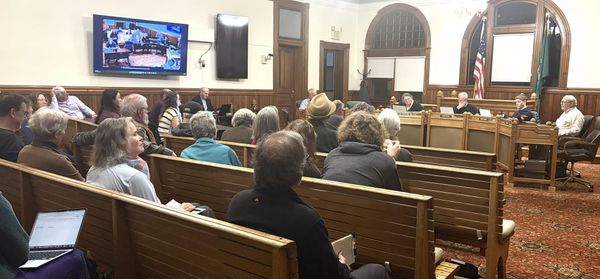
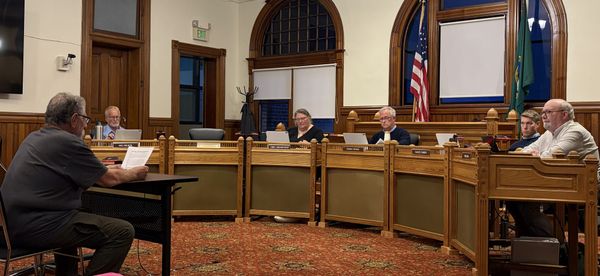
It isn't just grandparents and community radio producers who have been astounded by the work these students have done. On May 18, the Swan School explorers, their parents, and a host of siblings and supporters packed Port Townsend city council chambers to witness Mayor Amy Howard declare a day of honor for the class and to formally recognize all of their accomplishments.
Because the chambers were packed, it's a little hard to hear all of what Mayor Howard says, but the excitement comes across beautifully,
Amy Howard 12:46
Whereas the students of Swan Schools Explorer class looked at their community and asked a question many adults overlooked, Where do our neighbors go when they need food? And finding the answer insufficient, they decided to do something about it.
Whereas these 15 students conducted original research identifying seven existing food pantry locations in Port Townsend and created a community map to make that information accessible to all who needed it, whereas the explorers reached out to neighbors, posted in community forums, gathered feedback, and contacted local families to identify interest in hosting a pantry demonstrating civic engagement of the highest order.
Whereas the students raised funds, secured material donations from local companies, prepared a materials list, selected a construction template, and collaborated with volunteer builders, turning their vision into tangible action.
Whereas, through their efforts, the explorers added 10 new little free pantries to Port Townsend, replaced Swawn School's existing pantry, and expanded free food access into neighborhoods where it is needed most.
Whereas every recent Monday has seen these students load up their backpacks and visit newly installed pantries to stock them for the first time, filling them with food, toiletries, and even pre-stamped envelopes, supported by generous donations from families and community members.
Whereas the explorers made these deliveries using the public transit system, navigating routes, planning the trips themselves, and connecting with bus drivers and community members along the way. And in partnership with Jefferson Transit, students created a community map linking all bus routes to every free food pantry in town, ensuring that neighbors who rely on public transit can find a food they need. With a visit to Jefferson Transit headquarters planned to celebrate that collaboration.
Now, therefore, I, Amy Howard, Mayor of the City of Port Townsend, do hereby proclaim May 18, 2026, to be a day of honor for the Swan School explorers and their little free pantry projects, and call upon all residents of Port Townsend to celebrate these students for their compassion, creativity, and community spirit, and to recognize that the future of this city is in remarkably good hands.
Nhatt Nichols 15:01
Mayor Howard invited the students to join her to refill one of their pantries and ask her questions. As usual, the students took the bus, this time uptown to Lawrence Street. They collected the food items that had been donated at Aldridge's Market, then walked up to the pantry outside of The Nest.
Amy Howard 15:18
Show me the box, I'm going to answer any questions that you have, and then I brought a bag of stuff to put in the box, because I thought that would be more fun than showing up empty handed.
Katey Dwyer 15:26
Yeah, we brought some stuff too.
Amy Howard 15:28
Awesome! We can stock the box together.
Katey Dwyer 15:30
I don't know if we want to start with this, but we actually got a very special delivery to our school today, that our maps are officially done. So we wanted to bring you a stack.
Amy Howard 15:41
That's so exciting!
Katey Dwyer 15:42
Take one, and you probably know all the people to give them to.
Amy Howard 15:46
Can I put some in City Hall?
Katey Dwyer 15:47
Absolutely
Amy Howard 15:48
Fantastic.
Nhatt Nichols 15:50
The map includes 18 different places that you can find a little free food pantry, not just the pantries that were organized by the explorers. The map is designed to be both clear and fun, and has neat little illustrations, including a compass, a lighthouse, and a whale. At the top, it says, "Bring what you can, take what you need. A reminder that this map is for those who need to find food, and for those with a little extra to give. I'm Nhat Nichols, editor of the Jefferson County Beacon, reporting for the Beacon and KPTZ.
Jon Pinnow 16:25
John Pinnow with you here for this edition of Attention Please on KPTZ, a collaborative effort today with the Jefferson County Beacon. Obviously, the only way a little free pantry works is if there's a community behind it to keep it stocked, and one of the very best coordinated efforts I know of here happens at St. Paul's Episcopal Church uptown. I sat down with Tracy Garrett to see what kind of advice she might have for anybody wanting to help stock a little free pantry.
Tracy Garrett 16:59
There's lots of stuff online that people can reference, particularly about the types of food that can go in an untended, unrefrigerated cupboard that might be exposed to pests. Okay, that's so that's the parameters. We have the rule of two, so there's a list of things we put into the pantry, and we try to have a variety of food and drinks and grooming items, and we have a pair of socks every day, and in the winter we have a knit hand knit cap every day, and also the utensils that you need to to eat what you take out of the pantry.
We asked, we asked people who are donating food to look for food packaging that you don't have to have a can opener or a knife to get into, and that works pretty much,
Jon Pinnow 18:03
and like you say, nearly every day, many of those items need to be restocked.
Tracy Garrett 18:08
Yep.
I think we give away $1,400 of food, it adds up, but it's a testament, I think, to our community's generosity. The people who donate food are not always members of St. Paul's, our neighbors here, just our geographic neighbors, sometimes will donate food or money for the purpose of stocking the pantry, but it's important to us that we have milk, oatmeal, quick cooking pasta dishes, vegetables, fruit.
Some of our patrons are high schoolers on their way to school in the morning, and they stop and get something for lunch, maybe. But I think we have this idea of what a person in need looks like, and I'll just remind you that it's every kind of person, it's old people, it's young people, it's a mom with a child or two, it's a, it's all kinds of people,
Jon Pinnow 19:15
So if somebody has noticed a new little free pantry in their neighborhood, thanks to the explorers of Swan School,
Tracy Garrett 19:24
and the map,
Jon Pinnow 19:25
and the map. How would you suggest they think about participating?
Tracy Garrett 19:33
First of all, the food you eat is probably liked by other people, so what you have in your kitchen, and then your pantry cupboard at home probably works if you're interested in meeting specific needs that are difficult to fill. Shelf stable box milk is really helpful. Any kind of canned protein, so tuna, sardines, canned salmon, the pasta with meat that comes in a can; that's a pretty hearty meal for one person.
Other things that are nice to have in the pantry, canned vegetables, canned fruit is really popular, or the small packages, they just pull the top off. Grooming items are always welcome, and every once in a while, we get a large package of toilet paper, and I'm always so grateful, but feminine hygiene items, anything that has to do with dental care, soap bars, all those things. So, what I recommend you put in the pantry is whatever you use at home.
And it should be unopened and unexpired and in the simplest packaging possible for someone who doesn't have a place to store the extra and people don't always have refrigeration or storage capacity or a pan that big to cook that thing or a stove on which to cook it. Without making any judgments about it, just put that at the edge of your mind, and shoot for something that accommodates that limitation.
Jon Pinnow 21:35
Yeah, so as we kind of sum this up, I have to admit, it has been wonderfully inspiring to me personally to see a group of five and six year olds taking some action with a lot of guidance, but taking action and making something positive happen for the community. I can't be the only one who feels inspired.
Tracy Garrett 22:01
No, no, it is wonderful for us at St. Paul's to partner with them and enable any aspect of their project to go forward. We're in the inspiration business at St. Paul's, and, yeah, we need inspiring as well.
The motto is “take what you need, but leave what you can,” and that isn't just about food, you know. Take what you need from your neighbors and give what you can, take what you need from the community to be a happy, healthy person, and give back what you can. It's such a privilege to have that reciprocity.
The whole idea that some people are takers and some people are givers doesn't resonate with me. We are all taking once in a while, we can all give once in a while.
Jon Pinnow 23:15
That's Tracy Garrett, who coordinates the effort at St. Paul's Episcopal Church to stock their little free pantry, by the way, they've also got a little free pet food pantry at St. Paul's. It's one of many on the map put together by the students of Swan School and St. Paul's. I'm told you'll find the map at all of these little free pantries and a number of other places around town. My name is Jon Pinnow, and I thank you again for listening to KPTZ, and for being a part of the effort that makes this happen.