Port and County Clash Over Industrial Zoning, Seek Path Forward on Economic Development
Airport development stalled by regulatory disputes; officials aim for a collaborative solution.

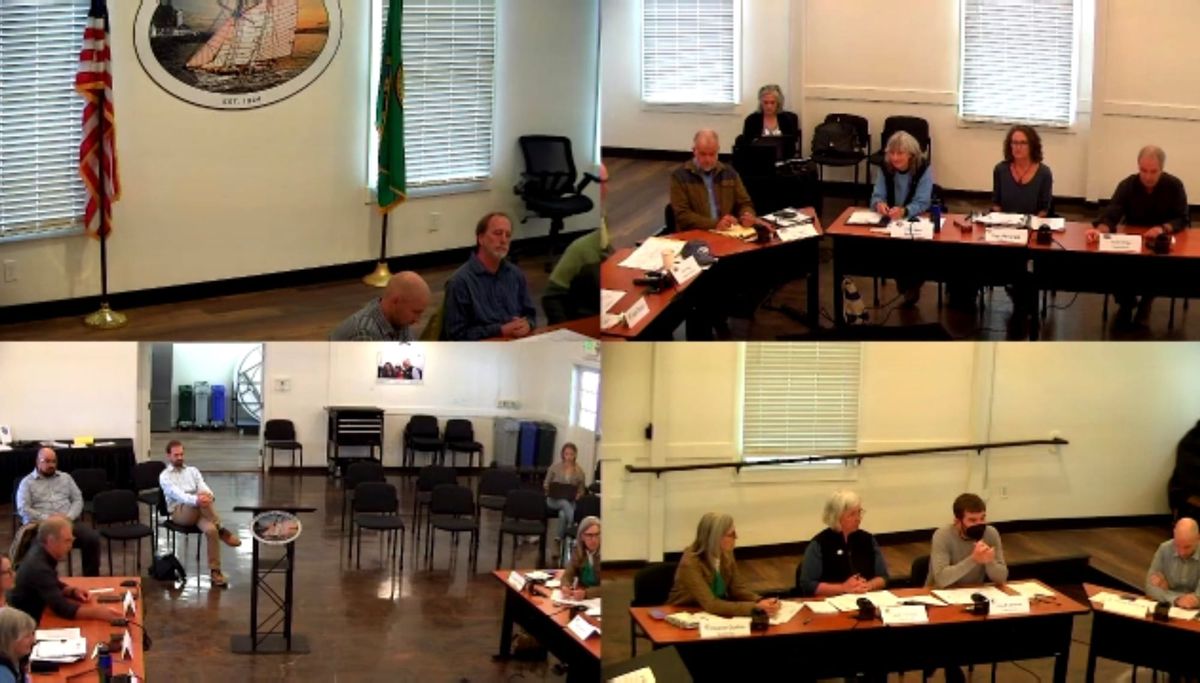
PORT TOWNSEND, WA — In a special joint meeting on Tuesday, June 9, the Jefferson County Board of Commissioners and the Port of Port Townsend Commission engaged in a frank and wide-ranging discussion about the future of economic development, revealing both shared ambitions and deep-seated frustrations over regulatory hurdles, particularly concerning the Jefferson County International Airport (JCIA).
While both bodies expressed a desire to collaborate on a unified economic framework, the conversation quickly became laser-focused on the port’s struggle to develop a light industrial park at the airport, hampered by what port officials called restrictive county codes.
Port frustrations with county regulations
Port Executive Director Eron Berg praised the county's past assistance, but voiced strong frustration with current permitting processes. He argued that the port is being "held back" by regulations that make investment challenging, specifically pointing to three major obstacles at the JCIA site: a 10,000-square-foot building size limit, restrictive 50-foot vegetated buffers and impervious surface limitations that render a third of the developable property unusable.
"The port's vision of economic development in the county is your vision," Berg told county officials. "We exist to deliver the jobs or comp plan." He added that the port is willing to take risks on land but is "stymied" by the county's regulatory environment.
Port Commissioner Pam Petranek echoed this sentiment, calling for the county to "roll out the red carpet" for businesses rather than pushing them back with lengthy permitting timelines and high tax burdens. "We, as commissioners, hear a lot of complaints, and the complaints are we're leaving Jefferson County," she said.
The County’s perspective: GMA constraints and historical context
County Administrator Josh Peters and Community Development Director Jeremy Williamee provided context, explaining that many of the contested regulations stem from the state’s Growth Management Act (GMA) and past legal challenges. They noted that Jefferson County was "hauled before the hearings board" in the past, leading to a conservative application of rules to distinguish rural areas from urban ones.
Peters pushed back on the idea that the county has been unhelpful, citing recent collaboration on the Timber Cooperative project and ongoing settlement negotiations over a land use appeal filed by the port. He clarified that the county is currently working on a settlement agreement to resolve the appeal regarding the airport's binding site plan.
"We're working on a settlement agreement . . . to get to an outcome that we both hopefully are going to meet the port's needs," Peters said, noting they are "on the precipice" of a resolution.
A call to prioritize Glen Cove
A significant point of contention arose when County Commissioner Greg Brotherton challenged the port to look beyond the airport. He noted that while the port is seeking code changes for the JCIA, the county’s comprehensive plan has long identified Glen Cove and Port Hadlock as the primary targets for industrial growth.
"I guess my ask is if the port should be looking at Glen Cove and Port Hadlock explicitly," Brotherton said, noting that the area is about 50% vacant and already home to maritime businesses. He expressed concern that businesses moving to the airport are simply relocating from Glen Cove, rather than adding net new jobs to the county.
Port officials countered that they have not identified suitable 20-acre parcels for sale in Glen Cove, and that the airport project is too far along to abandon. "We've got a decade into this . . . it's a car that's almost ready to roll," said Port Commissioner Peter Hanke, urging the county to clarify whether they support the airport project moving forward.
Next steps and potential solutions
Despite the friction, both sides agreed on the need for a clear, collaborative vision moving forward. Commissioner Heather Dudley-Nollette proposed that the Intergovernmental Council address the community’s expectations for its Limited Areas of More Intensive Rural Development, particularly in light of new state legislation. The county noted that while comprehensive plan changes can occur only once a year, code amendments can be implemented sooner.
Commissioner Heidi Eisenhour acknowledged a shortage of county staff, noting that the Department of Community Development (DCD) has lost over five full-time employees, and suggested that the port might be able to assist with capacity.
Williamee responded that although DCD aims to be supportive, they require clear priorities from the commission to allocate resources effectively. Additionally, port officials revealed they are considering introducing a new Industrial Development District ballot measure as soon as next year, which could provide significant funding for industrial development projects, including the airport and potentially other areas.
The meeting concluded with a commitment to continue the conversation, with the port agreeing to share its master plan for the airport to help align visions. As Commissioner Eisenhour put it, "We've proven that when we work together, we can make things happen . . . we can all row together in the same direction and get somewhere."