Managing a City Water System Amidst a Confluence of External Forces
Climate change, a partnership with an Out-of-State-Owned Port Townsend Paper Mill and a long, aging pipeline present formidable challenges to providing affordable, safe drinking water.

This is the first piece in a three-part series examining the ways the Port Townsend Paper Company (PTPC) is intertwined with Port Townsend's economy, ecology and dependencies.
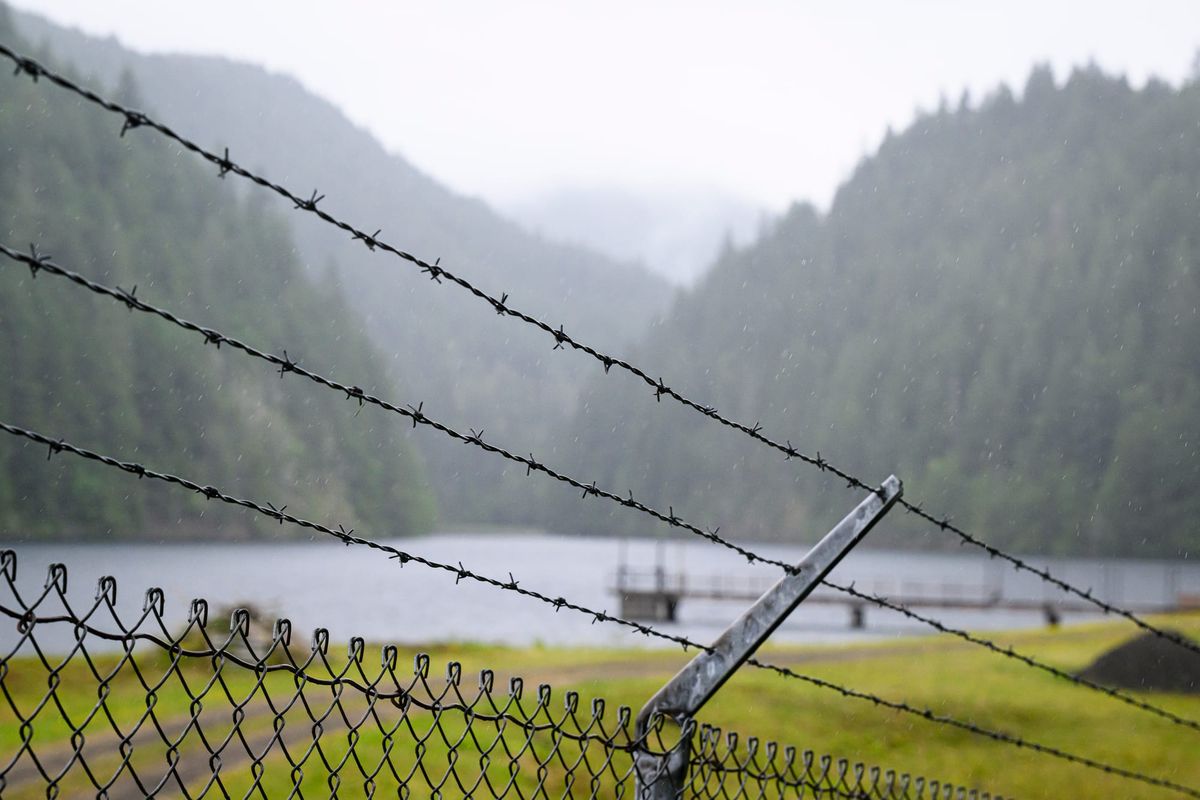
Nestled in the shadows of the lush Olympic Mountains lies the source of drinking water for Port Townsend residents and businesses. The location is pristine and clean, but at nearly 30 miles from Port Townsend, it brings a chain of dependencies so long and so specific that disrupting any single link could threaten the whole system.
This is especially concerning given that no other viable water source exists on the Quimper Peninsula in the volume that could sustain the drinking water needs of the city's population of almost 11,000.
Tension of managing drought conditions
The most recognizable of these dependencies is the mountain snowpack the city relies on for its year-round water supply appears to be irreversibly diminishing. As of May 1, 2026, the Olympic Peninsula's snowpack had fallen to just 27 percent of median—the worst reading of any water supply basin in Washington.
The City started drawing water out of the Lord’s Lake reservoir on July 22, twenty days ahead of the usual drawdown date.
“It’s really, really not a good situation,” said Steve King, the City’s Public Works Director.
The situation will likely force the City to require that the mill at least curtail some operations later this summer, but King said that the city should have enough water for its needs, even though it had to send a voluntary conservation notice to residents.
Under the Water Supply Agreement signed between the City and Port Townsend Paper Corporation in 2021, the City has the right to require the mill to shut down or curtail water use when reservoir levels reach defined trigger points. The City came close to pulling that trigger in each of the last two summers.
This is not a one-year anomaly. The University of Washington's Climate Impacts Group projects that Washington State's average spring snowpack will decline 38 to 46 percent by mid-century compared to historical averages—and for the Olympic Peninsula, whose mountains sit at lower elevations and are warmed by Pacific Ocean temperatures, the trajectory is steeper than the statewide average suggests.
The consistently reduced snowpack melt that feeds the streams that provide our water, poses difficult decisions for the City, some of which will inevitably pit the needs of city businesses and residents against the interests of the Port Townsend Paper Mill.
The Big Quilcene watershed, which supplies the city’s water, faces some of the steepest projected declines of any watershed in Washington. Though they don't impact our water system directly, glaciers on the Olympic Peninsula—which currently extend river flows into late summer as they melt—are projected to largely disappear by 2070, permanently eliminating that buffer for other watershed on the peninsula. What the city is experiencing this summer is the leading edge of a structural, decades-long trend; not a deviation from a stable norm it can expect to return to.
Every day that the mill endures a water shortage-induced shut down represents significant lost production revenue—a cost that could create real tension between the City's legal authority to shut down the mill, and the economic consequences of doing so, against the city's second largest employer and primary source of water revenue. The agreement does not resolve the political difficulty of using it. The mill did not respond to questions about how its business or its employees would be affected in the event of a prolonged shut down.
In a severe drought, the city's combined reservoir storage of approximately 644 million gallons, 500 million in Lords Lake and 144 million in City Lake, would sustain municipal demand after a mill shutdown for more than 100 days, according to Public Works Director Steve King, but only if both reservoirs are full when the crisis begins.
The Lords Lake East Dam, which holds back the primary drought reservoir, is rated "Poor" by Washington State's Department of Ecology Dam Safety Office and is awaiting a state-ordered engineering study. A proposal to double Lords Lake's storage capacity—the most direct adaptation measure available against worsening droughts—carried an estimated price tag of $9.3 million in 2021 dollars in the Capital White Paper.
A failure of that dam would eliminate the buffer that delays mill curtailment and protects City Lake, the reservoir that serves as the primary drought buffer between the city and a water emergency.
Funding needed pipeline repairs and replacement relies heavily on the mill
The 29-mile pipeline faces large costs for maintaining and replacing an aging infrastructure. Additionally, the pipeline relies heavily on the mill’s continued financial contribution to fund maintenance and infrastructure replacement.
Port Townsend residents and businesses are paying almost three times the water rate of those in Seattle. These water rates are high due mainly to decades of system maintenance deferral.
“We have a lot of work to do to improve operations and maintenance and catch up on deferred maintenance,” said Public Works Director Steve King.
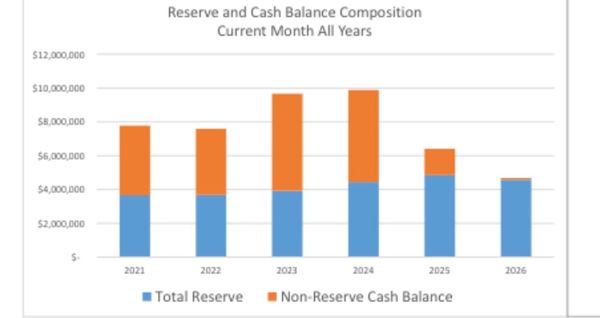
Under terms of the Olympic Gravity Water System (OGWS) Water Supply Agreement, the PTPC pays approximately $4.5 million per year into an OGWS maintenance and replacement fund. That fund currently has approximately $14 to $15 million, and is growing by $3.5 to $4 million a year after regular maintenance costs are deducted, according to King.
At that rate, 40 years of payments from PTPC produces roughly $140–160 million, almost exactly matching the $161 million in maintenance and repairs that an Assets white paper projects over that same time period. (White papers on important topics related to the OGWS were developed by the City and PTPC to provide a resource to inform negotiations and as background for the public and decision makers.) But the math only works if there are no major emergency repairs, no significant pipeline failures, and continuous mill revenue throughout all four decades.
“The Agreement has engaged the city into a more proactive and higher standard of care and maintenance than had previously been conducted,” King said. “We’re learning from their folks about how things should be maintained and what’s our operating procedure.”
The City is currently working on updating estimates of the annual cost to operate the OGWS for the next 30 years, which King says it plans to present to the City Council in an August 10 workshop. King said that both the City and the mill will need to raise their respective financial contributions to keep the system safe and operable. This is largely due to the City’s commitment to a higher standard of care, and for tending to a backlog of maintenance.
King notes several specific areas where a pipeline failure would not only disrupt water to Port Townsend. A blowout where the pipe runs beneath the Jefferson County Airport runway would also shut the airport, King said.
The pipeline traverses cliff faces above Highway 20, where a failure could send water and debris onto a state highway and destabilize the slope below. Other high-stakes vulnerabilities occur where it crosses Highway 101 and Highway 104 at multiple points.
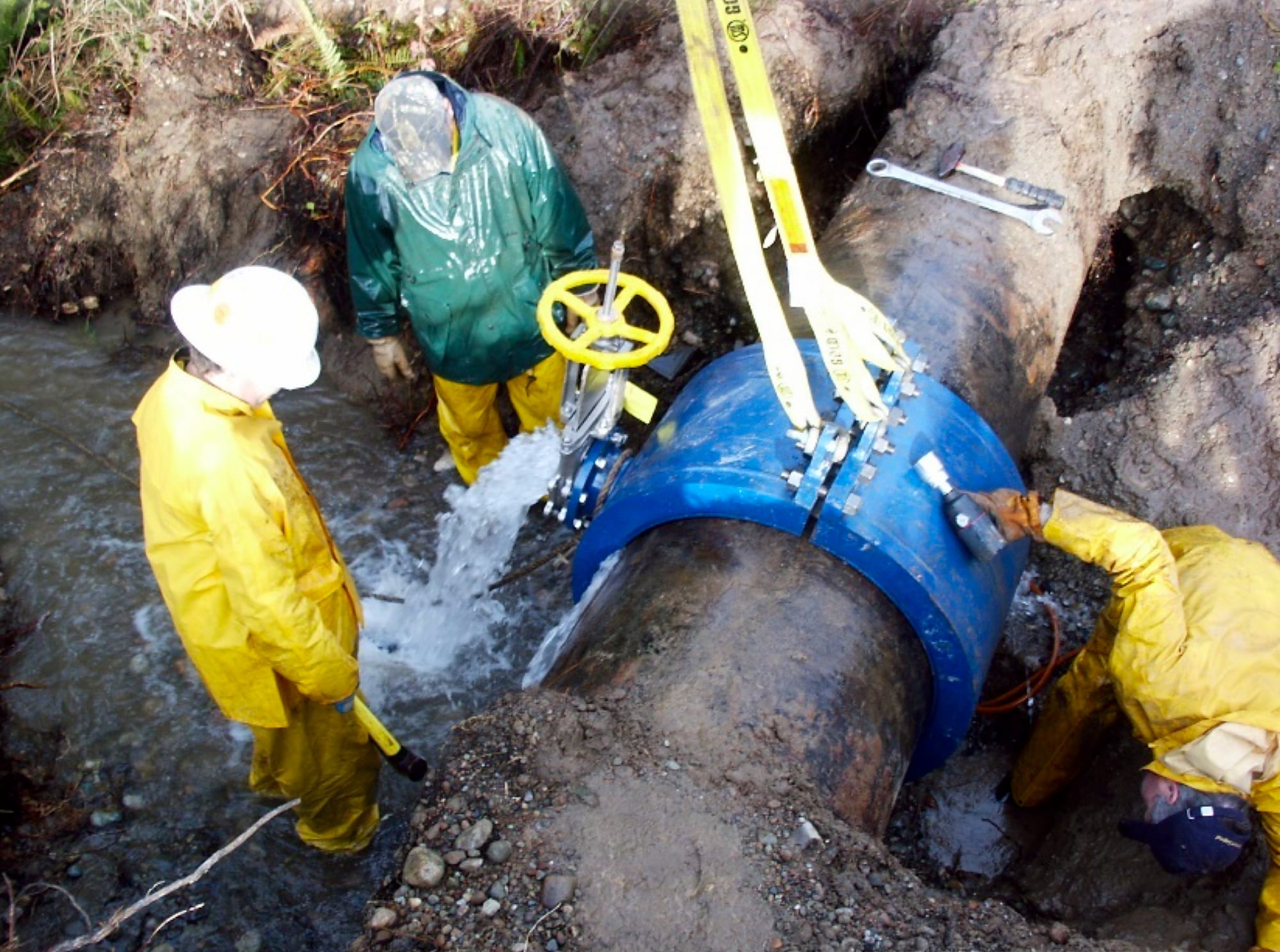
The pipeline is getting long in the tooth, as some sections were built in 1928, others in 1946. Jacobs Engineering inspected the pipeline in 2021 and in its technical memo stated, "The OGWS pipeline consists of nearly 8 miles of welded steel pipe that is approaching 100 years old. The fact that the pipeline is still operational is remarkable; however, the remaining useful life beyond the 100 years of service is questionable."
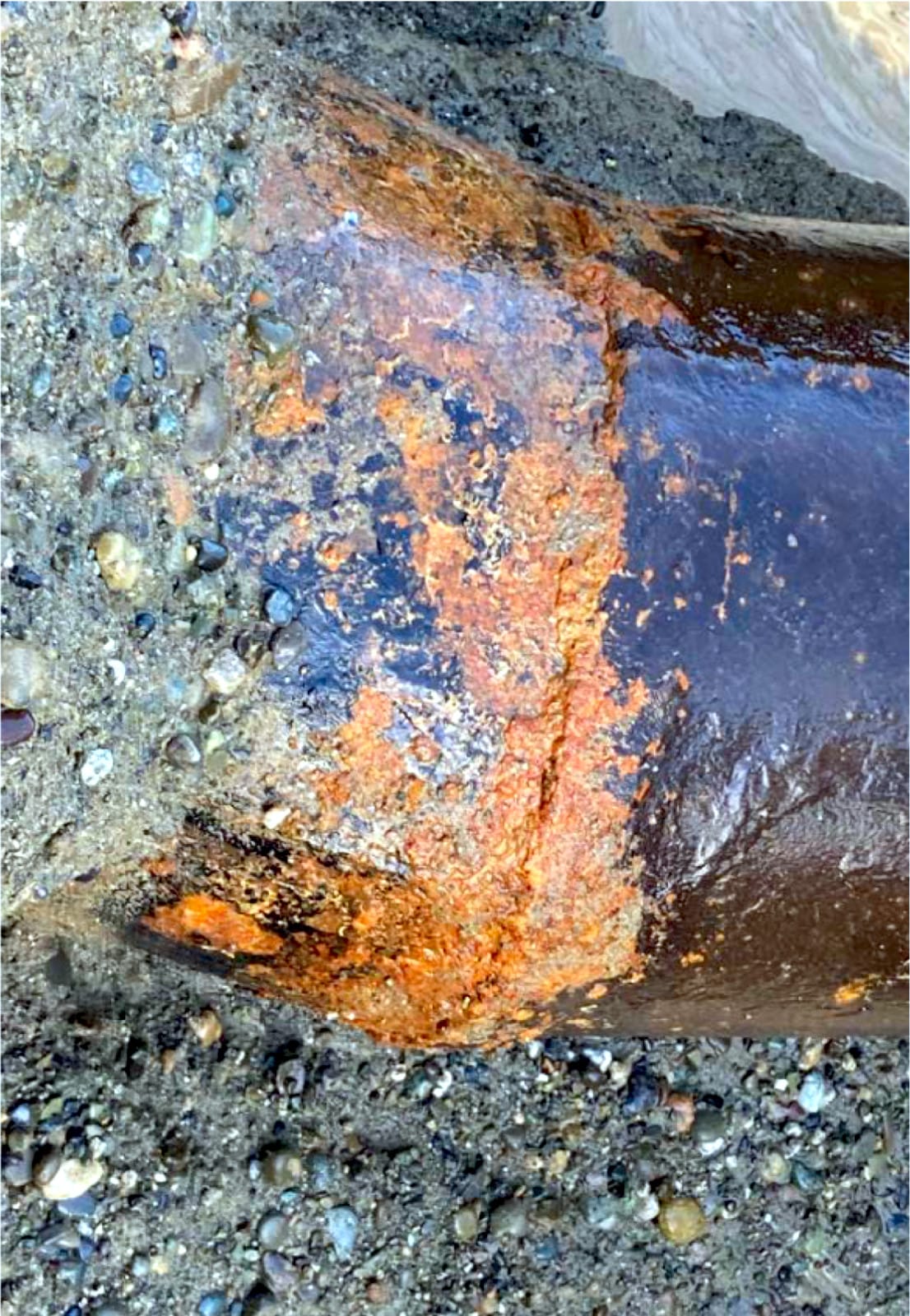
A 2021 OGWS capital white paper contains several warnings from Jacobs concerning thinning walls caused by corrosion that pose danger of failing.
PTPC CEO Rob Kreizenbeck pushed back. “A substantial amount of pipe wall remains and the overall corrosion rate is relatively low,” Kreizenbeck stated to the Beacon in an email. “The pipeline is expected to perform well for many years.”
King told the Beacon that a subsequent Jacobs condition assessment found the pipeline is in "quite good condition" with "almost negligible corrosion"—except at the airport section. The alarming wall thickness measurements in the white paper were produced by a mill tool that "was not reading accurately," King said
But pipeline breaks are increasing in frequency, from roughly one per year for 20 years, until the past several years, which is seeing two to three breaks per year, according to King. He said that the city is in the process of determining an appropriate schedule and procedures for ongoing monitoring of pipe condition with specialized steel pipeline consultants. Improving the corrosion protection system is a high priority, King said.
In an August 2024 rupture, a cracked coupling lost more than half a million gallons per day and drew down City Lake before repairs were complete.
Almost all the breaks are occurring in approximately 6,000 feet of 1946-era pipe near Anderson Lake Road with failing welds. That section is now the city's replacement priority, King said.
In the event of a catastrophic scenario, like a major earthquake where the pipeline cannot transport water, King said, "We have six million gallons total, so that'll last three or four days in the summer." That quantity would draw from in-town emergency storage—the golf course well, the water treatment plant storage, and the treated water reservoirs within the distribution system.
Forest Service decides the city’s access to the water
Three Special Use Permits issued by the U.S. Forest Service in 2009 authorize the City to operate its dams, diversions and pipeline on federal land in the Olympic National Forest. All three expire on December 31, 2029. Without them, the City has no legal right to divert water from the Big Quilcene River, no right to maintain the caretaker facility at the diversion, and no right to operate the transmission pipeline across Forest Service land—which accounts for a substantial portion of the 29-mile route.
King said that the City will soon begin the permit renewal process, which will require a full environmental and biological assessment. He is confident that the permits will be renewed, but the Trump administration’s recent decisions on public land use should raise concerns. The white papers developed for the Water Supply Agreement do not discuss any scenario in which the permits are not renewed.
Additionally, the Forest Service is legally required, under the Endangered Species Act, to evaluate whether Hood Canal chum salmon and steelhead are affected by the water diversion at current permitted rates, though legislation is pending in Congress that may weaken these protections. Still, the agency may potentially have no legal option but to impose more restrictive conditions—regardless of political will in either direction.
Water Supply Agreement improves financial and operational planning—but could it be better?
The OGWS had, for decades, supplied millions of gallons of water every day to the mill without any set rate per quantity consumed. For the first 93 years, the city essentially leased that pipeline to the mill.
“The mill was more or less hands-off on day-to-day operations," said King, referring to the water system. The result: a system not maintained to public utility standards, with "private industry looking at a lifespan that is short while cities must think in generations,” King said.
Then, in 2021, the City and the PTPC signed off on the 20-year non-binding water supply agreement, which established a more financially sustainable water system and partnership for the City. The mill’s continued contributions to the OGWS fund mentioned above, is necessary to pay for maintaining the system.
The 2021 agreement established a raw, unfiltered water rate for the first time, beginning at $1.05 in the agreement's first year, rising annually to the current $1.24. The two parties review the rate model every five years.
The mill’s water consumption has dropped by roughly 10% during this time, suggesting that paying for water is incentivizing conservation. The mill uses about 10 million gallons of water each day, and the city averages around one million gallons per day during most of the year, rising towards two million gallons daily during summer.
The rate review discussions will take place this year and are worth watching. King said that the mill “does not like spending this kind of money,” noting its former position of receiving unlimited free water.
Port Townsend city residents’ water bills would be even higher if PTPC were not now paying for its water under the 2021 water supply agreement. But neither the agreement nor anything else around the city’s water supply is static.
The City may adjust the per-thousand-gallon charge and the capital cost allocation within the framework that the existing agreement already establishes. Its contractual authority ends there, but it has the power to adjust the charges. This gives the City leverage with regard to adding financial assurances such as a bond for site cleanup in the event of a major disaster, such as the implosion that occurred at a Longview paper mill in May, or the inevitable cleanup of a site on which many hazardous chemicals have been dumped, spilled and leaked over the past 99 years of operation. Stronger language could be added that would give the city greater protection when the mill comes under new ownership.
In March, Atlas sold a minority ownership stake to Blackstone, the world’s largest asset manager. This could cut either way for the City—deeper pockets, but potentially a more sophisticated counterparty in any renegotiation of the 2021 Water Supply Agreement.
Another vulnerable point in the agreement is that the City must notify the mill before releasing any of the mill's documents under a public records request, and cannot release them during any legal challenge the mill pursues.
The continuation of clean, safe, reasonably affordable water to the city over the coming decades presents increasing challenges due to the costs of maintaining an aging infrastructure, a changing climate, and reliance on an out-of-state partner who could exit at any time, and whose primary interests of profit and value extraction may be contrary to those of the region. Next week, we’ll report on the environmental impacts of the mill in the second part of this series.
Correction: an earlier version of this article incorrectly stated that the mill is the largest employer in Jefferson County. It also implied that our watershed contains glaciers.