Why Local Food Access Programs Matter
A look at how the Jefferson County Farmers Markets are supporting neighbors with low incomes, keeping food dollars in our community, strengthening small farm businesses, and fostering a more resilient local economy.

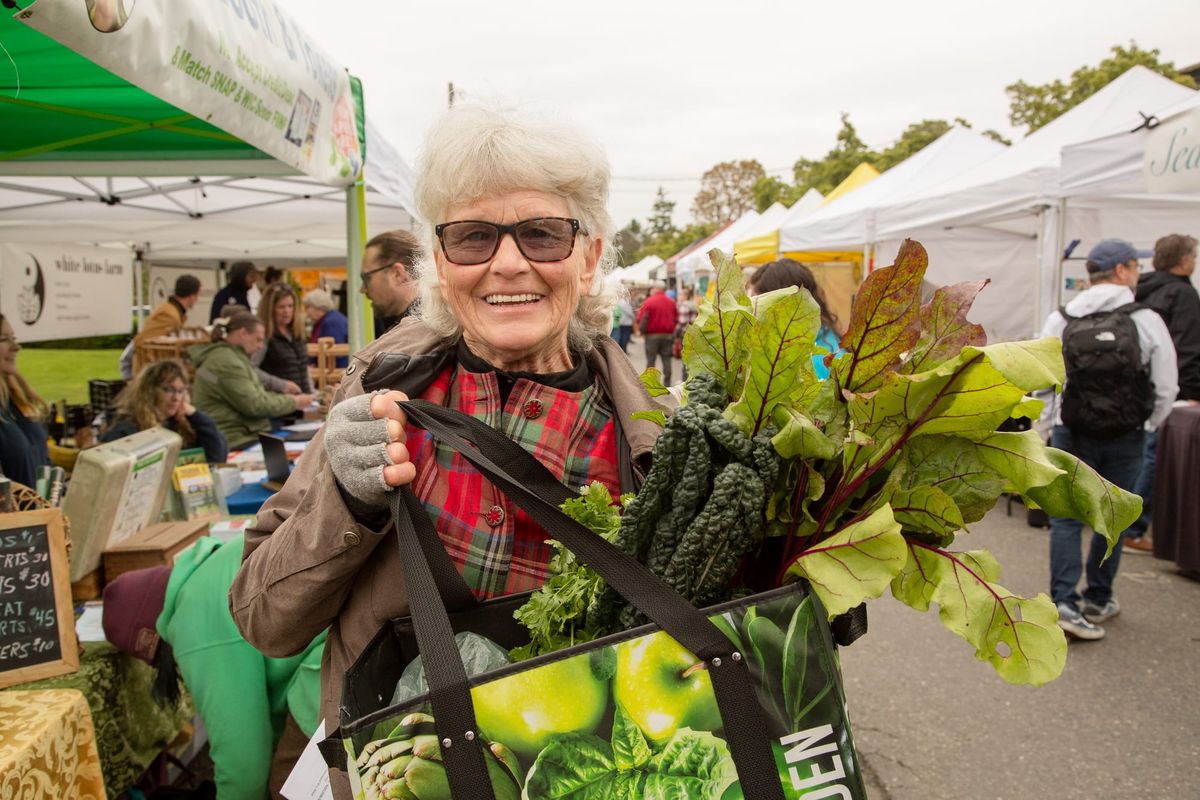
By Nicole Persun, special to the Beacon for the Jefferson County Farmers Market
Last year, when SNAP benefits were disrupted during the government shutdown and thousands of people in Jefferson County temporarily lost their food benefits, the Jefferson County Farmers Markets (JCFM) were able to bridge the gap. The nonprofit used funds from previous food access program fundraisers to offer a “community $30” to market shoppers whose SNAP benefits were disrupted—no questions asked.
Federal food access programs continue to be in flux. “JCFM’s food access programs are a critical part of our local food system’s safety net,” Amanda Milholland said, JCFM’s Executive Director. “We take a holistic, community-based approach to increasing access to nutrient-dense local food. JCFM’s farm-direct programs keep food dollars in the community, strengthen small farm businesses and foster a more resilient local economy.”
A tangible impact
For market shoppers like Ann*, JCFM food access programs are a lifeline. Ann is 82 and has been a resident of Jefferson County for 45 years. Throughout her career, she has cared for others as a critical care and home health nurse and single mother of two children. Today, she lives on a fixed monthly income, and spends all $60 in SNAP benefits she receives monthly at the farmers market, where she can double her budget for fresh food.
“For me, being food insecure is not about poor money management,” she said. “After bills, there’s just not much left over to buy food. I focus my money on nutritious food and basic needs. I budget as carefully as I can, and with our farmers markets, I am able to eat well and care for my health.”
For many local families, these programs are the difference between surviving and thriving. "We are raising the future. Good food is key to healthy child development," said Shannon*, a former nutrition educator and massage therapist. Though she deeply values fresh, locally grown food, Shannon and her family of three haven't always had access to healthy food. "I believe so wholeheartedly in local food and food access,” Shannon continues. “Eating a healthy diet is critical for a child's brain and body development. Before we learned about the SNAP and WIC programs, as well as the farmers market match, we struggled to buy fresh fruits and vegetables, and, I must admit, we often didn't eat as many as we should have. We were just focused on having enough food. Once we signed up for WIC and SNAP and learned about the farmers market match programs, everything changed.”
Shopping at the market is more than about the food—it’s about community, too. “We shop at the farmers market every week, bringing home berries, fresh greens, and so much more,” Shannon continues. “We've discovered foods that I had never even heard of before, some of which have now become our favorites. For example, yacon, grown by Chimalow Produce, is my daughter's favorite. We look forward to the yacon season every year."
Ann agrees: “I have seen many of our local farmers grow up. I have been to some of their christenings, held their babies, and watched those same babies come back as young adults selling fresh produce for their family farm. That’s the beauty of the market for me. I love the way it connects all of us.”
“Local food is a top value for me and my family,” adds Sue*, a small business owner and mother of two who first came to Jefferson County with her husband for farming. As a farmer, Sue developed a deep appreciation for the hard work that goes into food production. “I love that with the market SNAP Match program, I have more dollars I can spend with local farmers. I know that it is hard to make a living as a farmer. I appreciate being able to spend my dollars in our community and, specifically, with the people who grow our food.”
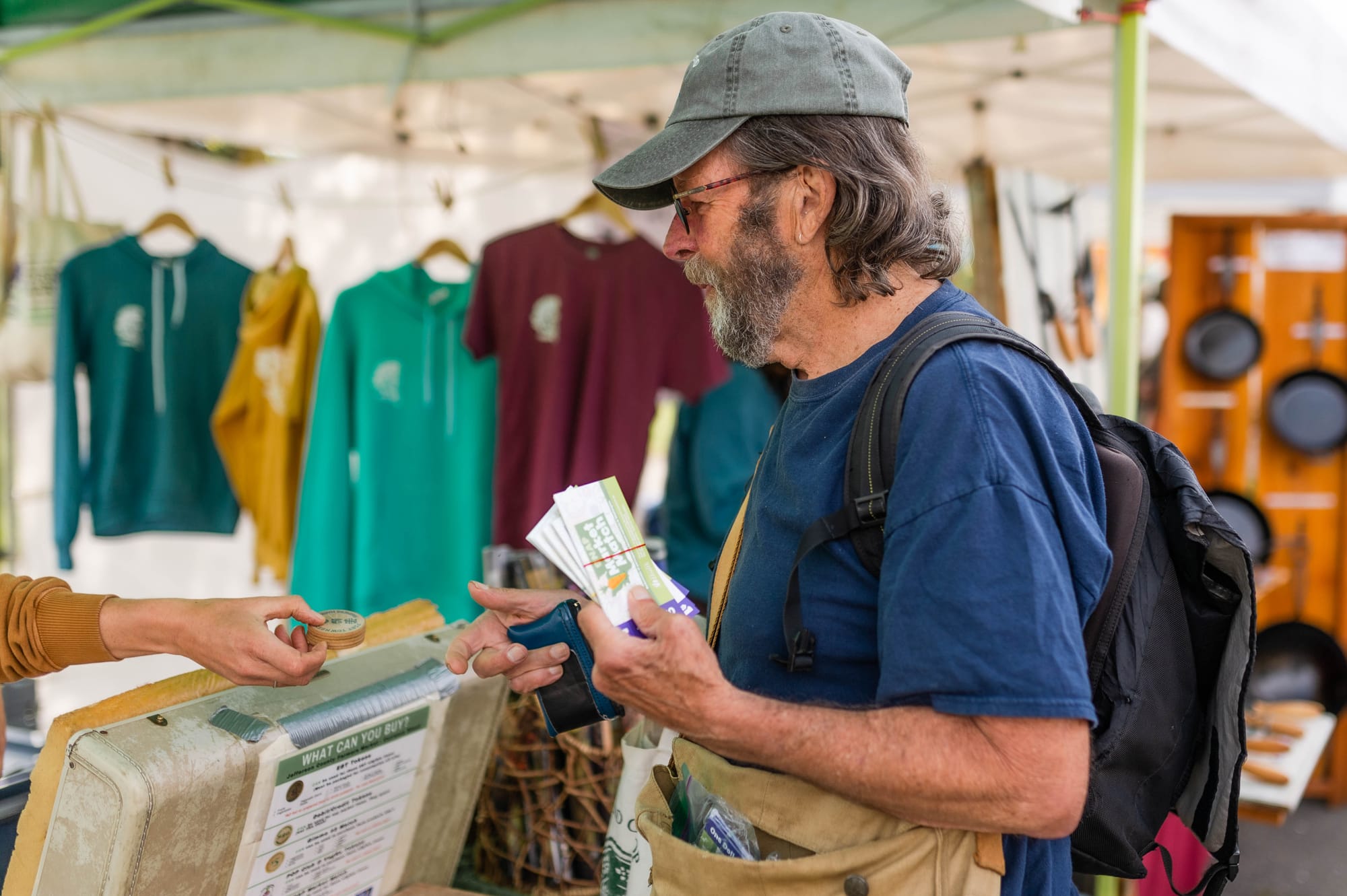
Food access programs have tremendous benefits for local farms and the local economy. In 2025, fresh-produce farmers at the Jefferson County Farmers Markets generated about 11% of their farm sales from market food access currency. Local produce farms depend on these sales at the same time that market goers depend on the nutrient-dense food they purchase from market farms with their food access bucks.
Together last year, JCFM’s food access programs—along with state and federal market match benefits—helped approximately 2,000 children, families, seniors, people with disabilities, and other adults bring home about $160k in fresh food while generating sales for local farms and small food businesses.
Funding cuts and shifting access
SNAP is undergoing major changes in 2026, following the 2025 federal reconciliation law. Work requirements have increased, while exemptions for certain veterans, people experiencing homelessness and former foster youth have been removed. Meanwhile, states will face substantially higher administrative costs because the federal government’s share of SNAP administrative expenses will fall from approximately 50% to 25%.
As households navigate stricter eligibility requirements and states take on more of the cost of administering SNAP, these changes place additional pressure on state agencies, food banks, farmers markets and other community food-access programs.
Next year, JCFM anticipates another reduction in state and federal funding for the SNAP Market Match program—however, the extent of the cuts is still unknown. “Community support helps us weather the uncertainty while ensuring that our community members continue to have access to fresh local food,” says Milholland.
Better together
Working alongside other local food organizations, JCFM is constantly finding new ways to expand its local food access for our neighbors with low incomes and stretch the power of community donations.
For example, JCFM works with the Jefferson County Food Bank Association and Forks Food Bank to offer senior farmers market nutrition benefits to communities across Jefferson County. JCFM also collaborates with the Jefferson County Food Banks to offer a produce buyback program, whereby community food banks purchase fresh produce from market farmers at the end of the market day, both ensuring that the community has access to more fresh produce and that local farmers generate more consistent income from the foods they grow.
In May of 2026, JCFM learned that the Women, Infants and Children Farmers Market Nutrition Program (FMNP) benefits were being cut statewide by over 60%, leaving only a handful of local families with WIC-FMNP benefits. The organization quickly rallied local support to start a Family VegRx program in partnership with Jefferson County Public Health to support families who were losing food benefits as a result of the cuts. When things shifted yet again and WIC-FMNP funds came through for our community, JCFM pivoted, utilizing the funds raised to match WIC-FMNP benefits and provide Family VegRx to families with children under 1 years old who don’t qualify for WIC-FMNP due to the age of their child.
At a time when funding for basic food programs is not dependable and requirements to access these funds are more prohibitive, community support is critical. If you want to get involved, tickets are still available for JCFM’s annual Farm-to-Table Benefit Dinner on Sunday, August 9th from 3:30–7:30 at the beautiful Chimalow Produce. The intimate community gathering and dinner on the farm generates critical funds for JCFM food assistance programs. Additionally, one-time and recurring donations can be made to the Jefferson County Farmers Markets food access programs here.
Every dollar donated to JCFM’s food access programs stays in our community and helps a neighbor in need. “With the dollars we receive in matching at the farmers market we are able to get fresh, glorious food,” says Sue of the SNAP Market Match program. “I am grateful for our farmers markets, volunteers, donors, and grant funders who make this program possible.”
*Pseudonyms used for privacy reasons