What is Port Townsend Without the Paper Mill?
PT’s history is deeply intertwined with the history of the mill. Can the town survive without it, and if so, what kind of environmental legacy will it leave behind?

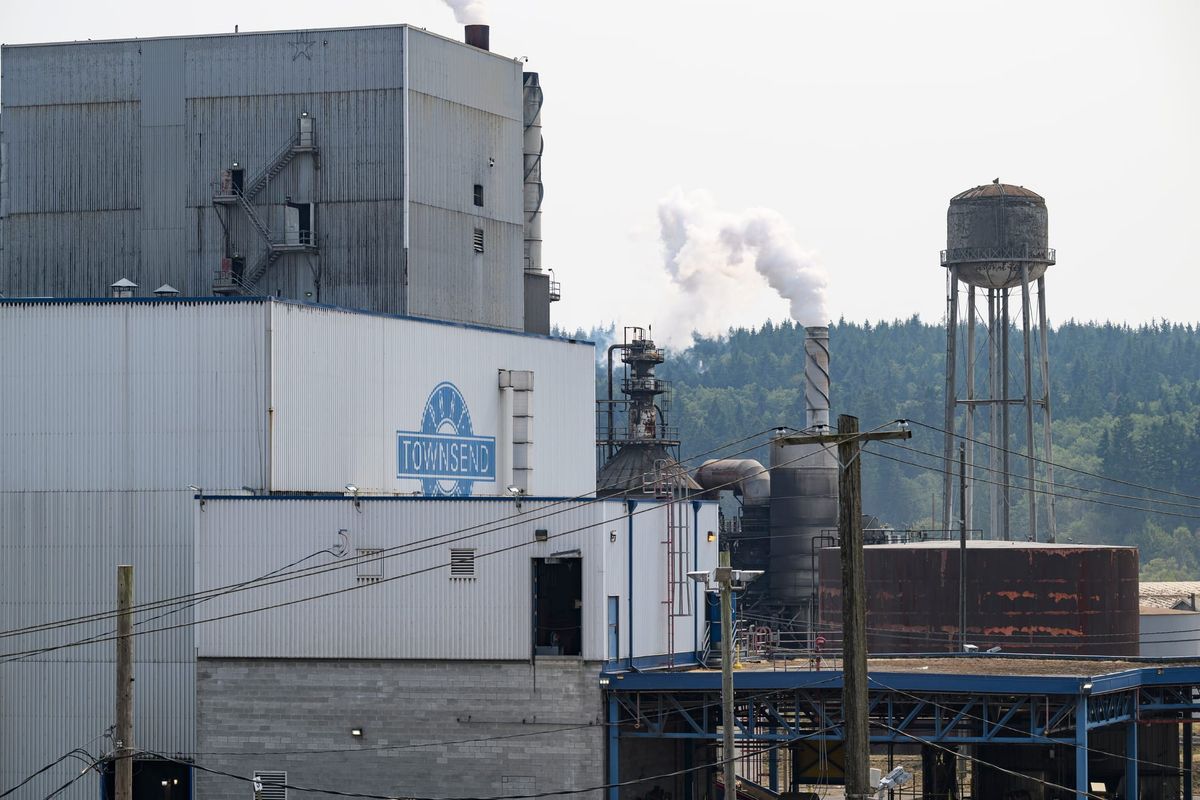
This is the final piece in a three-part series examining the ways the Port Townsend Paper Mill (PTPC) is intertwined with Port Townsend's economy, ecology and dependencies.
For centuries, the tribes of the Quimper Peninsula fished and gathered shellfish along Glen Cove, at the southern edge of Port Townsend Bay. As White settlers moved onto the Quimper Peninsula in the 1800s and early 1900s, the cove was the shoreline of choice over the more windy North Beach for families to recreate and take a dip in the cold waters of Port Townsend Bay.
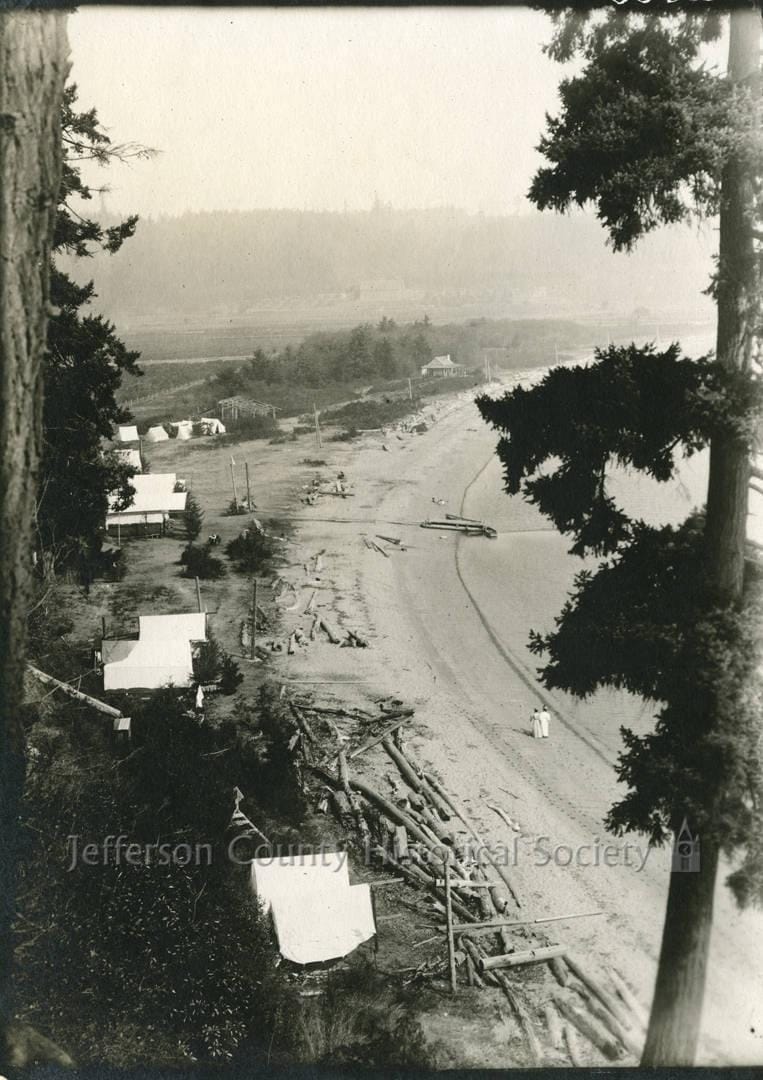
When the Port Townsend Paper Company (PTPC) came to town and built a paper mill on the Glen Cove shoreline in 1927, everything changed.
The mill’s birth was an immediate boon to Port Townsend and the surrounding area, helping build Port Townsend‘s water system, and supplying plentiful jobs and economic growth to a small town at the end of the road.
The mill continues to contribute benefits to the area
A 2025 study commissioned by PTPC conducted by Econsult Solutions, found that the mill generates $319 million in total economic output within Jefferson County, supporting 310 employees, 96 of whom reside in Port Townsend, with an average salary of $92,600—well above the county's average household income of $58,598. A caveat here is that the PTPC salary average may be skewed dramatically upward by the salaries for management and executives who don’t live in the city.
PTPC provides roughly 40% of all manufacturing jobs in the region, according to the study.
Those family-wage jobs are very valuable to a local economy that struggles to provide workers with wages that are high enough to afford the local cost of living.
Through a 2021 Water Supply Agreement with the City of Port Townsend, PTPC pays for raw water use, providing almost 90% of the funding necessary to execute repairs and maintenance of the city’s water system repair and maintenance plan over the next 30 years.
A quieter benefit the mill provides the county is that most of the Old Corrugated Cardboard (OCC) recycled in Jefferson County goes to the mill for recycling. If the mill closed, the county would need an alternate destination for that material stream, likely in California, according to Justin Miskell, Jefferson County’s Solid Waste Operations manager. One third of the OCC generated in Washington goes to the mill, according to the PTPC website.
”The amount of cardboard we see is unreal,” Miskell said. “We are really glad that the mill has eased the burden on us by accepting cardboard.”
The mill’s other primary input are wood chips, the majority of which come from northwest sawmills. The sources for wood chips are typically waste wood or fast growing soft woods, providing a less ecologically harmful service than felling large trees.
Even as PTPC continues to receive violation notices from Ecology under Atlas’ ownership, the company’s leadership claims it has had a “transformation” since it was bought by Atlas in 2022. Chief Human Relations Officer Ben Frasier told the Beacon that new leadership has invested more than $80 million since 2022, lifting containerboard output from 625 to 715 tons a day, and that the mill employs 213 members of United Steelworkers Local 175.
PTPC has long been a presence at community events over the years, such as being a sponsor at the Jefferson County Fair, and attending various celebrations such as the Port Townsend Independence Day Celebration and the All-County Picnic.
Examining the company's economic case
PTPC presents compelling numbers in both the Econsult study and its website explaining the company’s economic value to the local community. But upon close examination, some of the stated tax dollar benefits don’t add up—and in one instance, the company's own commissioned study contradicts itself.
The Econsult study's "Economic Loss Scenario" section warns that losing the mill would eliminate "PTPC's property tax contributions—which represent a substantial portion of the local tax base in Jefferson County." But five pages earlier, the same study states the mill's county property tax payment for 2024 at $400,000. Jefferson County Assessor Jeff Chapman puts the actual figure at about $340,000, split across roughly $20 million in assessed real property and $20 million in equipment. Against a county tax base that exceeded $10 billion for the first time in 2025, that is about .4%, which is not a substantial portion of anything. The study's alarm is refuted by its own table.
”If the mill were to close, it would raise the levy rate on business and homeowners, but not much,” said Jefferson County assessor Jeff Chapman. “Because we can add five commercial properties and get up to the same price range.”
“On the other hand, the mill contributes by providing a lot of jobs and those people who have jobs have houses. So, you know, the fact that they are living in, and can afford to pay for their homes.”
The company's website also claims that the mill "contributes nearly $4 million annually in local and state taxes, which are used to support the fire district, schools, hospital, and the County, and would force difficult decisions regarding public service funding."
The study's own breakdown tells a different story. Of that roughly $3.8 million, about $3 million is Washington State sales and business tax that flows to Olympia—not to any local fire district, school or hospital. Only property taxes fund those bodies. The study says that of the remaining $800,000, about half goes to property tax and half to sales tax. Chapman said that the mill is actually paying less, about $340,000 in property taxes. The state school levy takes the largest single share, roughly 29 percent countywide, while the remainder is divided among local schools, fire districts, the county, and the hospital, library and port districts.
Of $33.7 million in its annual wood-chip purchases, only about $110,000 is spent with Jefferson County vendors—the mill's fiber spending flows almost entirely outside the county, mostly due to the lack of a local woodchipper that can process wood to the level the mill requires.
Costs
The costs that the mill exerts on the environment, property values, worker health and safety and road wear are significant and hard to price.
The EPA does provide some cost data for carbon, the largest of these costs and the most misunderstood. The mill reported about 62,500 metric tons of carbon dioxide equivalent to the EPA for 2023—and the agency separately logged, but excluded from that total, another 491,477 metric tons of biogenic carbon dioxide from burning wood and wood residuals. The EPA treats wood carbon as neutral on the theory that regrowth reabsorbs it; the Environmental Integrity Project and states like Maine reject that assumption.
Which side you take moves the monetized climate damage from roughly $13 million a year to approximately $113 million, using EPA's own 2023 damage estimate of $204 per ton, which itself is a contested figure, given that the current administration has directed the agency to reconsider it.
Other costs have been covered elsewhere in this series—the throughline is that these costs have been largely unpriced and under-monitored.
If the mill closed
The Econsult study treats a mill closure as an economic catastrophe for the county. The reality is more complicated.
If the mill were to close, John Begley, former chief executive officer of PTPC from 1998 until 2008, told the Beacon in an interview that “the economic impact on the city and county and on individual people would be huge. I don’t think people realize how much effect it would have.”
Jobs
The immediate loss would be 310 direct jobs, and that 96 of those jobs belong to Port Townsend residents.
The study does not state how many of those job holders live in Jefferson County. It estimates roughly 120 more indirect and induced positions across the county. That loss would be a genuine shock in a small economy. But the model assumes that no worker is rehired in the county and the site is never reused.
Taxes
The mill warned that a loss of property tax paid by PTPC would "force difficult decisions regarding public service funding”.
But that characterization isn’t true, according to Chapman. “If the mill were to come off the tax rolls, it would definitely raise the residential levy rates, but it would not be a dramatic impact on the average homeowner,” Chapman said.
Because the mill sits just outside Port Townsend city limits, the City collects none of the utility, property and business taxes it would for a comparable in-city employer—even as the City manages the water system that the company depends on. The only tax the city receives directly from PTPC is an approximately $10,000 annual small business tax.
The hospital
Some locals voice concern that the loss of the mill’s insured employees could jeopardize Jefferson Healthcare‘s financial viability. But precise data is unavailable, and it’s difficult to draw any conclusions.
“We don’t track clinical or financial data by employer. So, while we can’t speak with specificity about a particular employer,” said Tina Herschelman, Jefferson Healthcare (JHC) PR and Community Engagement Manager.
But Herschelman cautions, “losing volume without losing fixed costs would increase financial pressure and risk to access. Emergency readiness, call coverage, compliance and staffing cannot scale down easily.”
Water
The mill pays about $4.5 million a year to the city for water—roughly 90 percent of all revenue flowing into the Olympic Gravity Water System (OGWS) fund. The City contributes about $500,000. That fund faces a capital and maintenance obligation the OGWS white papers put at $161 million over 40 years, with $64 million in the first 20.
Strip out the mill, and the fund keeps only its $500,000 while routine maintenance runs $750,000 to $800,000 a year. The fund's current balance of $14 to $15 million could absorb that gap for several years of maintenance alone, but the first major capital project would end that quickly: the $20 million pipeline phase scheduled for 2031 would consume the entire fund in one stroke.
Public Works Director Steve King put it plainly in an interview with the Beacon: "It would be significantly challenging to fund $40 million in infrastructure work with the limited customer base," and the program "would need to be greatly scaled back."
The alternatives won't completely fill the hole, though bringing the Jefferson County PUD's Quimper system on as a wholesale customer could substantially close that gap. King said that linking with the Quimper system which serves unincorporated Jefferson County would double the customer base, which would grow as the population in unincorporated Jefferson County grows in the coming decades.
“While not nearly as impactful as the Mill in terms of revenue, it would be a very big boost,” King said.
That leaves rate increases to fill in the gap. King said a mill departure would likely mean "a pretty substantial rate increase," with the twenty-year capital program "greatly scaled back to reflect the need for austerity."
“The important work we are doing at this time is to position ourselves for grants no matter what happens in the future,” King said.
The mill's presence even makes repairs costlier: the cheaper "slip-lining" method of pipe rehabilitation is off the table, because the combined mill-and-city demand cannot tolerate the shutdowns it would require. The mill's departure, however, would mean that substantially reduced demand for water would enable smaller, less expensive replacement pipes and methods to be installed and implemented.
He described one possibility studied in the white papers: decommissioning the Big Quilcene diversion and roughly ten miles of upstream pipeline, leaving the city dependent on the Little Quilcene alone—though he cautioned that the water-rights questions involved are unresolved. The Assets White Paper points out a consequence, however: that a loss of the steady, high volume water draw, water would sit far longer in Lords Lake and City Lake—raising the risk of stagnation, algae, and taste-and-odor problems that the City would then have to spend to treat. In other words, a smaller system would be cheaper to rebuild but potentially harder to keep clean.
The water supply agreement gives both parties the right to walk away from the agreement at any time.
If the mill terminates the agreement or permanently shuts down with less than one year's notice, a termination fee of up to $3 million applies. If the mill terminates with proper one year's notice, the termination fee is on a sliding scale—$500,000 to $1 million depending on timing and circumstances.
An additional $1 million termination fee applies to PTPC if at the time of termination the city has capital contracts in progress exceeding $3 million—meaning if the city has committed to a major construction project in reliance on continued mill revenue and the mill pulls out mid-project, the additional million applies.
The maximum combined termination liability the mill faces under any scenario is therefore approximately $2 to $3 million—which represents less than 2% of the $161 million capital obligation the city is executing on the assumption of continued mill revenue through 2041.
The agreement specifies that upon termination, the City retains all ownership of the OGWS infrastructure, all water rights, and all Special Use Permits. The mill has no claim to any of the infrastructure it has helped fund through water rate payments. The City also retains the OGWS Fund balance—whatever has accumulated in the capital reserve at the time of termination remains the city's asset.
PTPC was purchased by Atlas Holdings, a Connecticut based private equity firm, in 2022. Typically, such firms buy in order to sell.
The question for Port Townsend is therefore not whether Atlas eventually exits PTPC but when, to whom, and on what terms. A sale to a well-capitalized paper company might keep operations and the water payments intact. A sale to another private-equity buyer, or a weaker one, could mean a harder line at the agreement's five-year rate review, or an owner unable to sustain the $4.5 million a year the system leans on. The City, King said, has not modeled the cost of any of these departures.
How prepared are we when the mill closes or changes ownership?
The City and Jefferson County would face other high likelihood vulnerabilities whenever the mill closes or changes ownership—and by most measures, neither has prepared for them. King acknowledged the City has not modeled any departure scenarios in detail—the rate impact on households, the scaled back system, water-quality risks, the cleanup costs.
The City is starting its five-year review process this month, providing an opportunity to balance terms that now favor the mill: the roughly $2 to $3 million dollar cap on termination fees against a $161 million dollar capital obligation, the mill’s consent requirement over borrowing and the unresolved water rights questions a scaled-back system would raise.
The City and County could also undertake several high Return On Investment (ROI) actions. They could conduct an independent decommissioning estimate. That number can provide leverage in any negotiation.
The City should embed financial assurance in this rate review cycle—bond, escrow, or stepped contributions. An assurance requirement negotiated into this current rate review would carry to the next owner and bind it.
Though the County does not have any contracts with PTPC, it also has a valuable chip to play.
The mill needs a county-issued solid waste permit for its on-site industrial waste landfill. Washington law WAC 173-350 for municipal solid-waste landfills requires the owner/operator to provide financial assurance for closure and post-closure care, and forbids continuing disposal without it. The law states that an operator may not "commence or continue disposal operations . . . until a financial assurance instrument has been provided."
Jefferson County Public Health has jurisdictional authority to enforce this law.
The City and County could also explore coordinating with other agencies that likely have leverage: the Department of Ecology and the S’Klallam Tribe with its treaty-rights standing. The Port of Port Townsend could be another.
The cleanup
Port Director Eron Berg said that he is not seeking for the mill to close and go out of business, but he has thought about the hypothetical effects and responsibilities that would fall to the Port if the mill were to close.
“This is not an uncommon scenario where a long-term legacy business like a mill is no longer financially viable, and the cost to clean it up exceeds the value of whatever is left,” Berg said. “I imagine the potential of a cleanup will be long and arduous,” he said, citing that “legacy dioxins are present in the marina that we believe are likely from the mill, and they have a long-term cost to the Port.”
The last time that the marina was dredged was in 2009, according to Berg. Before the marina is dredged again, testing for and cleanup of the dioxins must be conducted.
The closure of the Rayonier pulp mill in 1997 provides a cautionary tale. Nearly three decades later the 75-acre site still sits dormant, its harbor-sediment cleanup—dioxins, furans, PCBs, heavy metals—proceeding slowly under the state's Model Toxics Control Act. Rayonier used bleached pulp, which is a bigger contributor to dioxin than the mill’s unbleached kraft.
A different mill? A complete makeover?
Could the site host a cleaner version of itself—a non-wood pulp operation running on wheat straw, grasses, or hemp, as firms like Genera in Tennessee and Cottrell's Mill26 in New York now do? The technology is real, and such plants use far less water and energy. But a comparable Washington venture, Columbia Pulp, used far less of both and still shut down, though the pandemic was a significant reason. A new facility would cost $500 million to $1 billion—more than the mill's entire annual economic output—with no regional feedstock supply and a private equity owner focused on returns. As a near-term alternative, it does not pencil out.
The site, though, is a natural for expansion of Port Townsend’s maritime industry. “One potential scenario would be as a deep water, maritime access, like graving facility and boat building operation,” Berg said. ”I would love to see the state develop a boatyard that’s owned by Department of Transportation that would build and maintain all of our ferries.”
Assessor Chapman sounded a note of caution about the value of the mill site for other uses. “If it were developed for condominiums, it would be worth a whole lot more than we have on it now,” he said. But he points out that cleanup cost alone will likely exceed the current value of the land which he estimates at $3 million to $4 million.
So in an ironic twist, the highest current value of the property, so scarred by decades of industrial use, is that the mill continues operating, Chapman said. “It’s not unreasonable to say that the property has value ‘as is’ if the mill is operating, but if it were to leave, the value would drop to zero or be a liability.”
A liability that may persist for decades for a community that supported the mill for more than a century.
corrections: an earlier version of this article had a math error