WTF Just Happened This Week
Republished from WTF Just Happened Today, a daily newsletter breaking down national news.

Curated by Matt Kiser, WTF Just Happened Today
September 17, 2026. Today in One Sentence. The Supreme Court blocked Trump’s plan to limit mail-in voting in the midterms; ¶ Trump attacked the Supreme Court over its “bad decision”; ¶ FBI Director Kash Patel declined to rule out sending agents to polling places during the November midterm elections; ¶ the Congressional Budget Office estimates that Trump’s war with Iran has cost the U.S. about $38 billion, and that it will continue to cost roughly $2 billion to $3 billion a month for as long as the fighting continues; ¶ the Senate blocked a cryptocurrency regulation bill that would have established a federal regulatory framework for digital assets; ¶ the Kennedy Center’s board voted to immediately close the performing arts venue for renovations after a federal judge again blocked an effort to put Trump’s name on the building; ¶ the U.S. confirmed that it has “on-orbit space control weapons” capable of defending American forces; ¶ 42% of voters said they trusted Republicans more to handle artificial intelligence; ¶ 51% of likely voters said they would vote for a Democratic candidate for Congress in their district in the midterms; ¶ 53% of voters consider Trump “corrupt” and 51% say he’s “dangerous”; ¶ and 54% of Democratic voters said they’re voting in the midterms mainly to stop Trump and Republicans.
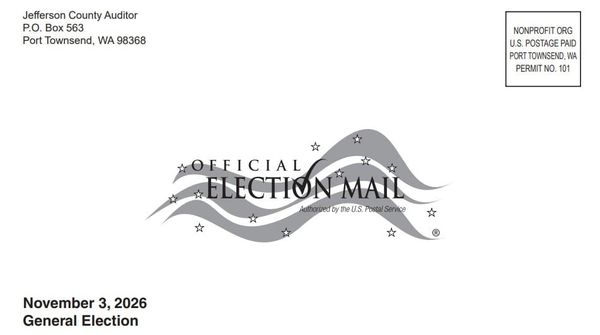
1/ The Supreme Court blocked Trump’s plan to limit mail-in voting in the midterms, saying the administration was “unlikely to succeed on the merits” of its challenge. Justice Brett Kavanaugh wrote that while there was “at least a fair prospect” the Postal Service had statutory authority to issue the rules, applying them this year “would be arbitrary and capricious” because election officials didn’t have “sufficient time to reasonably implement” them. The changes would have required states to submit lists of voters eligible to receive mail ballots and redesign ballot envelopes with unique barcodes, allowing the Postal Service to return noncompliant ballot mail to election officials even though its required online portal wasn’t operational yet. (CNN / Wall Street Journal / New York Times / Washington Post / Associated Press / NPR / Bloomberg / NBC News / Axios / CBS News)
2/ Trump attacked the Supreme Court over its “bad decision” to block his restrictions on mail-in voting, calling the ruling “a big loss for Republicans, and America itself.” He claimed without evidence that it would make cheating on mail ballots easier. “The Supreme Court has really let our Country down!” Trump said, adding that “These are not the people I interviewed to serve on the United States Supreme Court.” After singling out his three appointees – Neil Gorsuch, Brett Kavanaugh, and Amy Coney Barrett – Trump praised Justices Samuel Alito and Clarence Thomas for dissenting, calling them “legends both.” (Associated Press / Axios / CNN / New York Times / Washington Post / ABC News / USA Today / CNBC / Wall Street Journal)
3/ FBI Director Kash Patel declined to rule out sending agents to polling places during the November midterm elections. “I don’t know that we can’t legally do it,” Patel told the Senate Judiciary Committee. Added, however, that the FBI would “follow the law” and that “if there’s a reason to go there, because there’s been a violation of law, we will, otherwise we won’t.” Patel said the bureau would “house our agents and intel analysts in our field offices” and keep election-crime coordinators at all 56 field offices because “election integrity is of paramount importance” and “this FBI is not going to shy away from that effort.” Federal law, however, bars armed federal officers or military personnel from polling places except in limited circumstances. When Sen. Peter Welch asked Patel to pledge that he wouldn’t interfere with voters, Patel replied: “I pledge unequivocally that I will not participate in your charade of lies.” (New York Times / Bloomberg / Democracy Docket / NBC News)
- Kash Patel defended changes to the bureau’s hiring rules that eliminated automatic disqualification for applicants with histories involving prostitution or bestiality, saying the policy was intended to allow trafficking and abuse victims to be considered for jobs. “We did not want to punish victims of bestiality, victims who were trafficked,” Patel said. (Reuters / Associated Press / Washington Post / Axios / The Guardian)
4/ The Congressional Budget Office estimates that Trump’s war with Iran has cost the U.S. about $38 billion, and that it will continue to cost roughly $2 billion to $3 billion a month for as long as the fighting continues. The nonpartisan budget office also expects the war to add about .05 percentage points to inflation in the first quarter of 2027 due to disruptions to oil and natural gas shipments through the Strait of Hormuz and the Red Sea. The CBO report blamed the war for more than 40% of inflation during the second quarter of 2026. The Pentagon, however, didn’t provide information requested by the CBO, which acknowledged that the missing data limited its analysis and excluded the cost of repairing damaged U.S. bases. (Politico / Bloomberg / New York Times / NBC News / Wall Street Journal / CNN / ABC News / CBS News)
5/ The Senate blocked a cryptocurrency regulation bill that would have established a federal regulatory framework for digital assets. The Clarity Act, which would have divided oversight of digital assets between the SEC and CFTC, failed to clear the 60-vote threshold after every Democrat and several Republicans opposed advancing it. Democrats argued that the revised ethics provisions still didn’t do enough to prevent Trump and other federal officials from profiting from crypto holdings while overseeing policies that could affect their value. Last year, Trump reported more than $1.4 billion in income from crypto ventures. And in 2024, the crypto industry spent more than $130 million in congressional races to elect pro-crypto legislators. (Associated Press / Politico / New York Times / Axios / Wall Street Journal / Bloomberg)
6/ The Kennedy Center’s board voted to immediately close the performing arts venue for renovations after a federal judge again blocked an effort to put Trump’s name on the building. U.S. District Judge Christopher Cooper ruled that the board “cannot install memorials for President Trump or anyone or anything else at the Kennedy Center without Congress’s blessing.” Trump, meanwhile, threatened that “the Reconstruction and the Renovation of The Kennedy Center will not take place” unless his name is on it. He also claimed the center was in a “virtual state of collapse,” called Cooper “very hostile and conflicted,” and said he raised $17 million that’s been deposited into the center’s account “to keep it afloat.” (CNN / Washington Post / Politico / Bloomberg / NBC News / New York Times / CNBC)
7/ The U.S. confirmed that it has “on-orbit space control weapons” capable of defending American forces. The Space Force said the weapons can be used for “offensive and defensive purposes.” China, meanwhile, accused the U.S. of “preparing for war in outer space” and warned against an arms race, while Russia called for space to remain “free of any weapon.” (The Guardian / NBC News / CNN / ABC News / Washington Post / Associated Press / CBS News / CNBC)
poll/ 42% of voters said they trusted Republicans more to handle artificial intelligence, while 40% said they trusted Democrats more. 61% of likely voters said they oppose construction of data centers for AI, including nearly 80% of voters under 30. (New York Times)
poll/ 51% of likely voters said they would vote for a Democratic candidate for Congress in their district in the midterms, while 43% said they would vote Republican. 57% of independents said they planned to vote Democratic. (New York Times)
poll/ 53% of voters consider Trump “corrupt” and 51% say he’s “dangerous,” while 18% called him “steady.” (Axios)
poll/ 54% of Democratic voters said they’re voting in the midterms mainly to stop Trump and Republicans, while 46% said they’re voting to help Democrats enact their agenda. (CBS News)
The 2026 midterms are in 49 days; the 2028 presidential election is in 784 days.Today in One Sentence.A federal judge ordered the Kennedy Center to give at least 30 days’ notice before making any major changes to the building after photographs showed Trump reviewing a printout that appeared to read “Kennedy Center DEMOLISHED”; ¶ U.N. investigators found “reasonable grounds” to believe the U.S. committed war crimes in Iran; ¶ the House passed a sanctions bill targeting Russia’s energy sector; ¶ the top Democrat on the House Foreign Affairs Committee put a hold on Trump’s proposed $2.8 billion arms sale to Israel; ¶ Canada and the European Union are discussing making Canada the EU’s first-ever “associate member”; ¶ the White House withdrew Lance Schroyer’s stalled nomination to lead ICE; ¶ and a Democratic senator blocked bipartisan legislation to shield consumers from data center-related electricity cost increases.
1/ A federal judge ordered the Kennedy Center to give at least 30 days’ notice before making any major changes to the building after photographs showed Trump reviewing a printout that appeared to read “Kennedy Center DEMOLISHED.” U.S. District Judge Christopher Cooper also ordered the Trump administration to file a detailed status report on the center’s current closure and emergency repairs. The orders follow Trump’s warning that “the Trump administration should certainly have recognition, because frankly, if we don’t do that, it’s going to close. It’ll end up being ripped down.” Kennedy Center officials, however, said the building is temporarily closed because of “acute risks to public safety” from structural deterioration and insisted that “nothing is being demolished.” (CNBC / Axios / New York Times / Politico / ABC News / CNN / CBS News / Washington Post / Associated Press)
2/ U.N. investigators found “reasonable grounds” to believe the U.S. committed war crimes in Iran. The fact-finding mission found that the Feb. 28 strike on an elementary school that killed more than 100 children was “the intended point of impact.” U.S. forces also failed to do everything feasible to verify it was a military target. Investigators said failure “went beyond negligence.” A second strike on a sports complex and nearby residential area also killed 22 civilians. Trump, meanwhile, previously said “Nobody did that on purpose,” and that “mistakes are made. War is nasty.” The same report, however, also accused Iran of crimes against humanity, including murder, imprisonment, torture, and other inhumane acts against protesters. (Axios / New York Times / Associated Press)
3/ The House passed a sanctions bill targeting Russia’s energy sector. The legislation allows Trump to impose tariffs of up to 100% on major buyers of Russian oil and gas, and the “shadow fleet” used to evade restrictions on Russian oil exports. It also extends sanctions on Iran’s energy and weapons sectors. House Democrats had opposed the bill, arguing that it would expand Trump’s tariff authority. Trump is expected to sign the legislation. (New York Times / CBS News / The Guardian / Semafor / NPR / NBC News / Axios)
- Russia and China vetoed a U.S. resolution extending U.N. monitoring sanctions on Iran’s nuclear program. (Associated Press / New York Times)
4/ The top Democrat on the House Foreign Affairs Committee put a hold on Trump’s proposed $2.8 billion arms sale to Israel, saying the package raises “grave, unresolved concerns.” Rep. Gregory Meeks argued that “The Trump administration has not provided sufficient assurances that these weapons will be used by the Netanyahu government in accordance with U.S. law and with appropriate protections for civilians.” The package includes 40,000 2,000-pound bombs and 20,000 I-2000 penetrating warheads. The administration, however, could still use emergency authority to bypass normal congressional review. (Wall Street Journal / The Hill / The Guardian / ABC News / Washington Post / Associated Press)
- The State Department approved the sale of 48 F-35 fighter jets to Saudi Arabia for as much as $24.3 billion. If the deal goes through, Saudi Arabia would become the only Arab country operating the advanced fighter jets; Israel is currently the only country in the Middle East with F-35s. (Politico / Axios / Bloomberg)
5/ Canada and the European Union are discussing making Canada the EU’s first-ever “associate member.” Trump, meanwhile, called the proposed arrangement “laughable” but still threatened to impose “very heavy tariffs” on Europe or “stop trading with Europe on many things” if “I think it’s at all a hostile act.” While Prime Minister Mark Carney welcomed the proposal, he stressed that Canada isn’t seeking full EU membership and that “what matters is the substance.” Associated member status doesn’t currently exist under EU treaties and would have to be created and negotiated. (CBS News / Politico / CNBC / NBC News / CNN / NPR)
6/ The White House withdrew Lance Schroyer’s stalled nomination to lead ICE. Schroyer, a former Oklahoma state trooper and close ally of Homeland Security Secretary Markwayne Mullin, had no experience leading a major law enforcement agency, little immigration experience, and had never worked at ICE. His nomination had stalled after Senate Homeland Security Chair Rand Paul refused to hold a confirmation hearing until the Department of Homeland Security provided information about its investigation into civilian deaths during immigration enforcement operations. (Politico / Associated Press / Axios / New York Times / CNN)
7/ A Democratic senator blocked bipartisan legislation to shield consumers from data center-related electricity cost increases. The Ratepayer Protection Act would require state utility regulators to consider standards making large data centers cover the costs of new power generation, transmission, and grid upgrades. It wouldn’t, however, require states to adopt those rules. Sen. Martin Heinrich nevertheless objected to an attempt to fast-track the measure after the House approved it 417-3, arguing that the measure lacked “real teeth.” (CBS News / Politico / CNBC / The Hill / New York Times / Associated Press)
The 2026 midterms are in 47 days; the 2028 presidential election is in 782 days.