An Investigation into the Paper Mill’s Operations Reveals Subpar Operational Behavior and Concerning Effects on Ecological and Human Health
Our investigation reveals a nationally notable pattern of environmental violations

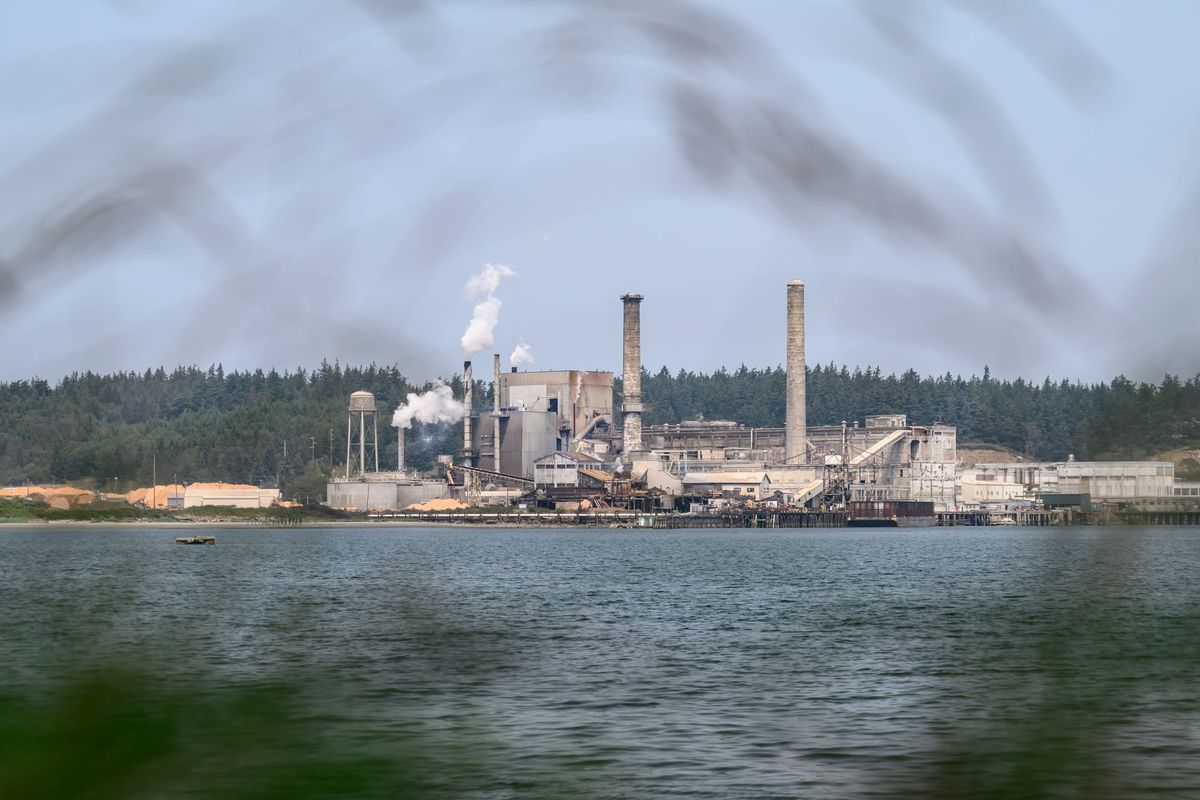
The Beacon’s three-part series about the Port Townsend Paper Company, the county’s second largest employer with 99 years of local history, began last week with a look at its role as a supporter and beneficiary of the Olympic Gravity Water System. This article looks at the mill’s practices regarding compliance with its permits, and its effect on human health and the surrounding ecology.
The May 27 implosion of a 900,000-gallon tank filled with highly caustic white liquor which killed 11 employees of the Nippon Dynawave paper mill in Longview, has focused the attention of thousands of residents who live less than 140 miles north on their neighbor—the Port Townsend Paper Company’s (PTPC) paper mill.
The surge in attention coincided with the Beacon’s investigation into PTPC’s many layers. Our research shows a mix of regulatory inconsistencies, a consistent pattern of violations and gaps in agency oversight of the mill.
Port Townsend Paper is Jefferson County’s second largest employer, a long-standing industrial anchor and part of the region’s economic identity. It is also a facility with a long environmental record, a history of odor complaints, and public health findings that raise unresolved questions about what residents breathe, what the mill discharges and what regulators still do not know.
Within three days of the Longview tragedy, investigators confirmed that no state or federal agency had been required to inspect the tank before it failed. "There's no one agency or regulatory body that would be responsible for inspecting any single above-ground tank. It is really left to the owner, the operator of the individual facility,” said University of Washington Professor Marissa Baker, an associate professor in the UW Department of Environmental & Occupational Health Sciences as quoted in the Seattle Times.
The Washington Department of Labor and Industries announced on July 2 that it was beginning a special enforcement effort focused on tank maintenance, testing and repair records, and on written procedures around operation and maintenance of tanks at all paper mills in the state.
"Generally in compliance"
In May 2025, after a six-year administrative delay attributed to "largely competing priorities and staff turnover," Washington State's Department of Ecology issued a new wastewater permit for PTPC. The permit's 240-page supporting fact sheet—the document in which Ecology explains its reasoning and responds to public concerns—contains the following passage:
"PTPC has generally been in compliance with their Air Operating Permit (AOP) and National Pollutant Discharge Elimination System (NPDES) permits. The fact that a facility has violated an air or water permit is not grounds to terminate a permit. Occasional violations are expected under both the Clean Air Act and Clean Water Act. Violations that have occurred under the NPDES and AOP permits are generally short in duration. Ecology is not aware of any ongoing violations at the facility."
What the permit language cannot answer is whether the legal threshold is protective enough.
Ecology's own characterization—'generally in compliance'—describes adherence to a standard, not the adequacy of the standard. Answering that fully would require toxicological and cumulative-exposure analysis beyond the scope of this investigation. What follows is the documented record, offered for public scrutiny.
The violation record, the mill’s pattern of behavior and its regulator
Context matters when evaluating violations, regulatory triggers and enforcement actions applied to an industrial operation like PTPC. In order to understand the meaning of a certain violation, or for that matter, many violations, studying the context is vital.
The Environmental Integrity Project (EIP), a nonprofit environment watchdog organization based in Washington, D.C., found in its May, 2025 national paper industry report that PTPC had been in violation of the Clean Air Act for 12 consecutive quarters—every quarter in the three-year period reviewed.
The violations generated $63,750 in total air penalties over five years for a facility producing 1,000 tons of paper daily, owned by Atlas Holdings of Greenwich, Connecticut, which generates approximately $26 billion in annual revenues across its portfolio.
“Twelve consecutive quarters of Clean Air Act violation is not the industry norm,” Courtney Bernhardt, Director of Research at EIP told the Beacon.
Port Townsend was one of only six other pulp and paper mills in the U.S. that the EPA flagged as having violated the Clean Air Act (CAA) for at least three straight years, as of May, 2025.
The report examined violation information of 183 plants, putting those six plants in the worst 3% of violators by that measure. For reference, 63 plants (about a third of the total) spent at least one quarter in violation over that same three-year time period, according to Bernhardt.
While that record puts PTPC in elite company, it outperformed the other 182 pulp and paper mills in the U.S. in having the most enforcement actions—28 over five years as of March, 2025. The two closest contenders had 16 and 11 enforcement actions, respectively.
The Department of Ecology has issued 166 “violations/triggers” to PTPC since 1990. But paper mills are required to conduct numerous regular self-monitoring actions and inspections, in addition to the inspections performed by outside agencies. Knowing that combined number, as well as the severity of violations leads to a more fair evaluation of any mill’s operations. The Beacon is waiting for the Washington State Department of Ecology to confirm the number of compliance obligations required of PTPC.
Enforcement actions can range from a warning letter to a financial penalty.
“Our enforcement actions correspond to several factors, including the severity of the violation and whether or not it was reoccurring,” Ecology’s regulator, Mady Lyon said in an email.
Ecology issued a violation on June 4, 2026 stating that PTPC had violated its NPDES Permit for daily maximum effluent limits for total suspended solids and five-day biochemical oxygen demand six times in the month of April.
Compounding the issue was the mill’s response to this violation. Ecology said that PTPC did not follow the procedures described in its own spill prevention plan following the black liquor spill events on April 7 and April 10, 2026, which caused the effluent limit violations, Ecology’s violation letter stated.
In July 2017, an EPA Region 10 inspector discovered that a mill digester had been venting emissions without routing them through a required pollution control device since at least 2001—16 years of continuous noncompliance, undetected by Washington State Ecology's routine oversight. PTPC paid $342,000 to settle with the EPA in June 2019.
That same month, Ecology issued a Determination of Nonsignificance, approving a 30-percent production expansion, having accepted an application with seven mandatory environmental checklist questions left blank.
Two pipe failures occurred in 2025, including one which released 114,630 gallons of untreated processed wastewater into the bay in April. That failure was of untreated wastewater bypassing treatment entirely, which is more serious than effluent exceeding a limit.
Both violations carried the maximum NPDES fine of $10,000 per day. PTPC acted within a day to shut off the leaks in both cases, according to Brittny Goodsell, Ecology’s Communications Specialist.
On July 6, 2022, emissions measured from PTPC’s recovery furnace exceeded the hazardous air pollutant limit required under their air quality permit. A clog in part of the emissions treatment system was found to be limiting the system’s performance. Ecology fined PTPC $56,250 for the violation.
Observers may evaluate the mill’s operations only through the violations and enforcement actions brought by the EPA and Ecology, but there are also what Ecology calls “areas of concern” to consider, such as it found in its October, 2025 inspection.
Ecology cited less egregious behaviors such as wood chips and other debris falling through the dock into Port Townsend Bay, and the construction of a screw press without Ecology approval, which is a violation of NPDES. PTPC said that it did not believe that it needed the approval of Ecology.
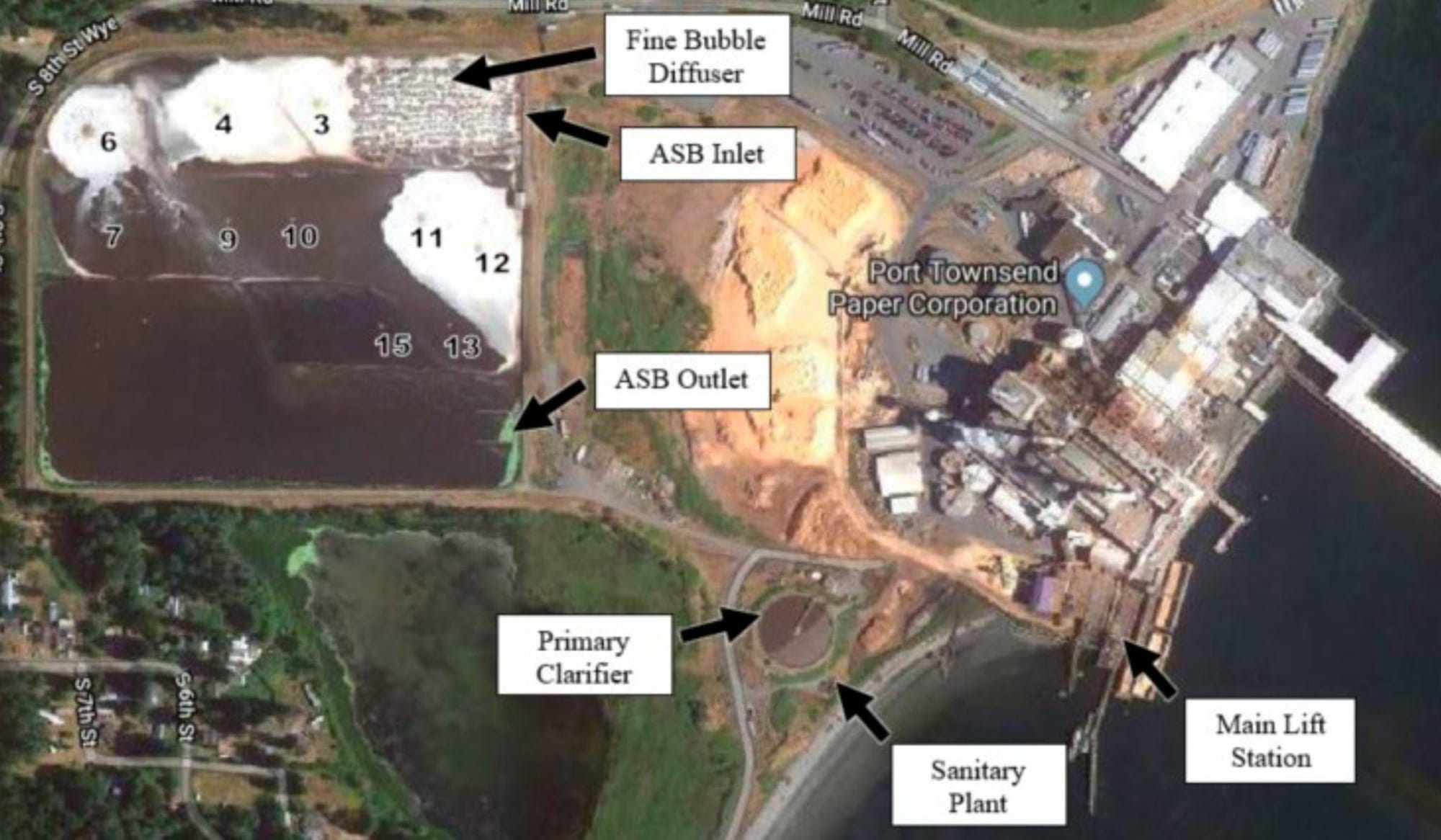
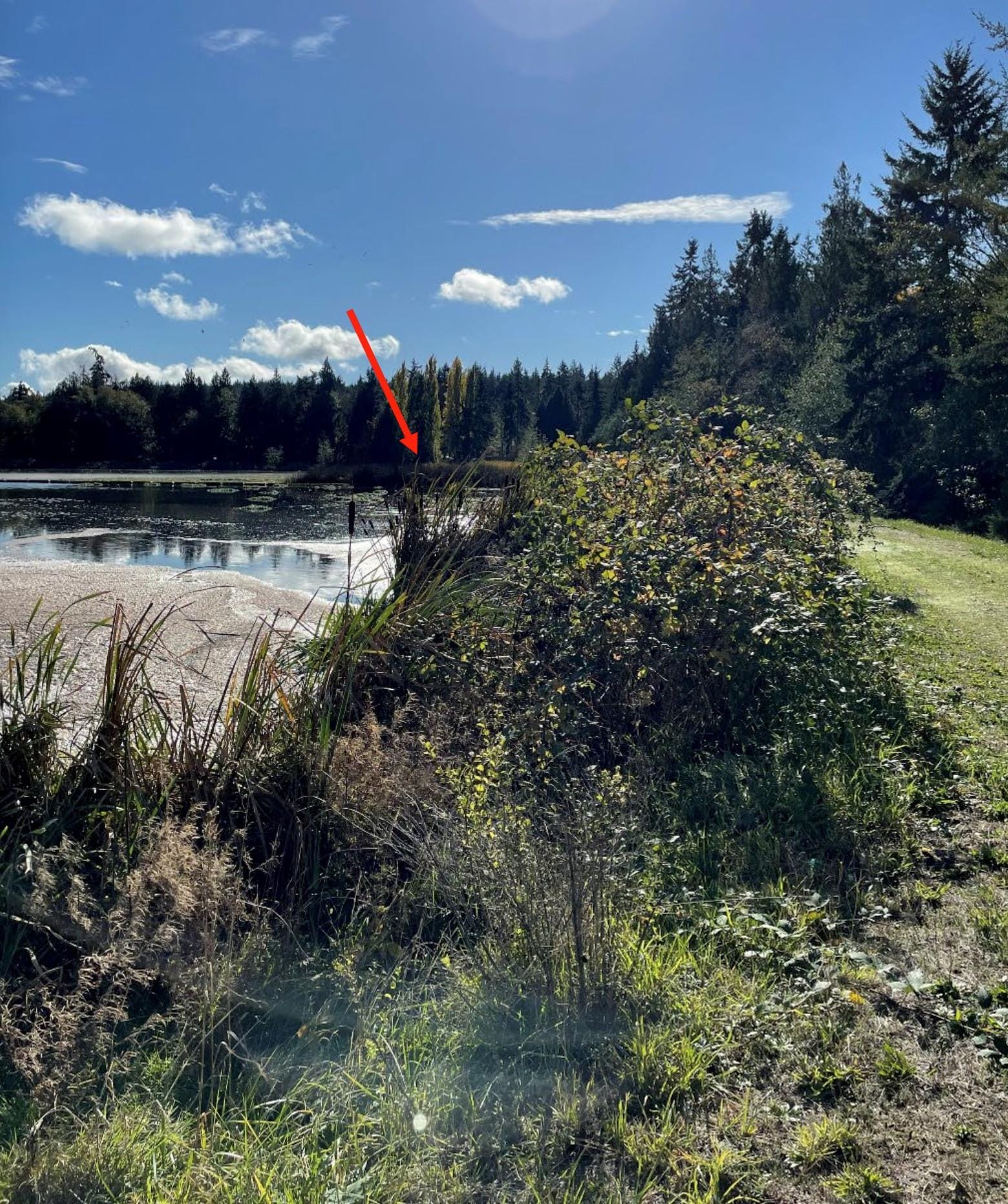
The report continued: “PTPC should not store oil on the catwalk of the primary clarifier in case of a spill.” (The identical action was observed and reported the previous year by Ecology.) “Two of the fine bubble diffuser lateral lines were disconnected. The baffle was not in a straight line—it appeared to have curled in on itself. Clumps of floating vegetation towards the center of the ASB [aerated stabilization basin] and at the outfall weir. Excessive vegetation in the ASB is a concern because it can reduce the capacity of the ASB.”
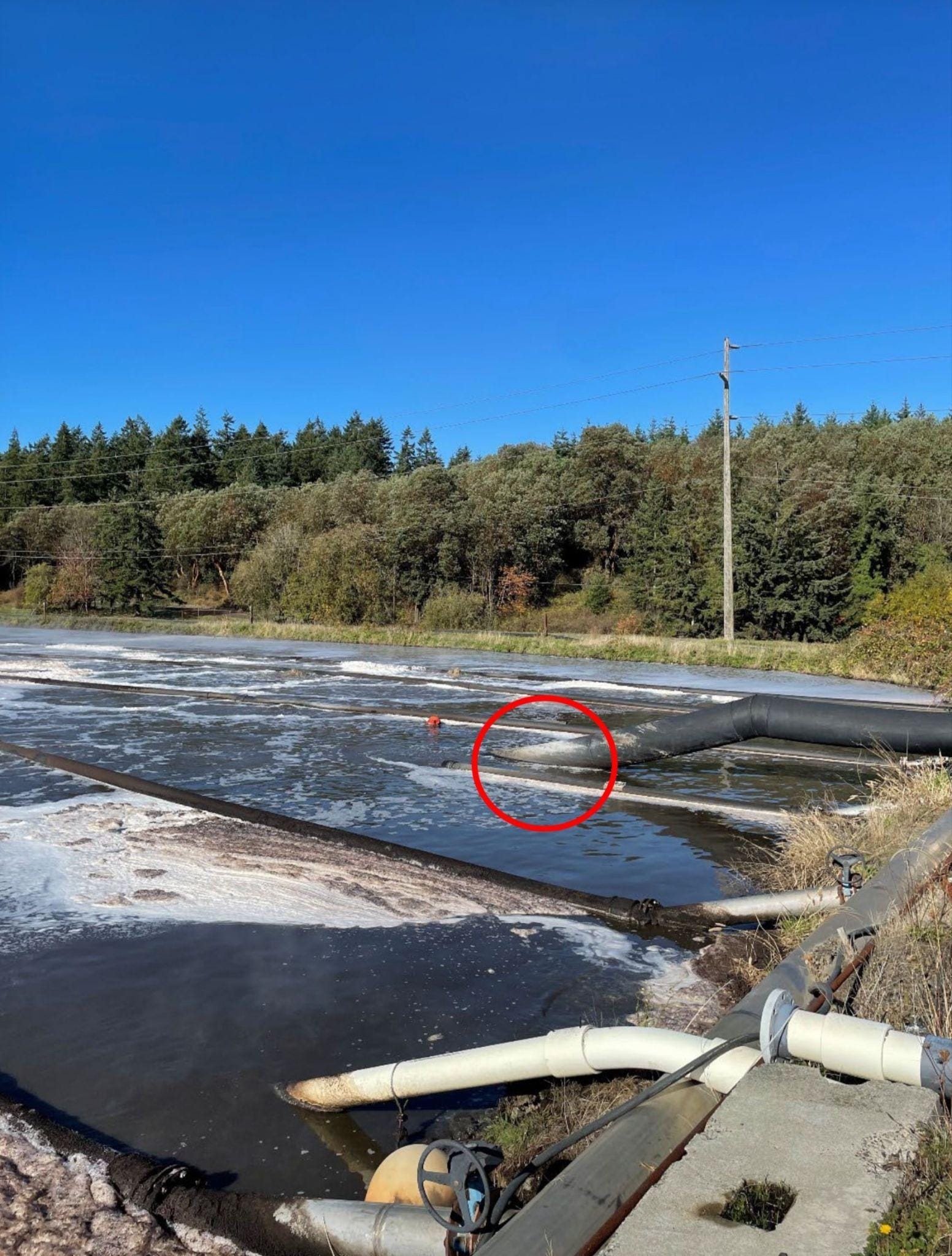
The inspection report included plans that PTPC said it had in place to address some of these concerns and other planned improvements.
The record shows that the company has several long periods of noncompliance for various required operations reporting. It has argued unsuccessfully against Ecology’s determinations in at least two cases.
But the Beacon has found that the mill has demonstrated quick corrective action in response to at least two violations, and proactive—if inconsistent—behavior in establishing improved processes and safety measures.
Ecology regulator Mady Lyon—the person who manages PTPC's day-to-day compliance with environmental law—confirmed in a written response to concerned Port Townsend resident David Ginsberg in June: "I have both air and water quality permit violations from PTPC dating back to November that I need to address. I am currently working on addressing those violations with enforcement actions."
PTPC Chief Human Relations Officer Ben Frasier told the Beacon in an email, “the mill tracks and monitors all required emissions and pollutants and is in full compliance with all required reporting to state and local agencies.”
The treatment pond—from anonymous tip to documented fact
One of the most serious findings began as an allegation from a former mill employee. They alleged that the mill's wastewater treatment pond—a large outdoor basin where microbes break down industrial waste before it flows into the bay—had filled so heavily with accumulated sludge and solids that it had lost much of its original depth and treatment capacity.
That allegation and more violations related to that treatment pond are now documented in a Notice of Violation (NOV) issued by Ecology on May 18, 2026, and in a survey of the pond's depth that PTPC itself submitted to Ecology on May 13, 2026.
The NOV states, “Improper operation and maintenance of the aerated stabilization basin (ASB) does not provide for all reasonable methods of treatment before pollutants are discharged to the environment, especially under periods of higher pollutant loading to the system.”
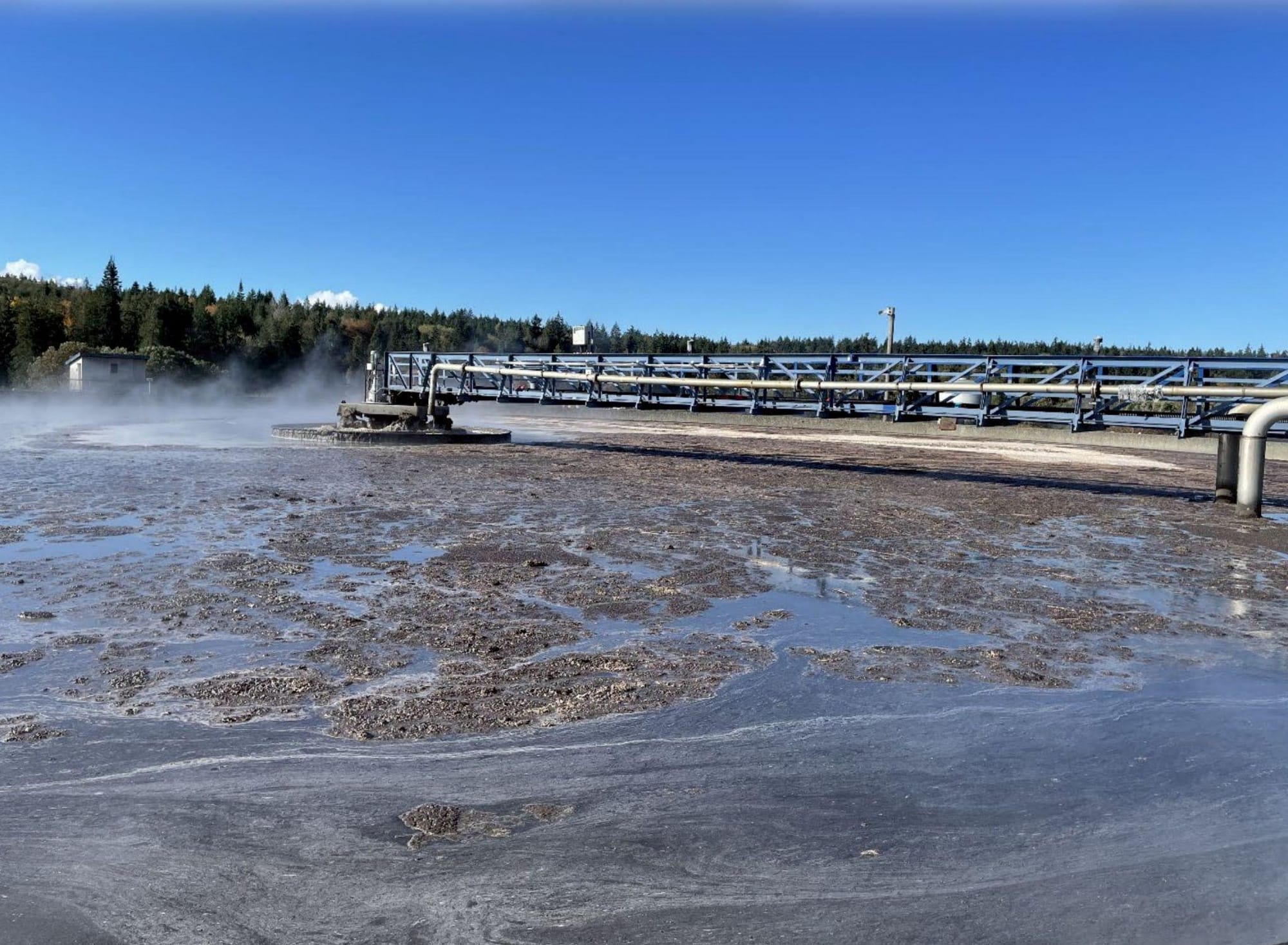
And it notes that PTPC's own Treatment System Operating Plan (TSOP) requires annual surveys of sludge accumulation—the last one before 2026 was conducted in 2022, a four-year gap in the mill’s responsibility to ensure that pollutants were being treated properly.
The NOV resulted from the October 2025 inspection that Lyon conducted documenting the pond's operational failures. That inspection showed disconnected aeration lines, a missing aerator motor, two more aerators sitting unused on the bank, a damaged flow barrier causing wastewater to potentially bypass treatment zones, a "geyser" indicating a malfunctioning aeration head, and dissolved oxygen readings well below the mill's own internal targets. These findings were cited as a formal permit violation, and later characterized in the NOV as the ASB operating at “critically reduced treatment capacity.”
What goes into the bay and what the permit allows
A May 2026 depth survey conducted by the mill confirms what those conditions had been producing: a treatment system operating at significantly reduced capacity, quietly discharging into an ecologically sensitive arm of Puget Sound, under a permit whose carcinogen limits don't take final effect until 2029.
PTPC discharges approximately ten million gallons of treated wastewater into Port Townsend Bay every day, 3.4 billion gallons per year, through an outfall discharge pipe 1,200 feet offshore at a depth of 37 feet.
Ecology’s NPDES fact sheet confirms PTPC discharges detected quantities of dioxin, benzene, vinyl chloride, chloroform, lead, mercury, arsenic, chlordane, pentachlorophenol and benzo(a)anthracene into Port Townsend Bay. Only three of these substances have a numeric limit in the new permit. For the remaining substances, Ecology's analysis concluded that dilution in the bay would reduce concentrations below water quality criteria—so no numeric limit was required.
The permit Ecology issued in May 2025 explicitly confirms two of those three substances as probable human carcinogens detected in PTPC's treated wastewater: benzo(a)anthracene and chlordane. Chlordane was banned in the United States in 1988 because of its persistence and toxicity. The third, pentachlorophenol, is a known human carcinogen. No hard legal limits on any of these chemicals are required until 2029.
"There's not a lot that Ecology can do, since chlordane is a very persistent chemical,” said Alex Scagliotti, environmental planner for the Jamestown S'Klallam Tribe. “You could say Ecology is failing, but at the same time, the mode of action to solve that is pretty difficult."
The Jamestown S'Klallam and Port Gamble S'Klallam Tribes hold federal treaty rights to fish and harvest shellfish under the 1855 Treaty of Point No Point. Scagliotti described the shellfish closure near the discharge point as a clear impingement on treaty rights—one the tribe has not formally challenged because doing so requires legal resources it cannot deploy for every permit action.
Dioxins discharged into the bay are presumed to be accumulating in the fatty tissue of fish and shellfish that the tribes had harvested for centuries.
Dr. Kelly Munkittrick, a marine biology professor at the University of Calgary with more than two decades of research on pulp mill environmental effects monitoring, said the absence of documented harm in marine environments is harder to interpret than in freshwater.
“It’s generally much more difficult to find damage in marine environments,” Munkittrick told the Beacon, “because fish move widely through the receiving water rather than staying in the effluent zone, and because fresh effluent interacts with saltwater in ways that complicate monitoring.”
Two mills—same chemistry, different settings
Port Townsend Paper and Nippon Dynawave are both kraft mills using the identical chemical process: wood chips are cooked with white liquor at high temperature and pressure, breaking the wood down into pulp. The white liquor is then recovered, regenerated, and used again. Both facilities store white liquor in large uninspected above-ground tanks. At PTPC, the process that killed eleven workers in Longview runs every day.
Nippon Dynawave sits in Longview's heavily industrialized Columbia River corridor, surrounded by other industrial operations and served by emergency responders accustomed to large-scale chemical incidents. PTPC sits at the edge of a residential and tourist community of over 10,000 people, directly on the shore of Port Townsend Bay—whose local fire department’s chief, Bret Black, has publicly stated lacks adequate staffing for a major industrial incident.
PTPC's June 1, 2026 press release, issued six days after Longview, stated the company was conducting "extra safety inspections" since Longview. It also reported that the company had checked that tank vents were open and that overflow lines were not blocked. The mill has not released a statement on if tank walls have thinned from corrosion or the welds have degraded over decades. The press release said that the company was "working on scheduling further testing" of tank conditions.
Shortly before the Longview accident, PTPC’s Frasier told The Beacon in an email that its capital investments since 2022, “include upgrades to the effluent treatment system to enhance wastewater handling and overall system reliability, significant work on power boilers to improve efficiency and reduce reliance on fossil fuels, capital investment into our air‑emissions systems and related controls across core mill operations, and several infrastructure improvements across the site.”
Lyon of Ecology confirmed in writing that her job does not include inspecting whether PTPC's white liquor tanks, pressure vessels, or chemical storage tanks are structurally sound. Washington Labor and Industries confirmed the same gap from their side. No government body is required to check whether the tanks are safe.
Tom Carroll spent 15 years, until 2022, overseeing repairs at the mill for Pacific Environmental Services—black liquor and white liquor spills, ruptured water pipelines, storage tanks, treatment ponds. Since the May 2026 implosion of a storage tank at a Longview paper mill killed eleven people, the condition of such tanks has been a rising worry in Jefferson County. On that point Carroll offered reassurance: the mill, he said, has installed new double-walled, state-of-the-art tanks that should be in far better shape than the one that failed in Longview.
But The Beacon has not received any response to its query to corroborate this, nor to a dozen other questions emailed to PTPC leadership since early June inquiring about the condition and inspection methodology of digesters, recovery boilers, power boilers, paper machines, lime kilns, evaporators and every white liquor and green liquor storage tank and vessel.
The Beacon has been denied access to the PTPC property, despite several requests. But according to Fuller, who visited the mill frequently over the 15 years he worked with Pacific Environmental Services, “the mill’s go-to contractor”, “The mill avoided spending money on safety and environmental unless they really had to.”
John Begley, former Chief Executive Officer of PTPC from 1998 to 2008, disagreed, telling the Beacon that during his time at the mill, “environmental standards were absolutely never sacrificed” to save money.
What is known and not known about what is going into the air
A study conducted near the mill over ten weeks in 2018 by the federal Agency for Toxic Substances and Disease Registry (ATSDR)—the only independent study of this kind in the modern record, published in 2024—found that formaldehyde levels in the surrounding neighborhood were more than ten times higher than what an EPA computer model run by ATSDR predicted, based on the mill's self-reported emission figures. More than two years after that finding was published, Ecology has not explained the gap.
All 30 formaldehyde samples exceeded ATSDR's cancer risk evaluation guideline.
"One of the very common chemical byproducts of general air pollution is formaldehyde. It's sort of a chemical pathway—when you have sunlight and you've got air chemicals, they will react and eventually turn into formaldehyde," said Nancy Johnston, who specializes in air sampling, and air characterization as a chemistry professor at Lewis Clark State College in Idaho.
The ATSDR study found evidence that sulfur compound emissions from the mill have reached concentrations associated with acute health effects, including headaches, nausea, eye and throat irritation and asthma-like reactions during peak events. Those findings are consistent with what residents have reported to Ecology in nearly 2,000 odor complaints over five years.
But the study did not find a direct causal link between PTPC's emissions and any specifically diagnosed illness in any Jefferson County residents.
“If you can smell the sulfur compounds, the other co-pollutants you cannot smell are almost certainly present simultaneously,” said Professor Johnston.
It is important to note that formaldehyde is not included in the sulphuric compound from which ATSDR drew its conclusion. The 2018 measurements were taken over a period of just 10 weeks, and it isn't clear whether it reflects a persistent or an unusually elevated period.
The visible plumes that spread overhead from the mill are mostly water vapor. However, Johnston said, "These air toxics can be less than one part per billion and still have a health impact. So yeah, it's mostly steam. But there are things in there that are dangerous, and it doesn't take more than a millionth of something to have a harmful impact."
The lone air quality monitor in Jefferson County operated by Olympic Region Clean Air Authority sits atop Blue Heron Middle School, approximately three miles from the mill, measuring common pollutants including fine particles and ozone. It does not measure hydrogen sulfide, the sulfur compounds responsible for the mill's characteristic odor, or any of the other airborne chemicals specific to kraft pulp mill operations.
ATSDR also analyzed local health data for evidence of an increase in acute respiratory effects. Data were available for asthma hospitalizations from 2010 to 2020 in the state of Washington, Jefferson County, and the zip code 98368; all of which contain the city of Port Townsend and PTPC. The asthma hospitalizations for the zip code 98368 were not statistically different from that of Jefferson County for the state of Washington.
Dr. Allison Berry, Jefferson County Public Health Officer, said that they have not seen evidence of clusters of people with severe shortness of breath and chest pain that would differentiate an exposure concern that is more urgent than nuisance odors.
“Generally we would look at an increase in potentially linked diseases (say asthma exacerbations, heart attacks, ER visits for respiratory compromise) in the surrounding area and look to see if that rate was higher than expected/higher than background rates,” Berry said in an email to The Beacon. “Additionally, we would look at environmental samples for possible contaminants in air, soil, water, depending on the possible contaminant and source.”
About the odors, the ATSDR study said, “People can smell some sulfur compounds well before they reach a concentration that might cause a toxic effect. Thus, the perception of offensive odor does not necessarily mean there is a toxic threat to people’s health. However, offensive odors can quickly become a nuisance and may be the direct cause of some health symptoms even in concentrations below levels of toxicity.”
Community seeks constructive action
The EIP findings—top three percent of CAA violations, and scoring the most enforcement actions of any pulp and paper mill in the United States—seem to place PTPC as one of the most egregious polluters in a notoriously ecologically harmful industry. Its location in a relatively pristine and beautiful natural environment and proximity to thriving residential communities—as well as the plant’s advanced age—are spurring strong local concern.
Online discussion about mill safety and the effects of its effluent discharge and air emissions has surged in the past two months.
“The most disgusting smell this morning—50 years of living here with all sorts of particulate vapors coming out of that mill and this morning was unbearable,” Gary Lemons wrote on August 2 on the online platform, Nextdoor. Lemons lives three miles from the mill.
“It gave my family as well as the neighbors, a headache that still won’t go away and I’m remembering my father‘s words that all smell is particulate in nature and when you smell something you’re actually eating it—this is beyond tolerance—beyond any ancient cliché about money and water—this is poison.”
A locally grown effort is underway to gather more accurate data about the chemicals coming out of PTPC’s stacks that are reaching the surrounding neighborhoods. Through the Thriving Earth Exchange—a national organization that helps communities organize local citizens to be volunteer observers—a network of air monitoring sensors will be set up around the mill. The approach takes advantage of a finding in the 2018 ATSDR study: the sulfur compounds most linked to respiratory health effects always rise and fall together with two compounds that are easier and cheaper to measure. That correlation means a network of lower-cost sensors can serve as a reliable early warning system for the full range of harmful compounds, making widespread community monitoring financially feasible.
Port Townsend residents Derek Firenze and Jaime Duyck are leading the project, and they have recruited two university scientists who will analyze the data.
“We want to measure how often these sulfur concentrations spike into the range of adverse acute respiratory effects,” Firenze said.
Additionally, the project is drafting legislation for the Washington State Legislature that would create financial penalties when sulfur levels near kraft mills reach the concentrations that the federal study linked to acute respiratory effects—applicable to the three kraft mills in Washington, not just PTPC.
The project’s results could be compellingly informative, and potentially provide greater understanding among both the “smell of money” defenders of the mill, and those who say that the health consequences of breathing the odor warrant shutting it down. The smell confirms that compounds are present, but it doesn’t tell us the concentration.
Though precise data is unavailable, local residents are suffering. “More recently, I’ll smell it in the night,” said Beth O’Neal, who lives approximately four miles from the mill. “It’s horrible. It makes me feel sick.”
Ongoing effects of the mill's emissions on local residents, and the Longview incident have spurred the formation of a group called Citizens for a Safe Water and Air PT. Anyone interested in learning more may contact the group at safewaterandair@gmail.com.
The Longview disaster spurred David Ginsberg to embark on a campaign to hold the mill to a higher level of safety practices, accountability and transparency. He has asked PTPC to implement safety measures, including inspecting the storage tanks, installing real-time monitoring equipment and sharing the data publicly
Ginsberg is also asking PTPC to complete health and environmental assessments that the Washington State Department of Health requested of the company in 2014 and 2018. These address waterway contamination data, air emissions, water discharge and hazardous materials, assess earthquake risk and preparation of a public emergency plan. He also asked PTPC to provide a complete list of hazardous chemicals stored at the facility to Jefferson County Emergency Management (JCEM), East Jefferson Fire Rescue and the public, and update that list whenever storage changes.
JCEM did not respond to two email requests for interviews for this article.
Ginsberg’s online petition in support of these actions has 895 signatures as of August 2. He has sent letters to PTPC, and leaders of local government agencies as well as the state regulatory agencies asking for prompt constructive actions to ensure that a Longview-type disaster does not occur here and that agencies support this community effort.
PTPC has not responded to Ginsberg. The agencies that have responded have provided “nothing substantive” according to Ginsberg.
Next year, Port Townsend Paper Company will celebrate its one hundredth year of operation on the shores of Port Townsend Bay.