The Fight for Protection Island
A story of stewardship and the future of public lands.
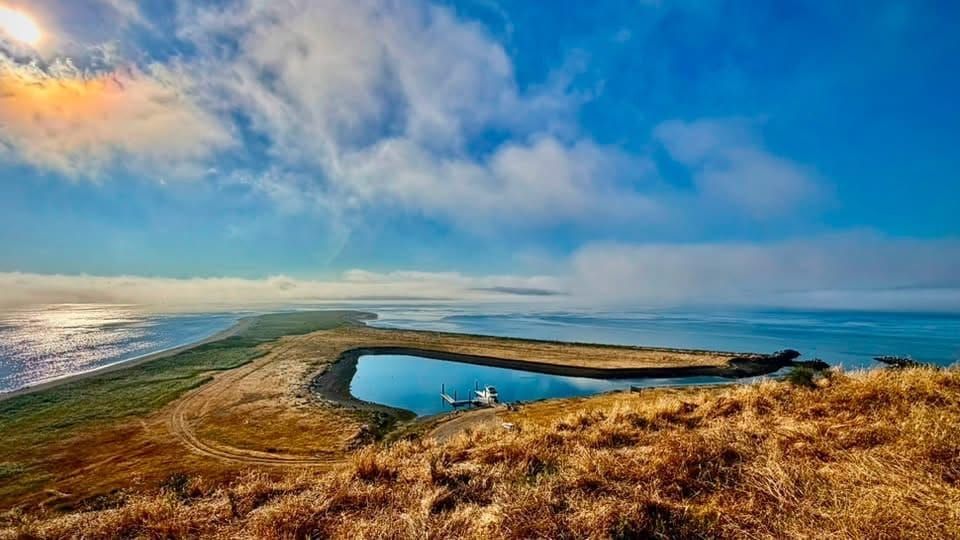
JEFFERSON/CLALLAM COUNTY, WA — In the swirling waters of the Strait of Juan de Fuca, a small, windswept island has become part of a collision between tribal sovereignty, conservation and public access. Protection Island National Wildlife Refuge, a home for thousands of seabirds and marine mammals and one stubborn human holdout, is now at the heart of an emotional debate over who should control America's public lands.
The debate stems from a developing proposal to transfer the land from the U.S. Fish and Wildlife Service, which currently co-manages it with the Jamestown S’Klallam Tribe, to the Bureau of Indian Affairs, where the land would be fully managed by the Tribe.
The conservation
Protection Island's journey to protected status began in the 1930s when ornithologists recognized it as critical seabird habitat. In the 1960s, Seattle Audubon Society member Zella Schultz began studying and banding glaucous-winged gulls there, launching a campaign to convince the state or federal government to purchase and protect the island.
When Schultz died in 1974, her friend Eleanor Stopps vowed to continue the fight. Stopps testified before the Washington State Legislature and U.S. Congress, leading a nine-year grassroots effort that finally succeeded in 1982 when Congress allocated four million dollars to create Protection Island National Wildlife Refuge. Stopps was later named Jefferson County's Citizen of the Century.
The refuge designation came not a moment too soon. In the late 1960s, Seattle investors had subdivided the island into some eight hundred vacation lots, complete with plans for roads, a marina and an airstrip.
Today, the 370-acre island hosts 72% of the nesting seabirds in Puget Sound, including an estimated 36,000 pairs of rhinoceros auklets, one of the largest colonies in North America, and one of the last remaining nesting colonies of tufted puffins in the region. Approximately one thousand harbor seals depend upon the island for pupping and rest.
The lone holdout
One of those 1970s buyers was Marty Bluewater, then twenty-three years old. In 1971 he purchased a lot on the island's high bluff for seven thousand dollars. When the conservationists prevailed in 1982, landowners were offered buyouts. Those who had built homes were offered residencies of fifteen years, twenty-five years or lifetime use. Bluewater was the only one who chose the lifetime option. Today, he remains the island's sole resident in a cabin without electricity, heated by a wood-burning stove fueled with driftwood.
Bluewater, who has Native American heritage and served as CEO of the United Indians of All Tribes Foundation, has become a supporter of the Tribe's management efforts. In a recent exchange with the Beacon, he shared his perspective:
"I am totally supportive of this moving forward. The Tribe will do a much better job in protecting the wildlife values of both Dungeness and Protection Island.” Bluewater said about the potential transfer. “They will have more resources than the ever-shrinking federal funding, more volunteers and a more serious long-term commitment to the future needs and the historical significance of the lands. Also at Dungeness, the Tribe will do more public programming and events for all citizens to enjoy. They have already, under the present short-term agreement, completed many improvements that were in limbo with the Fish and Wildlife folks.”
A newer chapter: Co-management
For millennia, the S'Klallam people lived in villages along the north coast of the Olympic Peninsula. The 1855 Treaty of Point No Point promised the S'Klallam they could continue hunting, fishing and gathering on their usual grounds. In exchange, they ceded legal claim to thousands of acres. But settlers soon forced the Tribe from their traditional village at the mouth of the Dungeness River, pushing them onto the Dungeness Spit itself. In 1874, under Chief Tulsmetum, the displaced S'Klallam pooled $500 in gold coins and purchased 210 acres east of Dungeness, a place they named Jamestown. It was not until February 10, 1981, that the Jamestown S'Klallam Tribe was formally re-recognized by the U.S. government.
In August 2024, the Jamestown S'Klallam Tribe signed a historic co-management agreement with the U.S. Fish and Wildlife Service, the first of its kind in Washington state. Under the agreement, tribal staff took over day-to-day operations at both Dungeness and Protection Island refuges through the Self-Governance Program established by the 1975 Indian Self-Determination and Education Assistance Act.
Chairman Ron Allen emphasized the Tribe's readiness to KUOW in 2024, stating, “Our tribe has a strong historical and cultural relationship with the Dungeness Refuge since our original village was sitting at the mouth of the Dungeness River," he said. "We have grave sites on the spit that we want to protect, and we are the original stewards of the site."
What the Tribe has done since taking over
In the nearly two years since assuming co-management, the Tribe has made significant improvements. Wildlife Refuge Manager and ecologist Fawn Wagner and Director of Natural Resources Hansi Hals detailed the work during an interview with the Beacon.
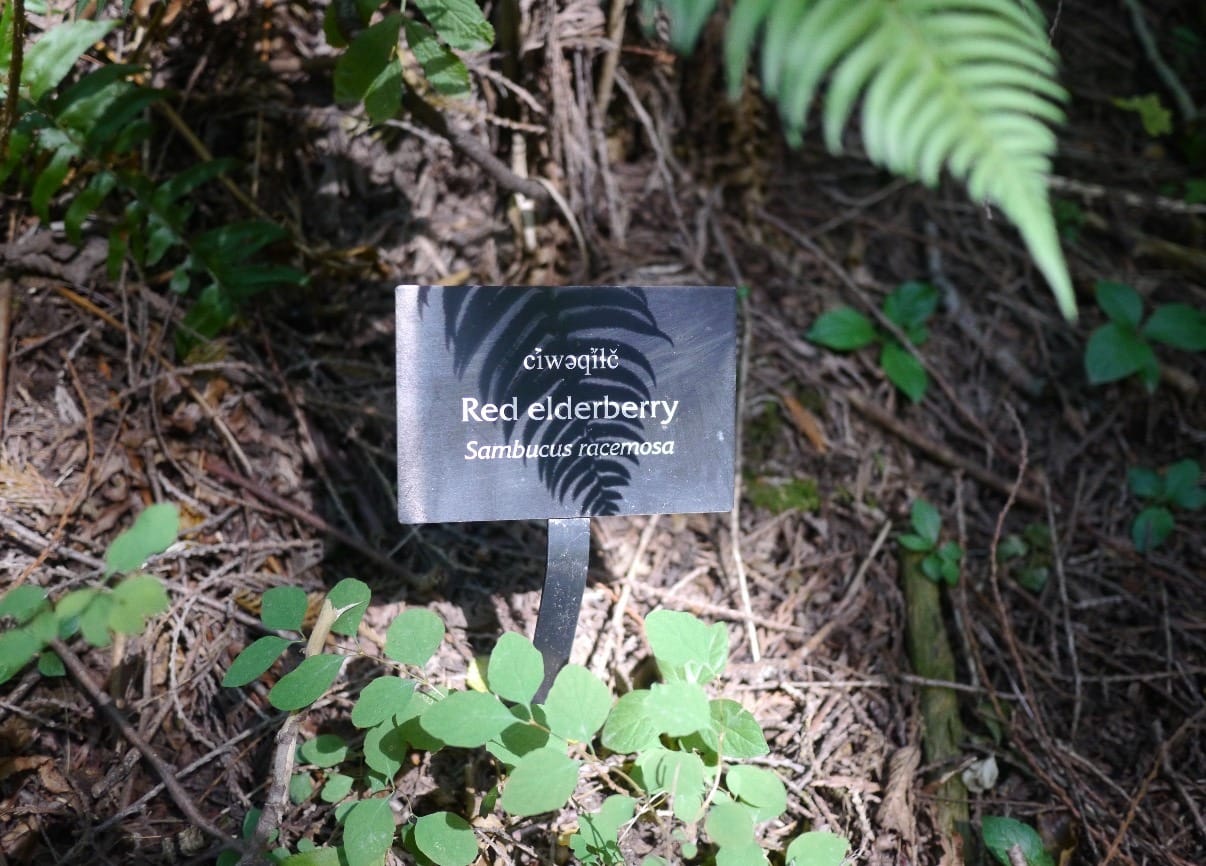
Among the visible changes, the Tribe removed signs that referred to the S'Klallam people in the past tense, which Wagner described as problematic for many reasons, and installed new signs featuring S'Klallam language alongside scientific and common names for plants. They created pop-up educational programs on Saturdays, developed a robust volunteer program and formed partnerships with local schools and universities, growing the volunteer corps from about 100 to more than 200 volunteers.
In habitat and wildlife management, the Tribe repaired over 1,500 linear feet of road on Protection Island, the main access route for management activities. They expanded European green crab (a Level 1 invasive species) trapping from 104 crabs caught in 2024 to over 16,000 in 2025, with catch numbers dropping this year as control efforts prove effective.
They also deployed avian acoustic monitors across sites as part of the Listen Up project.
Regarding funding, the Tribe brought in additional dollars beyond co-management funding through tribal contributions and grants, and is committed to maintaining the federal in-lieu of tax payment to Jefferson County.
The push for full ownership
The Tribe is now seeking full ownership through transfer to the Bureau of Indian Affairs, held in trust for the Tribe. The Jamestown S'Klallam Tribe Land Transfer Act of 2026, still in early development, is a proposed federal piece of legislation supported by U.S. Representative Emily Randall and U.S. Senator Maria Cantwell.
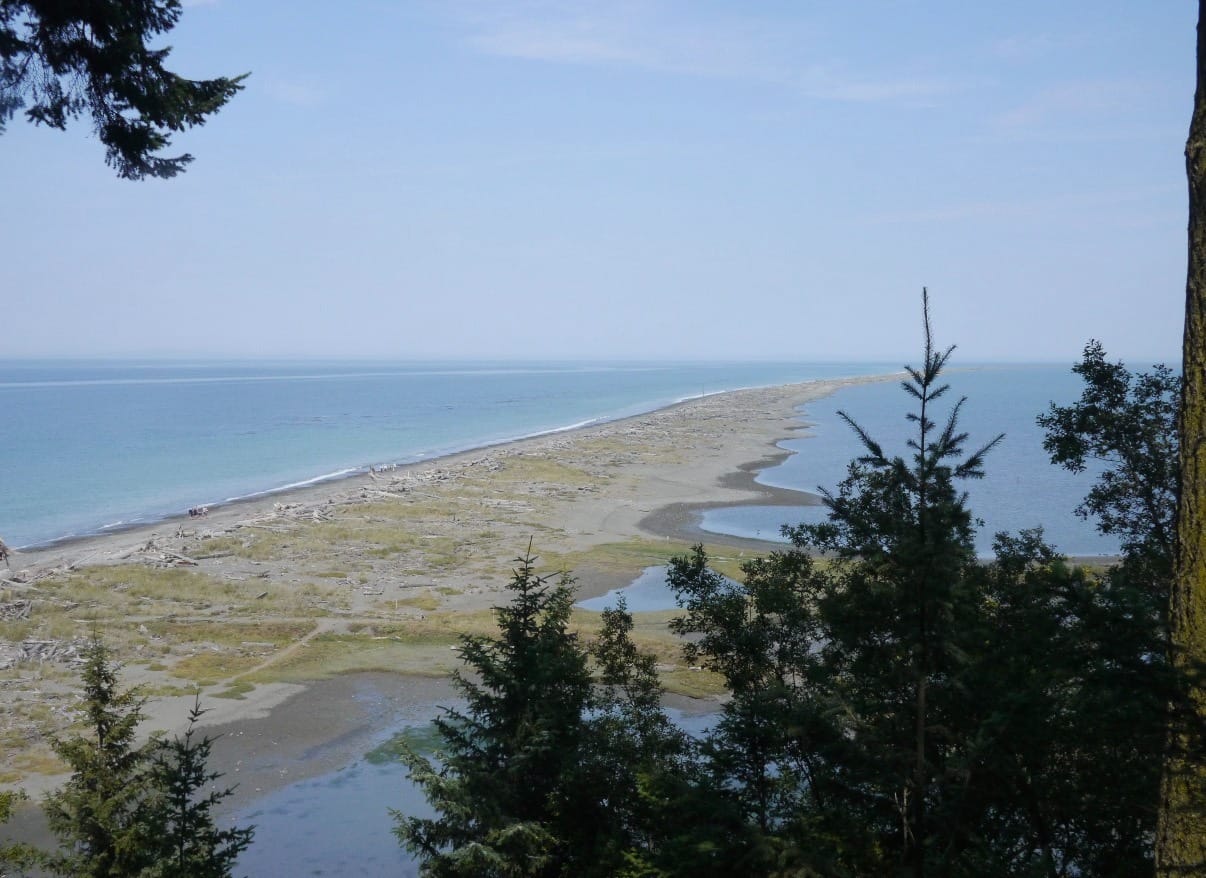
Allen emphasized that the land transfer would not change the land's status, explaining that it stays in terms of its intended purpose and will just be owned by the Tribe now, so they will continue to monitor it, manage it and protect it. He noted that the transfer does not change the public's right and public's interest with regard to what they are doing, but that the Tribe has such a higher interest and resources that are important to them. Allen pointed out that the proposed legislation explicitly prohibits any gaming or commercial development, squashing accusations that the Tribe will build a casino on the Protection Island or the Dungeness refuges.
The controversy
An online petition opposing the transfer has gathered over seventeen hundred signatures, started by Port Angeles retiree Rose Marschall on behalf of the Clallam Freedom Alliance, a group launched in 2020 to oppose COVID-19 public health mandates.
Opposing concerns expressed to Jefferson County commissioners range from worries about loss of public voice regarding management, to concerns about wildlife welfare and whether bird protections would remain, to fears that plans may change and include development, to questions about accountability if management moves from the U.S. Fish and Wildlife to the Bureau of Indian Affairs.
The oyster farm question: A local bird alliance weighs in
One recurring flashpoint is the Tribe's commercial oyster farm within the Dungeness National Wildlife Refuge. Chairman Ron Allen explained part of the motivation to Jefferson County commissioners in June of 2026: the Tribe has an oyster farm within refuge waters, which it has not farmed for about twelve years due to water quality issues. The tribe spent about one million dollars over more than a decade to clean up septic-system degradation in Dungeness Bay.
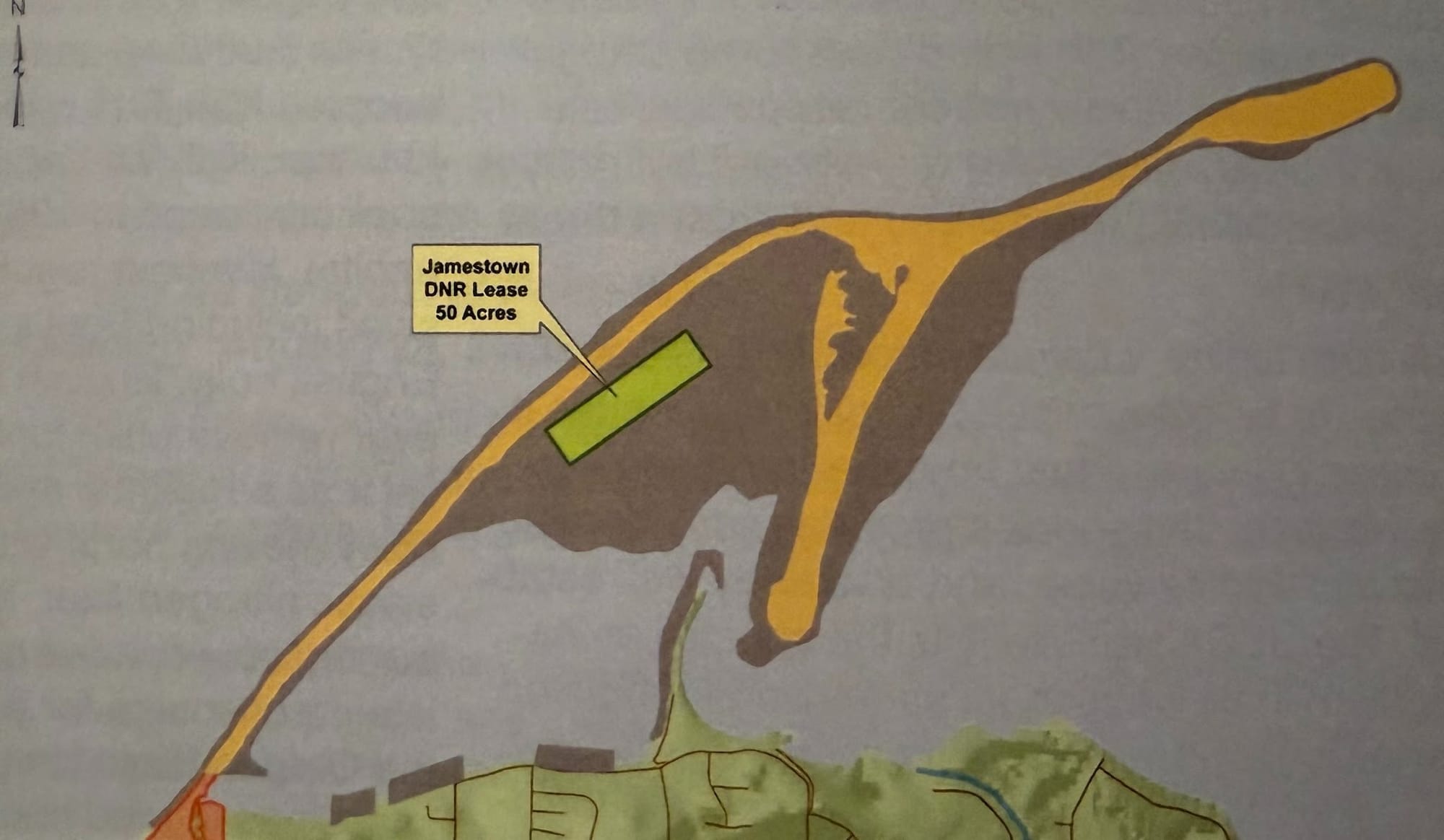
The lease in question covers approximately 50 acres of tideland in the northwest corner of Dungeness Bay, within the boundaries of the National Wildlife Refuge but on land owned by the Washington State Department of Natural Resources. The lease has existed since at least 1963, and the Jamestown S'Klallam Tribe has held it since 1990. Operations ceased around 2005 due to water quality issues traced to bacteria from septic drain fields and runoff from a nearby exotic animal farm. Since then, the Tribe has addressed those sources, and the permit has been restored.
The current permit allows for only 39 acres of cultivation: 34 acres of natural beach oysters and 5 acres of on-bottom grow bags. At 39 acres, the lease occupies just 3% of the bay's 1,300 acres. The tribe has begun operations slowly, starting with beach oysters only, and is monitoring water quality and temperature closely.
Local bird experts weigh in
Critics have characterized the operation as an "industrial" threat to birds and habitat. But the Rainshadow Bird Alliance, a local chapter of the National Audubon Society with deep roots in the region's conservation history, has stepped forward to offer a clear, data-driven perspective.
The Rainshadow Bird Alliance, formerly known as the Admiralty Audubon Society, has an intimate connection to Protection Island. In the late 1970s and early 1980s, the organization raised $50,000 to buy 23 lots on the island. It teamed up with The Nature Conservancy to persuade county, state and national groups, agencies and politicians to create Protection Island National Wildlife Refuge in 1982. Rather than opposing the Tribe's proposal, the Rainshadow Bird Alliance has offered a qualified endorsement. In a statement from its president, Rick Jahnke, the Alliance supports protection and restoration efforts at Dungeness Spit and Protection Island, noting that "because the federal government is no longer reliable for funding and even legal protections, we welcome any additional funding and layers of protection that the Jamestown S'Klallam Tribe brings." The statement cites the Tribe's energy and commitment to heal the land, their partnership in many local restoration efforts and their work over the past two years as co-managers of the refuges.
Dr. Steve Hampton, Conservation Chair of the Rainshadow Bird Alliance and an enrolled citizen of the Cherokee Nation, has analyzed the question of how the farm affects birds. His conclusion, shared in the Alliance's public statement, is that oyster aquaculture, as currently in place, has minimal effect on shorebirds at Dungeness Bay and no effect on any birds at Protection Island, which is nine miles away.
Hampton notes that out on the long section of the spit where the oyster lease is located, shorebirds are generally sparse. The primary potential impacts of aquaculture—displacement of shorebirds, disturbance from workers and destruction of eelgrass beds—are carefully monitored and avoided.
The statement also points out that oyster aquaculture is not generally considered a threat to birds. Because oysters are filter feeders, they are generally thought to improve water quality. While awaiting the details of the proposal, the organization is "optimistic that it will strengthen protection and restoration efforts for the land."
The Tribe's response to concerns
During the Beacon interview, Natural Resources Director Hansi Hals and Wildlife Refuge Manager Fawn Wagner addressed the public's concerns, speaking from their experience managing the refuges since August 2024.
Hals offered a straightforward explanation of what the proposed land transfer would actually mean. "Right now, the refuge lands are under the United States Department of the Interior Fish and Wildlife Service, and the proposal moves it to the U.S. Department of the Interior Bureau of Indian Affairs. There is a remaining federal nexus, and there is a remaining U.S. government accountability structure for community members and citizens who think they're seeing something that is awry. Accountability through the U.S. government will remain." She emphasized that if the land transfer were passed, "it is federal law. The intention is to retain all of the wildlife refuge conservation purposes and to have these pieces accountable in that law."
Wagner acknowledged the public's deep concern for the birds, noting that “both of the refuges’ main purpose is to be protected for the birds, and while we're doing our part, I think that the community is not necessarily aware of all the work. They don't see us counting birds on the spit, and they don't know that we have these acoustic monitors deployed, or we also have a game camera grid across Protection Island so that we can estimate relative abundance of the deer and other wildlife that exists out there." She added that while the work isn't visible to most people, "we're happy to tell anybody about it if they want to stop by and ask us questions. We're more than happy to share." Hals added, "Our goal is to be highly transparent."
When asked about the Tribe's cultural connection to Protection Island, Wagner explained the long disruption and enduring ties. "The relationship with tribes and Protection Island has been disrupted for a really long time. Even though it was protected only in the ‘80s, there was a European settlement on that island since the late 1800s.”
Wagner reflected on the broader implications of public lands protection: "Every time public lands get protected like that, unfortunately, it displaces the people who have a cultural connection to those lands, who have utilized those lands for generations.”
Hals concluded with a tribal saying that captures the deep connection: "There's a tribal saying that ‘every river has its people, every people has its river.’ The Dungeness is Jamestown S'Klallam's river and place that they've been stewarding with so much pride in the decades that I've been working with Jamestown S'Klallam tribe."
Leading a trend
The Jamestown S'Klallam Tribe is part of a larger movement of tribes reclaiming stewardship of ancestral lands. Hals explained that the Tribe is operating through a self-governance compact, which is much broader than a typical contract, and that they “are a very early adopter, and we had to sort of really wrap our heads around it.”
The tribe learned from the Confederated Salish and Kootenai Tribes' precedent with the 2021 transfer of the 19,000-acre National Bison Range. Now, other tribes, including the Makah, Swinomish and Lummi nations are calling S’Klallam to ask how they did it.
As Wagner said, they are one of the first tribes to enter into this type of co-management agreement, and “there's lots of land back and co-stewardship things happening, but this is relatively new, and we hope that we're helping to set a positive trend.”
Currently, U.S. Senator Cantwell and U.S. Representative Randall have sponsored the Lower Elwha Klallam Tribe Project Lands Restoration Act, a federal bill to transfer 1,082 acres of federal land back into a trust for the Lower Elwha Klallam Tribe.
The current local landscape
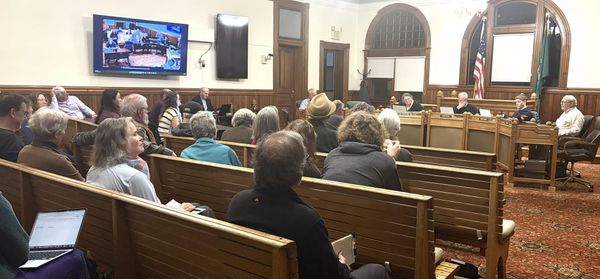
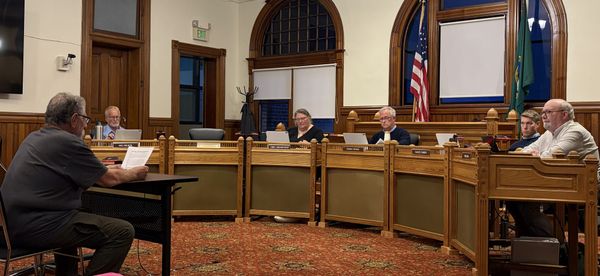
The local land transfer legislation has not yet been introduced in Congress. Jefferson County commissioners have delayed action on sending letters of support, citing the need for more public engagement and clarity on federal funding and protections.
Several factors are converging to make the future uncertain, including the Trump Administration's late 2025 order for a comprehensive review of all wildlife refuges, including Protection Island, the erosion of the Endangered Species Act and the redefinition of "harm" to habitat, uncertainty about federal funding for the refuge system and the two-year co-management model's impending review.
Why we are covering this story: Conservation and environmental impacts are not only important to our readers, but to the Beacon as well. This ongoing development will have generational impacts for the Puget Sound, which demands fact-based information as decisions are made.
How we are covering this story: Historical content, interviews and public records were used in this article. Many parties were unavailable/unresponsive for interviews, though we look forward to their future input.
Our approach to covering this story: It was important to the Beacon to gather all relevant information into one article, empowering readers with a broader perspective on the matter. This article was an investigative piece that extended our weekly deadline.