The Law Library Board of Trustees—An Essential Community Resource Debates Budget Shortfalls and Concerns Over Inmate Access
The cost to subscribe to an online law library is more than the county allocates based on court filing fees.

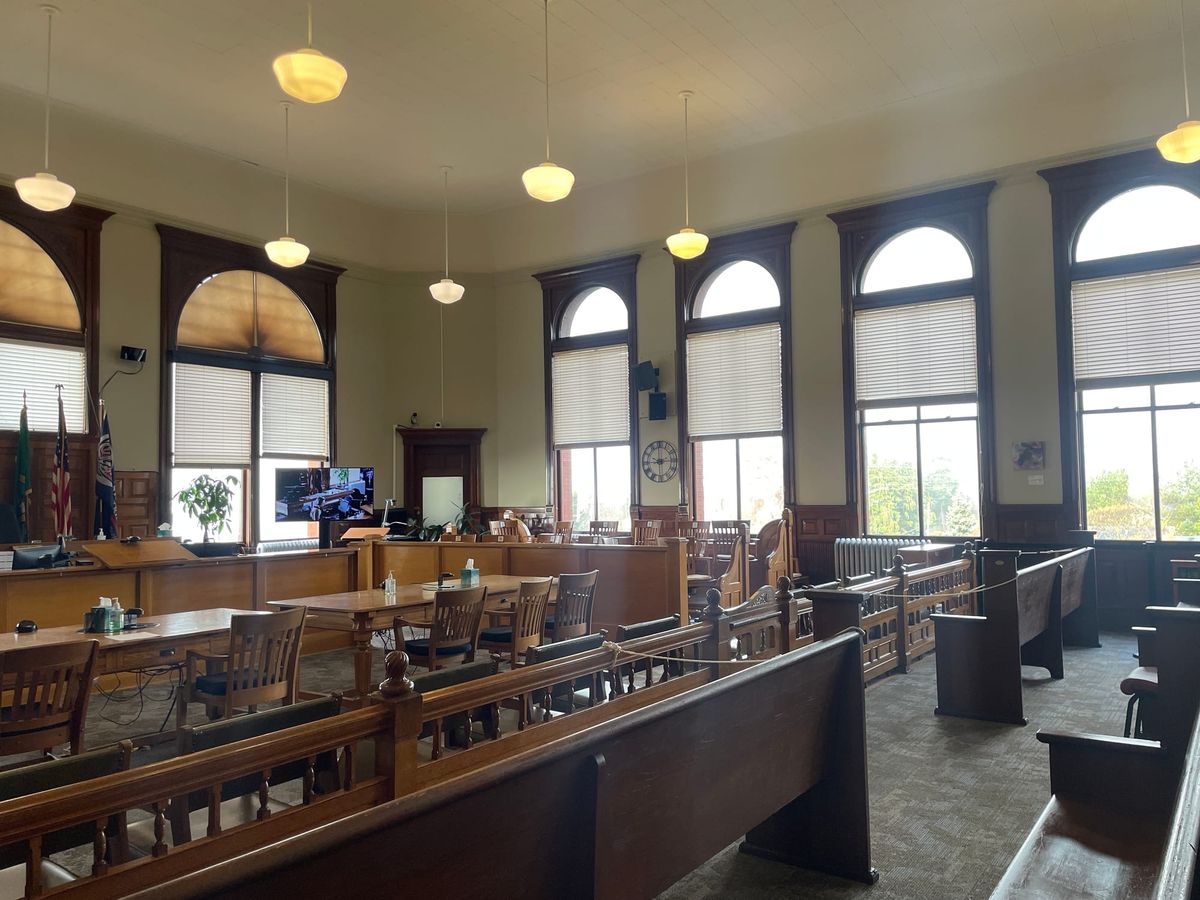
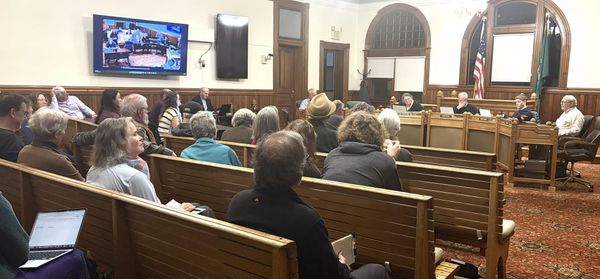
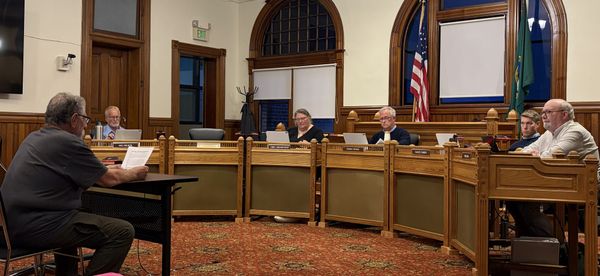
JEFFERSON COUNTY, WA — The Law Library Board of Trustees met on August 6 for a special meeting to adopt a budget recommendation for the Board of County Commissioners (BoCC) before the Monday, August 10, meeting in the Commissioners' Chambers at the Courthouse.
Since 1919, under Washington state law, having a Law Library has been a statutorily mandated public resource for counties with a population of 8,000 or more, funded largely by court filing fees.
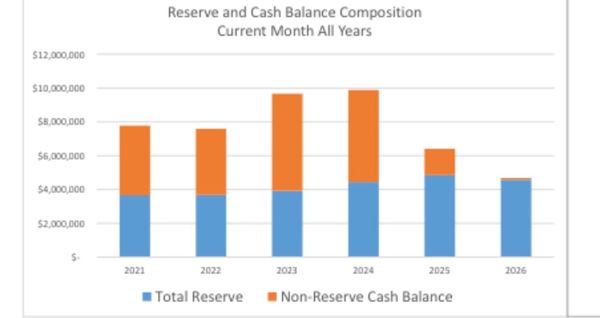
The monthly $1,000 subscription to Westlaw, the company responsible for the online archive, means that Jefferson County needs funds beyond the $10,000 it receives from filling fees on a yearly average. Trustees said they will look into potentially cheaper tiers of subscription on Westlaw, but will be asking the BoCC for an additional $3,000.
Superior Court Judge and board trustee Brandon Mack responded to Beacon inquiry over email, stating, “To save on funds, and because hardbound use has declined in recent years, the law library board decided to suspend maintenance of the hardbound volumes. Regardless, Westlaw provides members of our community with access to all current laws, including appellate caselaw, for the State of Washington.”
Members of the board mentioned the online library’s new AI tool’s effectiveness at simplifying the research process, making the whole of the collection more accessible to people who are not professional researchers.
Mack also wrote, “Not surprisingly, the courts are seeing an increased use of AI by both lawyers and self-represented litigants. Also not surprisingly, AI is not always accurate in its interpretation of the law and can often mislead litigants. All litigants, whether they be represented by a lawyer or self-represented, are responsible for understanding what they file, and must not mislead the court. The law library is a great resource to ensure everyone in our community has access to current laws.”
If the county fails to offer and maintain a law library, justice would be fundamentally undermined. Access to information about statutes, codes and precedents is not only essential for everyday citizens and self-represented litigants, it was affirmed as a sixth amendment right in 1975 for people facing criminal charges.
People representing themselves in court, often because they can’t afford help from a trained attorney, face tremendous disadvantages from the very beginning of their journey through the legal system. Access to a law library can often be their only source of help. The Beacon covered a self-represented civil case in June.
Law libraries are also essential for public defenders, small-firm attorneys and rural lawyers to research complex cases or check to see if a previous decision is still good law or if a higher court has changed it.
Courts and judges may also need to reference the library to inform fair, accurate rulings. Law students and researchers use these resources for legal training and academic growth.
Both the Port Townsend and Jefferson County Public Libraries are able to help people access the law library. All these libraries make it possible to hold the government accountable.
Jack Range, a board trustee and public defender with Jefferson Associated Counsel, pointed out that the 1990s tech kiosk at the Jefferson County Jail makes it difficult for defendants to access the information that they are due by rights. “It is wholly inadequate," Range said. Board trustee Lillian Powers, also a defense attorney, confirmed the communication barriers it creates with defendants when they are unable to access the law library while in jail.
This failure to provide meaningful access to the law library for people in custody may be posing an infraction on people’s constitutional rights and needs a solution.
The board mused on the potential of transport from the jail to the court house, but it was pointed out the cost of transport and the reduced staffing at the jail doesn’t make it a viable option. The board will look into whose responsibility it would be to procure funding for a new kiosk at the jail, and in the meantime will check with Westlaw if it is within their approved contract to share the username and password with the jail so inmates can have easier access to resources.