East Jefferson Fire Rescue Station 1 Welcomes New Engine With Push-In Ceremony
Locally designed, the engine will improve EJFR’s emergency response capabilities.

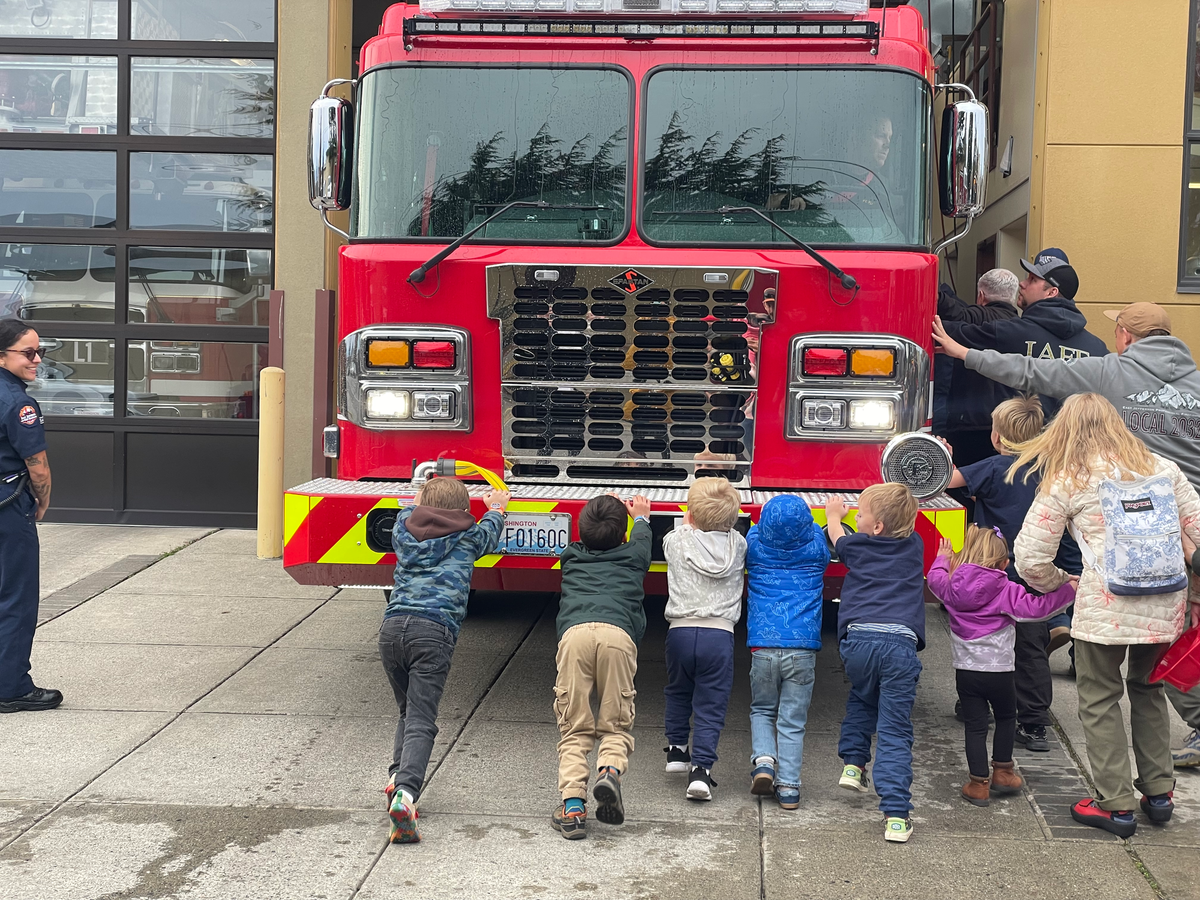
PORT TOWNSEND, WA — Following fire service tradition, East Jefferson Fire and Rescue held a push-in ceremony for its brand new engine on November 12. The ceremony dates back to the time when fire engines were horse-drawn pumpers. After leaving the station on a call, the horses would be disconnected, and the pumper cart would be manually pushed back into the station. Nowadays, a driver just has to shift into reverse to back an engine into the station. But when a new engine joins the fleet, it still gets a symbolic push-in. After its first wetdown, another tradition, E1 was pushed back into the station for the first time with the help of a crew of excited children.
The 2026 Spartan Metrostar Triple Combination Pumper, E1, will join Ladder Truck L1 at Port Townsend Station 1. Designed locally by the firefighters who will staff it, the engine is built to handle the specifics of its service area, as well as its home station. “We chose this design and its measurements to fit the needs of our fire station,” said Fire Chief Brett Black. “It has to fit in the building, and fit the needs of the community. Some roads aren’t paved here, and we need to be able to get everywhere we serve—whether it's here or Mats Mats or Ludlow.” While it looks big and takes a few giant steps to get into, the engine is actually quite sleek compared to other engines, ensuring it can respond anywhere in the county.
E1 can pump over 1,000 gallons of water per minute and also has the ability to use its hard-suction pumps to draft from water sources like pools or even the bay, if needed. Its new tank can store 750 gallons of water and 10 gallons of foam. It includes a full supplemental restraint system, which improves firefighter safety. “It will improve the training and safety of our firefighters because this is one of the most advanced engines on the market,” said Black. “I’m proud that we were able to design a fire engine that had all of the important safety features, like airbags, which sound like an obvious thing, but they are not in fire engines. It’s a fairly new technology.” In addition to airbags, there are bigger compartments accessible from the outside of the engine, allowing for more tool storage and specialized equipment. This also gets gear out of the cab, which reduces firefighter exposure to carcinogens.
The chassis, the structural and mechanical foundation of the engine, was built in Michigan. The rest of the parts were built in Brandon, South Dakota, where the entire thing was assembled. Firefighters traveled there to inspect it and ensure the real-life version matched the design. “It’s a lot of hours sitting down, deciding what’s best for each firefighter–short firefighters, tall firefighters–to be able to grab stuff to make it easier and more ergonomic for them,” said Lieutenant Firefighter Chris Kauzlarich, who was part of the design team. “It’s been a two and a half year project to finally get here. I’ve been doing this for 28 years now, so it will be interesting to see some of the new toys with it, because everything’s electronic now compared to the old stuff.”
For firefighter personnel, the new engine is just part of their ongoing commitment to serve the community and keep the public safe. “We really appreciate all the support we get from the community,” said Black. “That’s who it’s for,” echoed Kauzlarich. “To see the looks on the kids’ faces when we stop somewhere, and they get to see it . . . That’s what I’m looking forward to.”