Letter to the Editor: From Mayor Amy Howard
Questions only a court can answer.


Superior Court declined to grant the City’s request for a stay while our appeal moves forward. Some people have taken that to mean the City is ignoring the Growth Management Hearings Board’s decision or standing in the way of housing. I understand why it looks that way, so I’d like to let you know what’s happening. We are, in fact, working on the items the Board sent back to us. The first piece is an analysis of how many homes our community can supply at each income level, because that work will dictate what the rest of the work looks like. It’s technical work, which is why you haven’t had a chance to weigh in yet. It will come to the Planning Commission and Council in public, with time for review and public comment. Alongside the remand work, we are asking a court to answer questions that stand between us and the housing we all want built, especially affordable housing.
The cost of the confusion is already visible. A local affordable housing builder has put a planned 11-home project in the R-III zone on hold and can’t plan with confidence right now, which could leave a gap of years in building in Port Townsend once its current projects wrap up. Another nonprofit’s plan to rebuild its eight aging emergency housing units as permanent homes, at a scale that depended on the higher density, has stopped. Our planning department estimates the order could cut potential capacity on City-owned land set aside for affordable housing by up to 184 homes.
An appeal isn’t a lawsuit against anyone. It’s how a party asks a higher authority to review a decision it disagrees with, and it is the same right Affordable Hometown Port Townsend (AHPT) used to bring our Comprehensive Plan to the Growth Management Hearings Board. We have questions that need to be answered, and an appeal is the way we ask a court to weigh in on them. Here they are:
1. Can a board strike down more than it found fault with? The Board found substantial interference with one goal of the Growth Management Act: Goal 11, citizen participation and coordination, which calls for involving citizens in the planning process. That finding was about process, how the Council adopted one amendment to R-II density, including whether it should have gone back to the Planning Commission and whether the notice of the change was adequate. The Board made no finding that the added density, or any other part of the City’s public participation process, interferes with any goal of the Act. Yet the order went much further, invalidating “all increases in density to the R-II zone and related amendments, presumably located within Title 17” of our municipal code. State law lets a board invalidate only the particular parts it identifies, backed by findings and reasons that their continued validity would substantially interfere with a goal of the Act. “Presumably” is not a finding. The result is that our planners can’t say with confidence which density limit applies. Reasonable readings run from one home to four on a 5,000-square-foot lot, and no builder can plan around that.
2. Did the Council have to send its change back to the Planning Commission? The Planning Commission held a public hearing on R-II density on October 23, 2025, and even considered sixplexes in R-II during previous Planning Commission meetings. The Council then amended the recommended Planning Commission language, adding an exception that allows up to six homes per 5,000 square feet on R-II lots of 10,000 square feet or less, and took oral and written public comment on the change at two meetings, December 8 and 15, before voting. The Board agreed that state law doesn’t require another hearing in that situation. It relied on a section of our local code that calls for a commission hearing on text amendments. The City points to another section, which lets the Council modify a commission’s recommendation as long as the public can review and comment on the change before the vote. If every change had to go back for another hearing, no council could ever finish a plan, because each round could produce another change. Which section controls is a question for a court.
3. Must a city promise results, or make adequate provisions? State law, as updated in 2021 by House Bill 1220, requires cities to make adequate provisions for housing needs at every income level. The Board held that policy changes aren’t enough without proof they will meet the identified needs, and that vague aspirations won’t do. But whether homes get built depends on builders, lenders, and public funding that no city controls. Is the standard adequate provisions, or a guarantee? No court has answered that, and every city in Washington State planning under the Growth Management Act needs the answer.
4. Who has to prove what, and when? The law puts the burden of proof on those challenging a plan. In several places, the Board flipped that. It agreed the challengers hadn’t shown the upzone would create incentives for more expensive development types that will not serve all economic segments of the City, then told the City to analyze that question on remand. And the request to invalidate our zoning wasn’t in the petition that started the case. It first appeared as one sentence deep into a later brief. We don’t think a city’s zoning should be struck down on that footing, especially when the City had only one chance to respond to this last-minute invalidity request. The City argued it was not properly raised in the petition, based on the Board’s own regulations.
5. Does following the state’s guidance count for something? We built our housing analysis using guidance from the Department of Commerce, the state agency that tells cities how to approach comprehensive plans. The Board never found that we ignored it. Sixteen days earlier, the same region of the Board reviewed the land capacity analysis in the City of Anacortes’ plan, which used nearly the same method, the same state guidance, and the same consultant, and found it compliant. When one board gives two different answers, every city is left guessing.
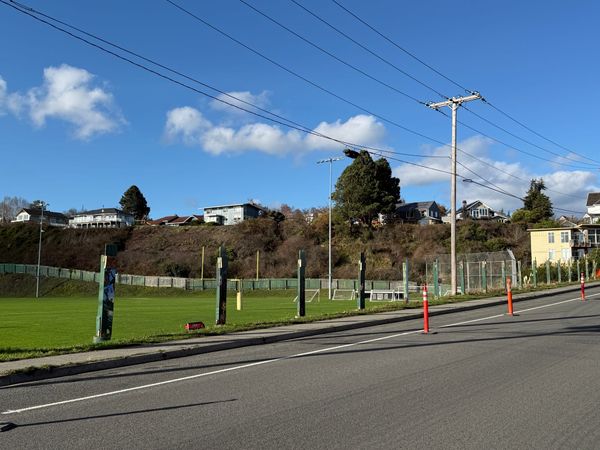
6. How wide should Port Townsend’s streets get? Behind a technical standard sits a simple question: as Port Townsend grows, how wide do we want our streets to become? Traffic engineers describe how freely cars move at the busiest times of day with a letter scale, A through F, called level of service. It isn’t a school grade or a pass-fail test. A means open road, and F means rush-hour stop-and-go. Our old standard for city arterials was D. The update adopted F for city arterials, such as Lawrence Street, and added standards for walking, biking, and transit. State roads, such as Sims Way, are still held to the higher D standard, and the City can’t change that. The challengers argued that F “provides no meaningful floor.” The Board agreed that state guidance sets no minimum and that choosing F is a local decision, but it faulted us because our older capital plan still said D, and it wasn’t persuaded that our walking and biking standards are in force. We say they are. Here’s what’s at stake: holding car traffic to a stricter standard as homes are added typically means wider roads, more lanes, and more signals. I don’t want four-lane roads and more stoplights in Port Townsend, and the City’s data show traffic on our arterials has gone down, with the pressure on the state highway. If AHPT wants a stricter standard, I’d ask what that would mean for our streets.
7. How do you count six years? State law requires a capital facilities plan covering at least six years. Ours covers 2025 through 2030. It was adopted in December 2024, a year before the Comprehensive Plan, but it used the same state population projections and the same 20-year planning horizon starting in 2025, so the two were linked. The Board measured the window from the date of its decision, found fewer than four years remaining, and said a plan on a two-year budget cycle must look eight years ahead. We say a plan adopted with a six-year window meets the requirement.
The City has set aside City-owned land for affordable housing, secured $1.7 million in state funding for sewer infrastructure at the Evans Vista affordable housing project, and is studying funding tools like inclusionary zoning and fees. AHPT has said it isn’t against more density if it helps meet affordable housing targets, and it has asked for housing targets by income level, a new land capacity analysis, and a study of racial disparities. Those are worth discussing. What’s missing is the how: which guarantees, enforced how, paid for by whom, and built by whom? I’d like to hear specific proposals from AHPT and from anyone else with a stake in this, at the table and in public. If you have a better answer, bring it.
Why appeal instead of simply complying? Because these are legal questions, and a court is the only place they get answered. The City is complying; we are starting the hard work to address the issues identified in the Board’s decision. Appealing while we work on the remand allows the City to get answers to these questions.
The public participation plan that will guide the rest of the remand work is being designed so that no single group or interest, AHPT and Council included, steers it, and it relies on broad-based participation from the whole community. The Board did not criticize or invalidate the eighteen months of outreach that shaped the plan, and the process ahead builds on that.
You can weigh in at any Council meeting, in public comment on agenda items or in general public comment, including when the income-level analysis comes forward. You can also write to all of us at citycouncil@cityofpt.us.