History, Healing and Impermanence
Port Townsend’s art fence comes down.

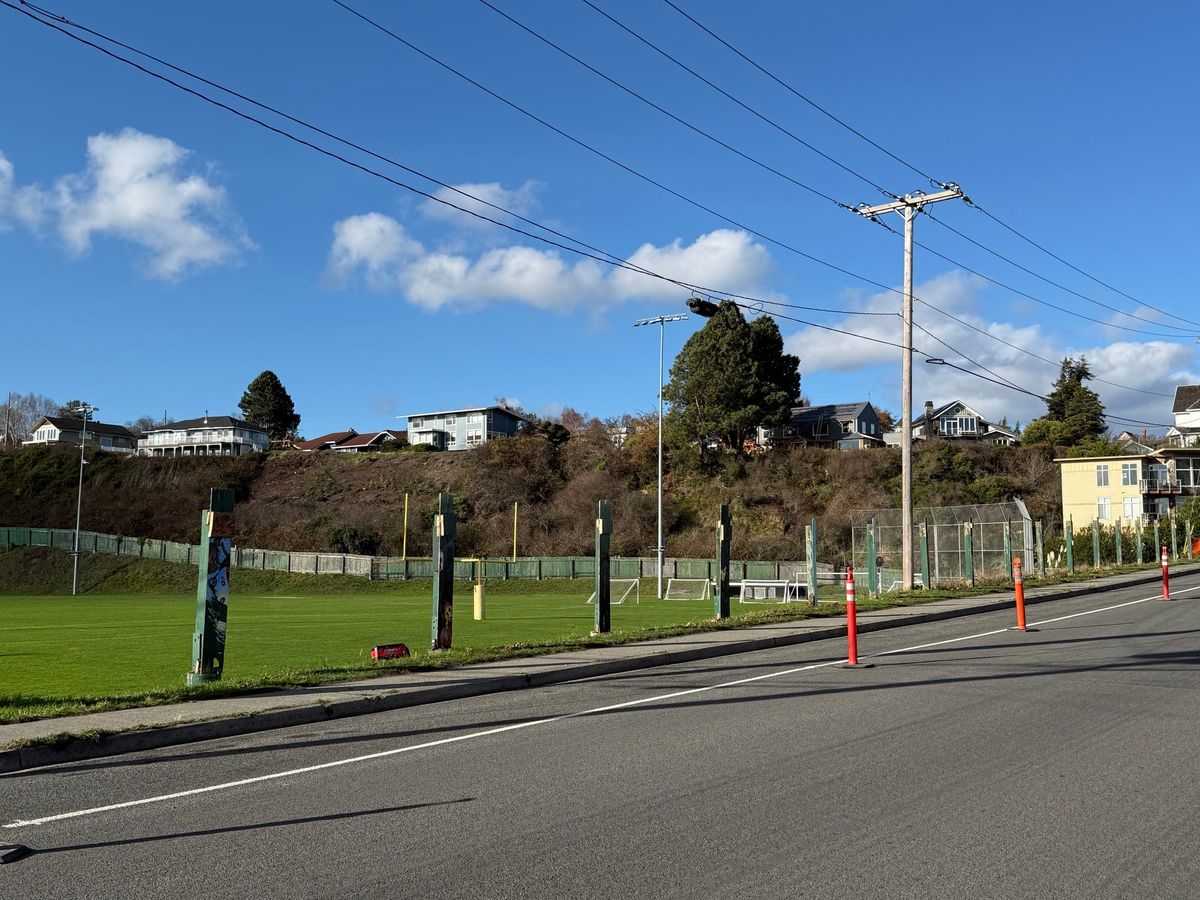
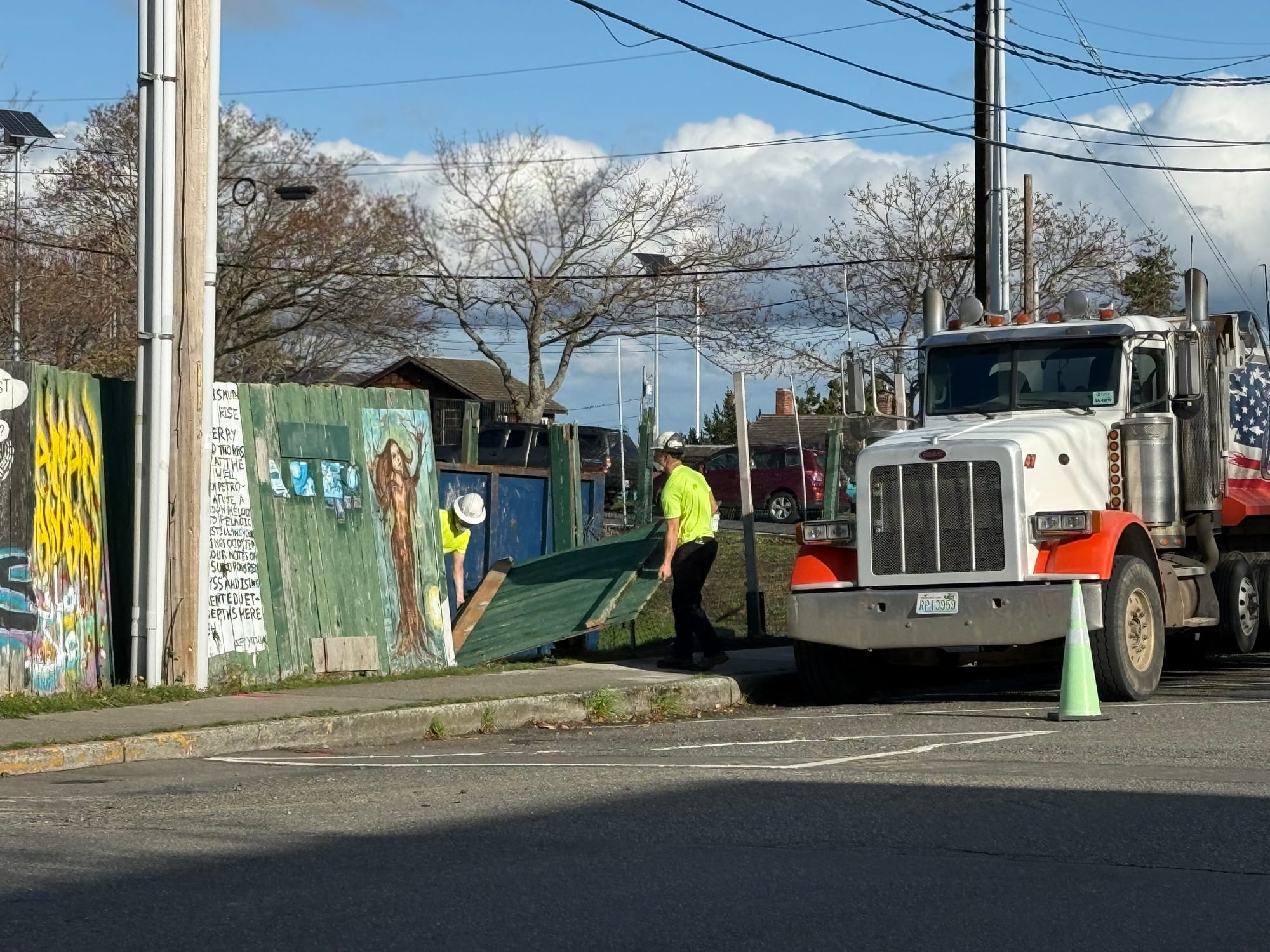
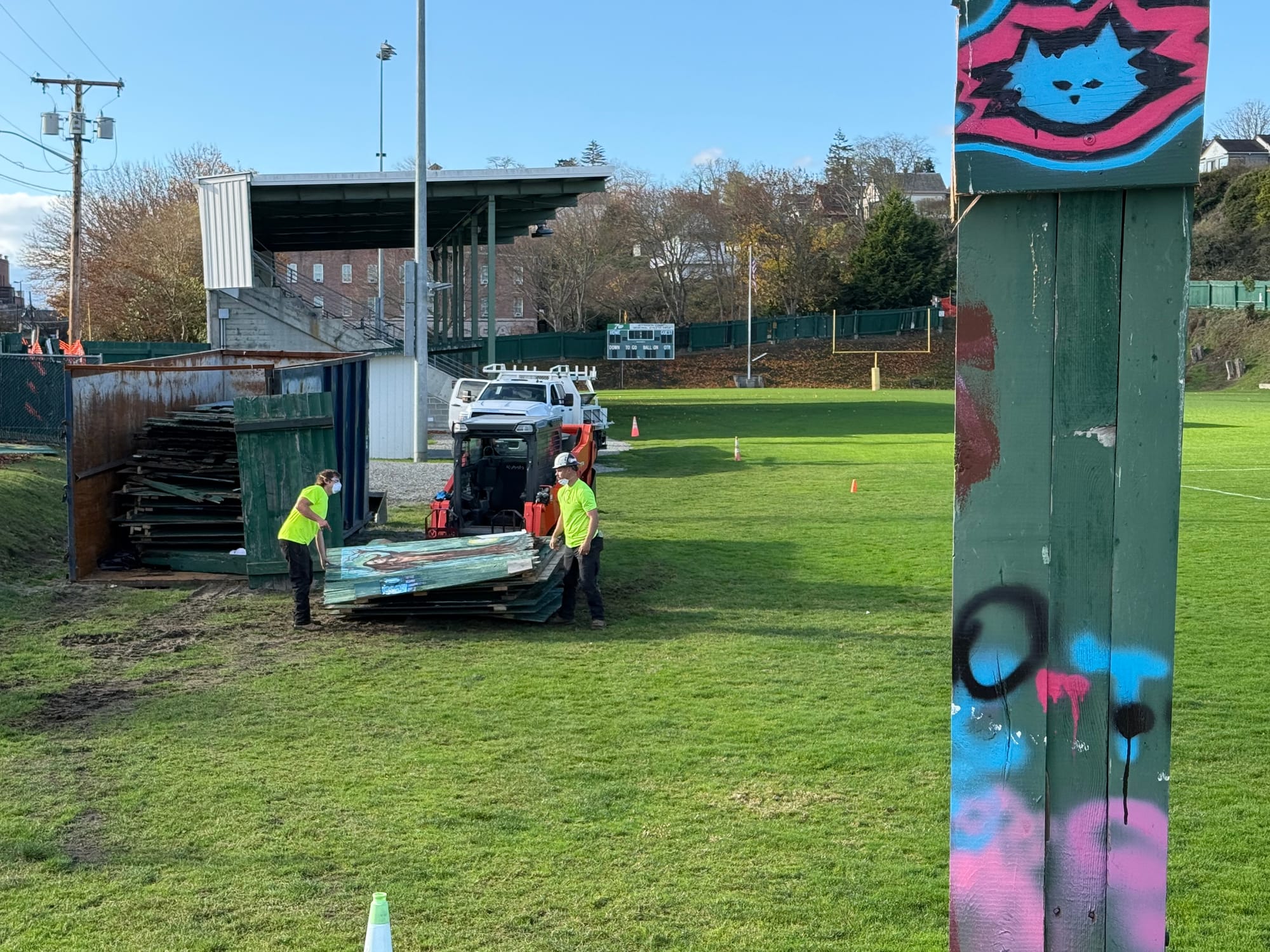
The multi-block Outsiders Street Art Project mural, along with the Memorial Field fence where it is painted, is being demolished this week. By midday Monday, all of the fence panels along Monroe Street had been torn down, with the remaining fence on Washington and Quincy streets set to be removed next.
Jefferson County, which operates Memorial Field, has long planned to demolish the old wooden fence, so the scores of artists who created the multifaceted mural were informed at the outset that their work was impermanent, said Alexandra Anagnostopoulos, the local artist who orchestrated the project.
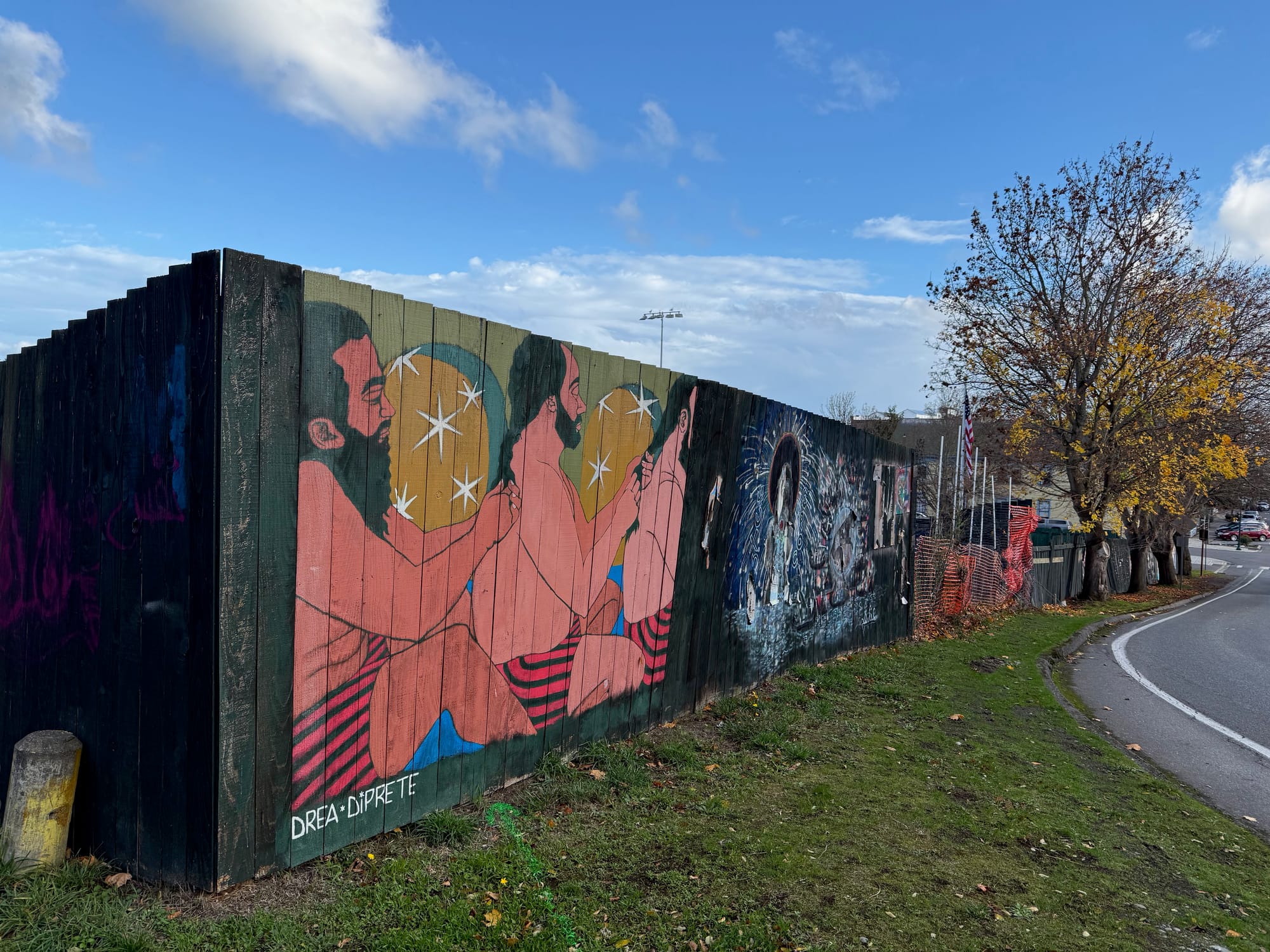
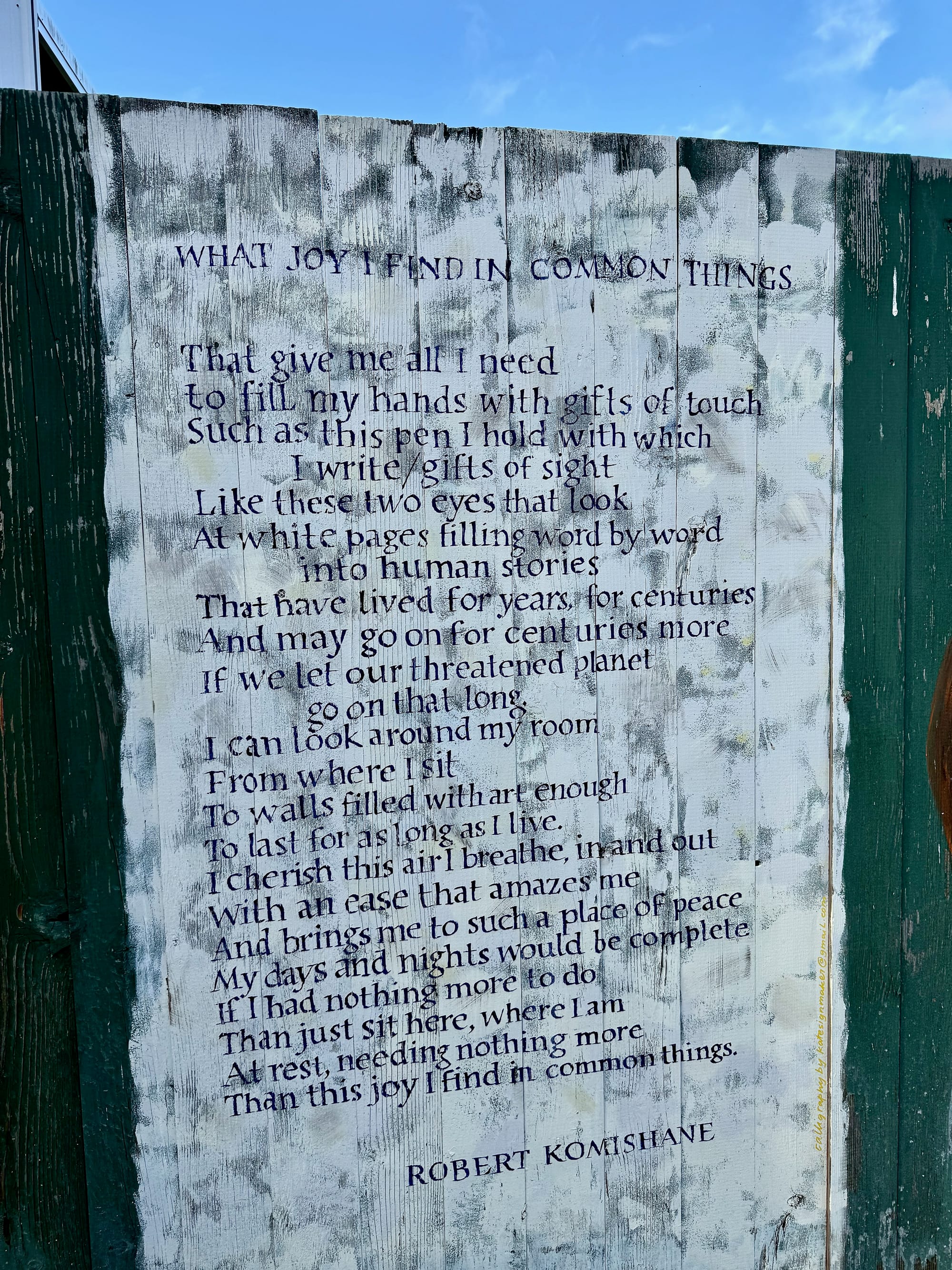
Beginning in the fall of 2025, the painters, wheat-pasters, historians and writers went to town. They told visual stories of Indigenous families, immigrants and the oppressed. They painted poems short and long. They remembered loved ones who had died. They rendered trees, wild creatures and the sun dipping into the sea. They bore witness to the history of this place, and to everyday life.
“I think the ephemeral nature of the project allowed a sense of liberation and freedom to artists to just be present, and paint or publish in an unattached mindset,” Anagnostopoulos, who is traveling in Greece, said by text on Monday.
“A lot of locals, predominantly people that did not create art for the fence, are the ones who got attached, which is interesting,” she added.
“That being said, I will also miss the work we did as a community.”
Anagnostopoulos, who devoted two years to campaigning for the street art project, said the county has kept her informed about why and when it would be demolished. She expressed gratitude to county officials, including commissioner Heather Dudley-Nollette, an early advocate for the endeavor.
“Also, I think the [county officials] have a lot of people coming at them asking why they’re tearing down the fence. I hope people will be kind to them because without the county’s support, we would’ve never even had the project.
“The fact that the fence was set to come down is what helped get the [art project] approved, as it served as a sort of experiment,” Anagnostopoulos wrote, “to see how a non-curated, public, community-managed and community-sourced !!! street art project would land in Port Townsend.”
“A part of me wishes I could be there today. The project has deep meaning to me,” she added. “Overall, I am glad I am not there for the demolition.”
For some years, Anagnostopoulos said, she’s been planning to move away. Her original idea was to give the community this mural as a gift, a token of gratitude for everything Port Townsend has given her—“like a kiss goodbye.”
She still resides in town, however, and now she sees this ending differently. It is a farewell, she wrote, “to make room for even greater imaginings.”
Rufina Garay, Port Townsend’s poet laureate, is among the artists who joined the Outsiders Street Art Project in October of last year. Garay said Anagnostopoulos was the one who taught her how to use wheat paste in her artwork, and who helped other artists source art supplies. Most of all, Anagnostopoulos “is really good at holding space for people,” added Garay.
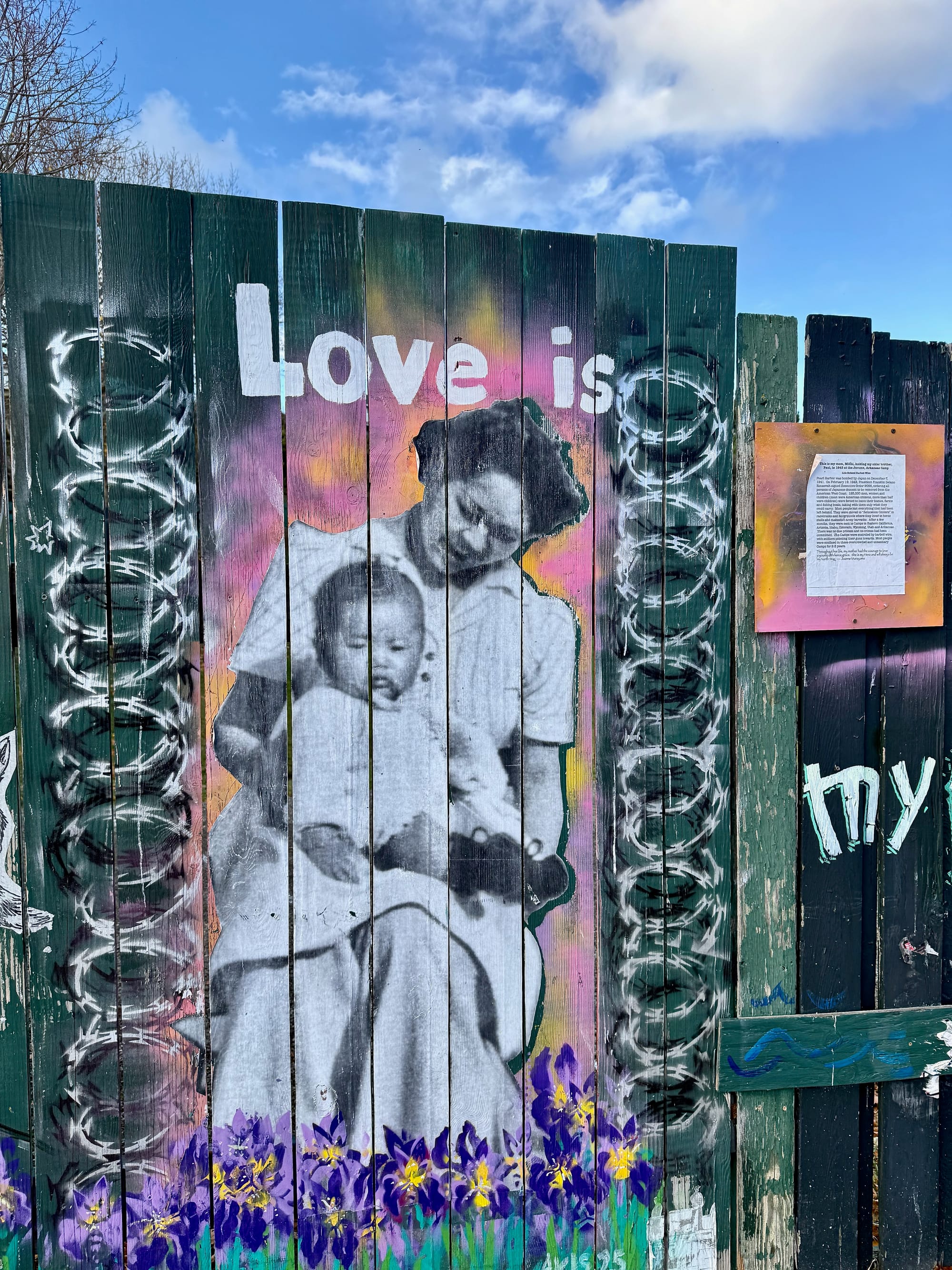
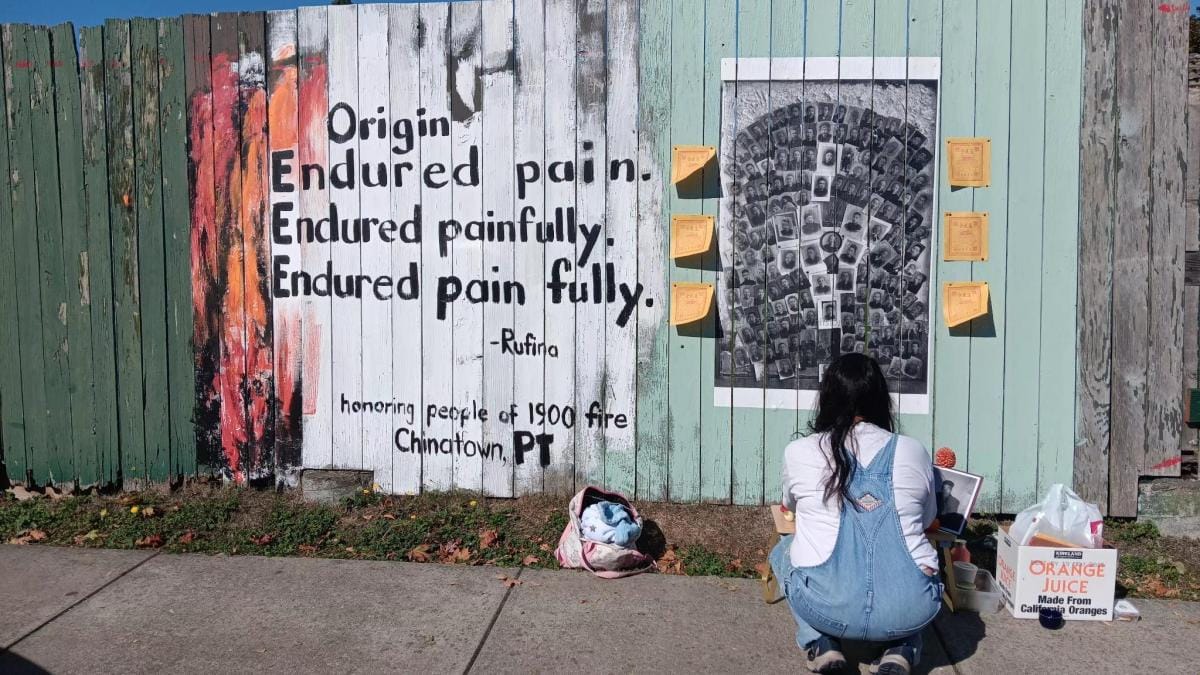
The fence and the mural became a space for artists—and passers-by—to connect, marvel, learn and remember. Garay, whose own background is Chinese, Filipino and Spanish, created for her panel a poem honoring the losses of the 1900 fire in Port Townsend’s Chinatown.
“While it might seem stark in its addressing of people’s pain, it’s also hopeful,” she said. Her poem’s final line, “endured pain fully,” suggests that we, through experiencing tragedy fully as a community, can one day move beyond it.
“Art is healing,” Garay believes.
As for the demolition of the fence, she said she is at peace with the process. In an ideal world, she admitted, there would have been a gathering for all of the artists, including a shared meal.
From her perspective as an artist, “the experience was the journey of creation, which is more important than the artifact. We made the journey of the fence beautiful,” she said, “and we did it collectively.”
Dana Sullivan, an author and artist who came to live in Port Townsend eight years ago, painted a tribute to a local librarian, Hilary Verheggen. Sullivan’s panel on Quincy Street, done in his signature style, pictures her with her beloved pet, Ninja Kitty.
Sullivan found himself enchanted by the whole project, one “that is so truly public art, so varied, so outrageously beautiful and personal. The [panels] are goofy, heartfelt, historical,” he said.
It all “just blew me away.”
There’s something exquisite about a transitory mural, he believes, almost like love letters etched in beach sand. Sullivan also loves the fact that his fellow painters made their art whenever they could, with whatever they had: brushes, paste and their own visions.
“It is truly a people’s project, totally self-regulated and grassroots. That’s what artists do anyway,” Sullivan said.
Jefferson County Parks and Recreation Manager Matt Tyler said demolition of the fence, which comprises 1,500 linear feet, is expected to take five days. Much of the street parking along Quincy, Washington and Monroe streets will not be available through this week. Workers will use an excavator, a forklift, and in some places their hands to tear the fence down, and then the panels will go into a Dumpster to be taken to the transfer station, Tyler said.
After demolition, “It’s going to be open for a while. It’s too big for a temporary fence,” he said, adding that since the area is a construction zone, the public must stay clear.
Parts of the fence were more than 70 years old, Tyler noted. Since lead-based paint was used, a demolition company certified in managing the substance has been engaged to completely remove the fence: Northwest Construction General Contracting, based in Battle Ground, Clark County.
Renovating Memorial Field has been a process stretching over a decade and a half, Tyler said. The stadium roof had to be restored and its lighting upgraded, while demolition of the fence was scheduled later.
“We waited to do the fence because it wasn’t critical to the function of the field,” he said.
A new fence is slated for construction beginning in mid-January, Tyler said, noting that it will be 7 feet high like the old wooden structure. It will look quite different, though: the new barrier will be a galvanized, vinyl-coated chain-link fence that people will be able to look through.
Being able to see into the field, Tyler said, will change the sense of place around it. Once the new fence is built, there will be times set aside for community members to enjoy the space as a public park as well as a soccer pitch, football field and softball field.
“It’s such an important facility for our community,” Tyler said, noting that Memorial Field, built as a World War II and Vietnam War memorial, was constructed on the ancestral lands of Indigenous tribes. He expressed his gratitude to the local tribes for their work with the county throughout the field renovation.
Anagnostopoulos said the work of the artists has been documented by Port Townsend photographer David Conklin and by city officials. An archive will be created for the Jefferson County Historical Society, she added, in collaboration with the participating artists, local activist Ave Avelino and Commissioner Dudley-Nollette.
“As anything we create teaches us, you have let go and co-create with the present,” Anagnostopoulos said. Yet she looks forward to future community art endeavors that bring artists together with the rest of the community. That could be an annual event, she said, as well as artworks involving local Indigenous tribes and immigrants: “sharing the crucial history of this area through visual story.”